






















































Middle East shock pushes Tanzania’s October fuel prices above Sh4,000
EWURA attributes the October adjustment to renewed tensions in the Middle East, which pushed up international refined-product prices and increased shipping and supply costs

Dar es Salaam. Tanzania’s retail petroleum market has entered another phase of price pressure after three consecutive months of declining pump prices were abruptly reversed by renewed turmoil in the Middle East.
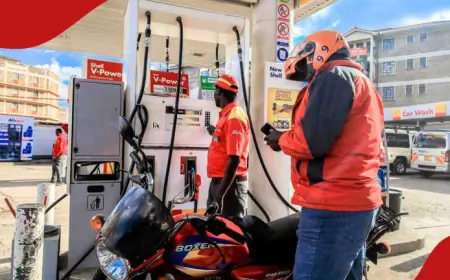
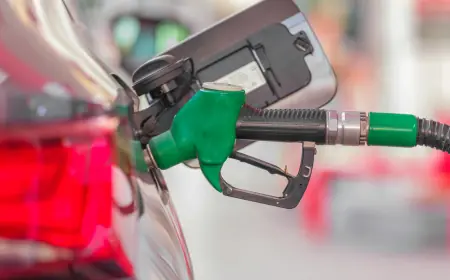
The Energy and Water Utilities Regulatory Authority (EWURA) raised its monthly cap prices from Wednesday, October 7, with a litre of petrol in Dar es Salaam rising by Sh261 to Sh4,057, while diesel increased by Sh209 to Sh4,086.
Kerosene recorded the sharpest increase, rising by Sh354 to Sh4,067.
The adjustment means the modest relief motorists enjoyed between June and September has been largely eroded.
In September, Dar es Salaam’s cap prices had fallen to Sh3,796 for petrol and Sh3,877 for diesel in three successive monthly reductions.
The latest increase also illustrates how quickly global developments can be transmitted to Tanzania’s downstream petroleum market.
EWURA attributes the October adjustment to renewed tensions in the Middle East, which pushed up international refined-product prices and increased shipping and supply costs.
The escalation comes at a particularly sensitive point in the global oil market.
The Strait of Hormuz, through which a significant share of the world’s oil and liquefied natural gas normally passes, has again become a major source of uncertainty as attacks on tankers intensify.
Reuters reported on October 8 that traffic through the strait had fallen to its lowest level in more than two months, with crude oil flows down to about 10.1 million barrels per day, roughly 74 percent of pre-war volumes.
The previous week recorded the highest number of tanker attacks since the US-Iran conflict began on February 28.
For Tanzania, the exposure is particularly significant because the country imports most of its petroleum products and relies heavily on supplies linked to Middle Eastern markets.
EWURA’s own notices throughout the year have repeatedly identified international Arab Gulf prices, shipping costs, insurance and product premiums as important components of domestic pump prices.
The scale of the 2026 price swing demonstrates the vulnerability. In January, petrol in Dar es Salaam was capped at Sh2,778 a litre and diesel at Sh2,726.
By March, the figures had risen modestly to Sh2,864 and Sh2,858 respectively.
The major shock came in April and May, when the Middle East conflict sharply altered international fuel markets.
April prices jumped to Sh3,820 for petrol and Sh3,806 for diesel.
In May, petrol rose further to Sh4,115 while diesel reached Sh4,248.
The increases came as international refined-product prices surged, with EWURA reporting exceptionally large increases in Arab Gulf free-on-board reference prices for April.
By June, Dar es Salaam’s petrol cap had reached Sh4,086, while diesel climbed to a 2026 peak of Sh4,333. Kerosene reached Sh4,685.
The government, however, did not leave consumers and productive sectors entirely exposed to the international shock.
It introduced targeted subsidies, particularly on diesel, which is critical to freight transport, public transport, manufacturing and other productive activities.
The subsidy was Sh259 per litre in May before increasing to Sh534.91 per litre in June.
Yet even the larger intervention could not completely absorb the international shock: diesel still rose by Sh85 a litre in June to Sh4,333.
The intervention illustrates the difficulty of using subsidies as a permanent shield against external price movements.
The state can absorb part of the shock, but a prolonged increase in international product costs can make full price protection increasingly expensive.
There was some respite as global conditions improved.
In July, EWURA reduced Dar es Salaam’s petrol cap by Sh96 to Sh3,990 and diesel by Sh151 to Sh4,182, citing a ceasefire arrangement and the reopening of the Strait of Hormuz to commercial vessels.
August brought further reductions of Sh92 for petrol and Sh204 for diesel, while September saw another Sh102 cut for petrol and Sh101 for diesel.
That three-month decline now appears to have been a pause rather than a return to the relatively benign market conditions seen at the beginning of the year.
The October figures are therefore significant beyond the immediate increase at filling stations.
Petrol in Dar es Salaam is now about 46 percent more expensive than its January cap, while diesel is about 50 percent higher.
The October diesel price is also roughly 5.4 percent above September’s level, while petrol is about 6.9 percent higher.
The impact becomes more pronounced away from the major ports.
At Tanga, October’s retail caps are Sh4,123 for petrol and Sh4,152 for diesel, while Mtwara has caps of Sh4,170 and Sh4,199 respectively.
In Kyerwa (Ruberwa), one of the remote northern districts, petrol reaches Sh4,370 and diesel Sh4,399.
Such differences reflect the structure of Tanzania’s downstream market.
EWURA calculates regional retail prices from the cost of petroleum products delivered through Dar es Salaam, Tanga and Mtwara ports, with inland locations carrying additional transport and distribution costs.
This is where the latest price increase could acquire a wider economic significance.
Diesel is a major input into road freight, public transport, agriculture, mining, construction and manufacturing.
Higher fuel costs can therefore work their way through the economy by increasing the cost of moving goods and operating machinery, with possible consequences for food prices and the broader cost of doing business.
The government has several tools at its disposal, including subsidies, regulation of maximum pump prices and measures designed to maintain security of supply.
Petroleum imports are also coordinated through the Bulk Procurement System, while EWURA monitors the market and publishes monthly caps.
The regulatory framework does not, however, amount to a fixed-price system.
Under Section 166 of the Petroleum Act, petroleum prices are governed by demand and supply, with EWURA setting maximum prices that retailers cannot exceed.
Oil marketing companies can compete below the published caps, provided they comply with the applicable pricing rules.
The immediate challenge is therefore to balance three competing objectives: protecting consumers and productive sectors from excessive price shocks, preserving the financial sustainability of government interventions, and ensuring that oil marketing companies remain able to import and distribute adequate supplies.
For Tanzania, the events of 2026 have provided a sharp reminder that domestic pump prices are not determined at the filling station.
They are shaped by a chain stretching from Middle Eastern refineries and international shipping lanes to exchange rates, import premiums, taxation, transport costs and government intervention.
What's Your Reaction?
 Like
0
Like
0
 Dislike
0
Dislike
0
 Love
0
Love
0
 Funny
0
Funny
0
 Angry
0
Angry
0
 Sad
0
Sad
0
 Wow
0
Wow
0