














































































BoT initiates stakeholder consultations on creation of joint credit guarantee firm
This new entity is envisioned as a specialised institution dedicated to the provision and management of credit guarantees, effectively centralising functions currently nested within the central bank



Dar es Salaam. The Bank of Tanzania (BoT) has initiated consultations to oversee the transition of its credit guarantee schemes into a standalone corporate entity, a move designed to bolster the country’s financial infrastructure and align with long-term economic goals.
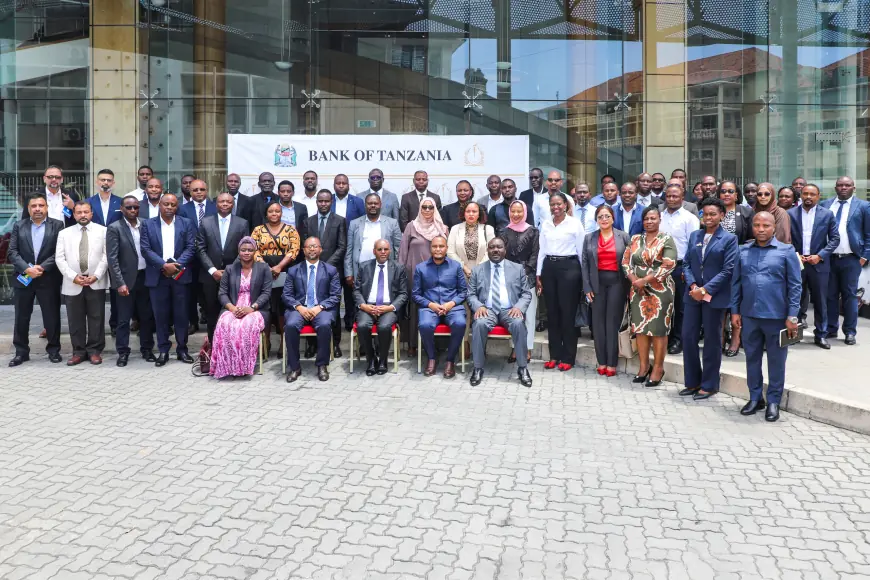
Presided over by the Deputy Governor for Economic Policy and Finance, Dr Yamungu Kayandabila, the consultative meeting held on March 12, 2026 focused on the structural framework for the proposed Tanzania Credit Guarantee PLC.
This new entity is envisioned as a specialised institution dedicated to the provision and management of credit guarantees, effectively centralising functions currently nested within the central bank.
Strategic realignment, regulatory clarity
The transition marks a significant shift in Tanzania’s financial governance.
By establishing Tanzania Credit Guarantee PLC, the BoT aims to achieve a clear separation between its core regulatory functions and the operational delivery of credit guarantees.
This structural ‘unbundling’ is intended to eliminate potential conflicts of interest and enhance operational efficiency.
In a professional financial context, this allows the central bank to maintain its objective oversight of the banking sector while the new company focuses on market-driven interventions and rapid response to the evolving needs of the private sector.
Furthermore, the establishment of this company is a proactive step toward achieving the National Development Vision 2050 (Dira2050).
The vision emphasises a robust, private-sector-led economy, which requires a more sophisticated mechanism for risk-sharing to ensure that capital flows to productive but collateral-constrained projects.
Collaborative framework
The BoT brought together a diverse array of institutional heavyweights to ensure the new company’s design meets multi-sectoral needs.
Key participants included representatives from the Capital Markets and Securities Authority (CMSA), the Tanzania Insurance Regulatory Authority (TIRA), and the Tanzania Private Sector Foundation (TPSF).
Representatives from insurance companies, collective investment schemes, and pension funds were also present, highlighting the intention for Tanzania Credit Guarantee PLC to act as a bridge between institutional liquidity and the credit needs of the real economy.
Evolution of existing schemes
Currently, the Bank of Tanzania directly manages two primary vehicles: the Export Credit Guarantee Scheme (ECGS) and the Small and Medium Enterprises Credit Guarantee Scheme (SME-CGS).
These schemes were originally founded to provide a safety net for commercial banks and financial institutions, encouraging them to lend to viable projects that lack traditional physical collateral.
The primary objectives of these existing funds, and by extension, the new PLC,include:
Enhancing foreign exchange earnings
By backing exporters, the state secures a steadier flow of foreign currency.
Job creation
Facilitating credit to SMEs directly supports the largest employment sector in the Tanzanian economy.
GDP Growth
Reducing the "risk premium" for productive investments accelerates overall national economic output.
The role of credit guarantees
In financial terms, a credit guarantee acts as a form of insurance for lenders.
When a business, particularly an SME or an exporter, seeks a loan but lacks sufficient land or assets to pledge as security, a credit guarantee company steps in to promise the lender that a portion of the debt will be repaid by the guarantor if the borrower defaults.
This reduces the risk for commercial banks, leading to lower interest rates and increased access to capital for businesses that are technically sound but "collateral-poor."
By moving these operations to Tanzania Credit Guarantee PLC, the government expects to foster greater innovation in financial products and allow for more flexible, market-responsive management than is typically possible within the rigid framework of a central bank.
What's Your Reaction?
 Like
0
Like
0
 Dislike
0
Dislike
0
 Love
0
Love
0
 Funny
0
Funny
0
 Angry
0
Angry
0
 Sad
0
Sad
0
 Wow
0
Wow
0