













































































60 years of the shilling: How the Bank of Tanzania authored the blueprint for East African monetary resilience
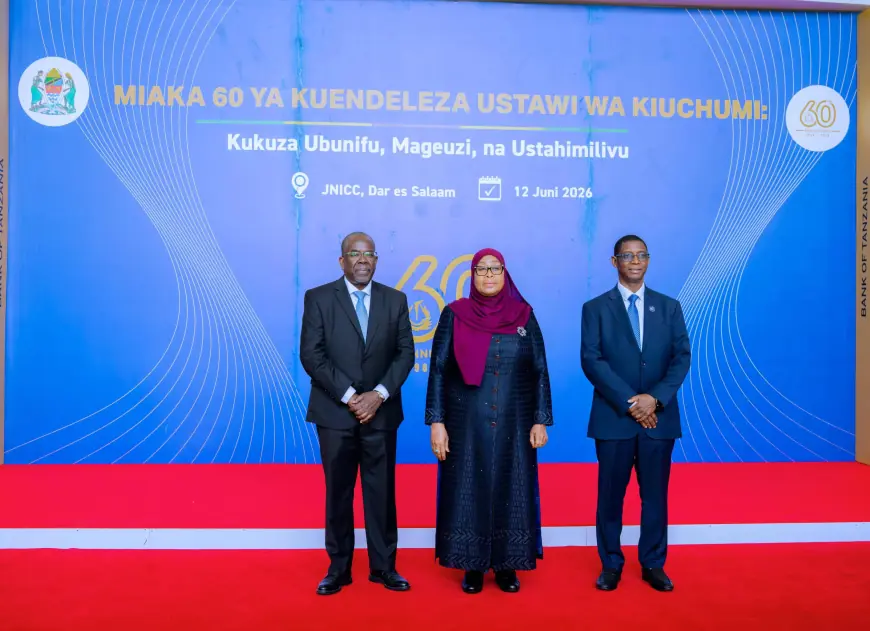
On June 12, 2026, the Bank of Tanzania (BoT) marked its diamond jubilee, celebrating exactly six decades since it opened its doors in 1966 to take over the mantle from the defunct East African Currency Board

Dar es Salaam. Inside the Julius Nyerere International Convention Centre, the atmosphere carried the distinctive, quiet gravity that accompanies historical milestones.
On June 12, 2026, the Bank of Tanzania (BoT) marked its diamond jubilee, celebrating exactly six decades since it opened its doors in 1966 to take over the mantle from the defunct East African Currency Board.
Confronting a global economic landscape fractured by geopolitical fragmentation and volatile commodity markets, the BoT used its 60th anniversary not merely for retrospective self-congratulation, but to offer a masterclass in monetary survival.
For the central banking community across Sub-Saharan Africa, the proceedings in Dar es Salaam served a deeper purpose.
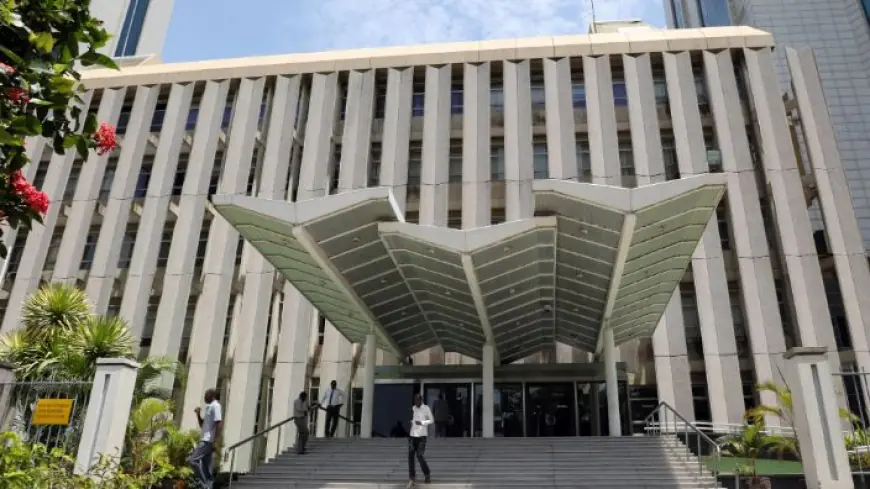
Over the past two decades, the twin towers of the BoT headquarters on Mirambo Street have quietly transformed into an ideological academy.

Central bankers from Nairobi, Kampala, Kigali, and Lilongwe routinely travel to Tanzania to study a specific phenomenon: how a central bank in a frontier economy can manage to preserve price stability, pioneering financial inclusion without sacrificing regulatory discipline.
The evolution of the mandate
To understand the modern institutional architecture of the Bank of Tanzania, one must first dissect its multi-layered history.
The institution inaugurated by Mwalimu Julius Nyerere in 1966 was structurally distinct from the inflation-targeting technocracy of 2026.
Following the Arusha Declaration of 1967, the BoT was legally repurposed to serve a command economy, tasked with managing credit allocations and strict foreign exchange controls under annual finance plans.
This model encountered severe structural limits during the macroeconomic crises of the late 1970s and 1980s.
The true modern turning point arrived with the passage of the Bank of Tanzania Act of 1995.

Recognizing that a central bank saddled with competing political goals could rarely contain inflation, the legislature stripped away secondary mandates, establishing price stability as the primary, singular objective of monetary policy.
This institutional independence was reinforced by the Bank of Tanzania Act of 2006.
It provided the statutory shield that enabled successive governors to withstand short-term fiscal pressures.
This hard-won autonomy proved critical during recent global shocks, allowing the central bank to transition smoothly from targeting aggregate money supply to implementing a forward-looking interest rate-based monetary policy framework.
The anchor of stability in a volatile region
While several neighbouring economies have wrestled with double-digit inflation and severe currency depreciation over the past decade, Tanzania has maintained a stable macroeconomic profile.

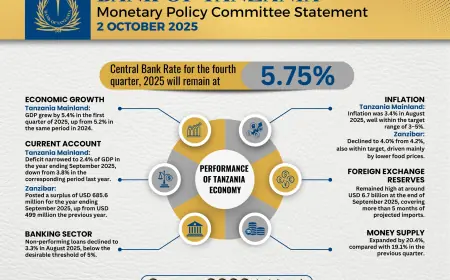
The central bank has consistently anchored core inflation close to its five per cent medium-term target.
This stability was not achieved by accident, but through careful liquidity management and macroprudential discipline.
The BoT approached foreign exchange intervention with deliberate restraint.
Rather than burning through international reserves to artificially defend the shilling, the central bank allowed the currency to adjust gradually to market fundamentals, intervening only to smooth out speculative volatility.
By maintaining gross official reserves above the traditional threshold of four months of import cover, the bank protected the domestic economy from external price shocks while ensuring sufficient liquidity for sovereign debt servicing and essential imports.
Blueprint for financial inclusion, interoperability
Beyond maintaining price stability, the Bank of Tanzania has earned international recognition for its approach to financial inclusion.
In 2011, the BoT was among the early regulatory signatories of the Maya Declaration, committing to bring unbanked populations into the formal financial system.
The bank chose to collaborate with mobile network operators rather than restrict them, establishing a regulatory sandbox model that allowed mobile money platforms to scale safely under close supervision.

The launch of the Tanzania Instant Payment System (TIPS) represented a major step forward in this strategy.
By operating a digital pipeline that links commercial banks, mobile operators, and non-bank financial institutions, the BoT successfully lowered transaction costs and eliminated fragmentation in the retail payments market.
Regional peers regularly study the TIPS framework as an architecture that enhances financial inclusion while keeping retail transactions securely within the oversight of the central bank.
Institutional governance, regional leadership
The BoT has also built a strong reputation for rigorous bank supervision.
The banking crises that affected East Africa in the late 2010s prompted the BoT to raise capital adequacy requirements and tighten asset classification rules.
When capital shortfalls or governance failures emerged within smaller commercial institutions, the bank intervened decisively, favouring structured mergers or orderly liquidations over prolonged bailouts.
This disciplined approach reduced non-performing loans across the sector and protected depositor confidence.
Through its dedicated training institute in Mwanza, the BoT has institutionalised its role as a regional knowledge hub.
The campus regularly hosts joint supervisory simulations, macroeconomic modelling seminars, and financial stability workshops for technical staff from across the East African Community and SADC blocs.
The diamond jubilee celebrations highlighted the fact that the Bank of Tanzania's greatest asset is its institutional memory and technical depth.
Navigating 60 years of economic history required shifting from early socialist planning to market-driven liberalization, and finally to the modern digital financial landscape.
What's Your Reaction?
 Like
0
Like
0
 Dislike
0
Dislike
0
 Love
0
Love
0
 Funny
0
Funny
0
 Angry
0
Angry
0
 Sad
0
Sad
0
 Wow
0
Wow
0