







































































Tanzania to establish international financial centre to attract global capital
The decision, formalised during the 38th Executive Committee meeting of the Tanzania National Business Council (TNBC) last week, follows a series of recommendations presented by the council’s financial working group in March 2026


Dar es Salaam. Tanzania has initiated a long-term economic strategy to establish an International Financial Centre (IFC) in Dar es Salaam, aiming to transform the nation into a regional hub for foreign direct investment and capital mobilization.
The decision, formalised during the 38th Executive Committee meeting of the Tanzania National Business Council (TNBC) last week, follows a series of recommendations presented by the council’s financial working group in March 2026.
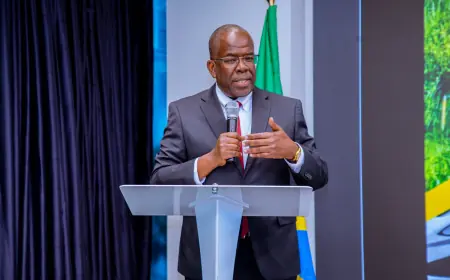
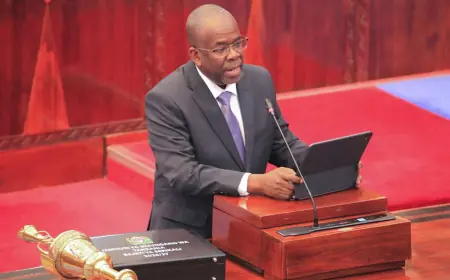
“Based on the challenges identified by the private sector, we have agreed to establish an International Financial Centre that will help address some of the obstacles facing investors and enhance Tanzania's competitiveness in attracting international capital,” the Chief Secretary and chairman of the TNBC Executive Committee, Amb Moses Kusiluka said.

The infrastructure is designed to address systemic bottlenecks highlighted by the private sector, lower the cost of capital, and position Tanzania alongside the six African nations that currently host functioning international financial hubs.
Amb Kusiluka stated that the initiative directly responds to specific constraints identified by private investors.
By offering a dedicated institutional and regulatory environment, the government expects the centre to mitigate bureaucratic delays, enhance competitiveness, and create domestic employment through accelerated project financing.
While the selection of Dar es Salaam leverages the city’s existing infrastructure and commercial density, global financial history suggests that transitioning from a domestic hub to an IFC requires profound structural adjustments.
Nairobi, Kigali
Economists note that the success of established hubs, such as those in Kigali or Nairobi, relies heavily on a dual-regulatory framework that separates domestic banking from international transactions.
For Tanzania to succeed, the legislature must implement a specialised legal regime that guarantees asset protection, predictable tax incentives, and the seamless repatriation of capital.

The Governor of the Bank of Tanzania (BoT), Emmanuel Tutuba, detailed the strategic foundations already in place, pointing to the country’s macroeconomic stability, political continuity, and a resilient banking sector.
“The establishment of an IFC will enhance the country's ability to attract capital from within and outside Africa, facilitate financing for large-scale development projects and strengthen international financial activities,” Governor Tutuba noted.
Digital infrastructure
However, integrating into the global financial architecture will demand a significant upgrade to existing digital infrastructure.
Governor Tutuba emphasised that advanced Information and Communication Technology (ICT) systems must be deployed to facilitate cross-border transactions and remote operations for international firms.
He added that the influx of international financial institutions is anticipated to trigger a transfer of specialized knowledge and financial technology to the domestic workforce.
“This presents an important opportunity for Tanzanians to learn from international experts and strengthen their professional capabilities in various financial fields,” Governor Tutuba stated.
Geopolitical advantage
The geopolitical and regional context provides Tanzania with a distinct geographical advantage.
Through its concurrent membership in the East African Community (EAC) and the Southern African Development Community (SADC), an IFC based in Dar es Salaam offers investors a strategic gateway to a market of over 1.4 billion people.
“We believe that once the government formally approves the establishment of this centre, an appropriate legal framework will be enacted to promote investment and safeguard investors' capital,” Governor Tutuba added.
To exploit this position effectively, local authorities must ensure that the legal framework aligns with international standards on anti-money laundering and financial transparency, which are critical to maintaining institutional credibility.
Human capital

Human capital development remains a core pillar of the long-term viability of the project.
The influx of international financial institutions is anticipated to trigger a transfer of specialized knowledge and financial technology to the domestic workforce.
The Executive Secretary of the TNBC, Dr Godwill Wanga, framed the initiative as a structural component of the National Development Vision 2050.
He emphasized that the modern service sector requires a highly skilled domestic talent pool to sustain operations without permanent reliance on expatriate labour.
“One of our responsibilities is to build the capacity of the private sector and create an environment that will stimulate economic growth in line with the goals of the National Development Vision 2050,” Dr Wanga said.
In tandem with the financial centre roadmap, the TNBC executive meeting concluded with an agreement to introduce a national awards framework to recognize public and private entities making substantial contributions to economic development.
The immediate focus, however, remains on drafting the requisite statutory instruments.
The speed and clarity with which the government enacts the governing laws will determine how quickly global capital markets respond to Tanzania’s entry into international finance.
What's Your Reaction?
 Like
0
Like
0
 Dislike
0
Dislike
0
 Love
0
Love
0
 Funny
0
Funny
0
 Angry
0
Angry
0
 Sad
0
Sad
0
 Wow
0
Wow
0