









































Tanzania deploys LNG diplomacy to counter political volatility narratives
Analysts note that the government increasingly regards the LNG project not merely as a major energy investment, but as an important test of its ability to reassure global capital markets that Tanzania remains stable, predictable and open for business despite recent political disruptions

Dar es Salaam. Tanzanian officials have recently travelled extensively to promote the country’s long-delayed liquefied natural gas (LNG) project, as part of a broader economic diplomacy drive widely viewed as an effort to reinforce Tanzania’s investment credentials following the political turbulence that followed the October 29, 2025 elections.
The international engagements have also served to signal that discussions on the LNG project are in their final phase and could be concluded in the near term.
Analysts note that the government increasingly regards the project not merely as a major energy investment, but as an important test of its ability to reassure global capital markets that Tanzania remains stable, predictable and open for business despite recent political disruptions.
Estimated at about $42 billion, the LNG project is widely considered Tanzania’s most consequential prospective foreign direct investment.
Its prolonged delay has been cited by investors as an illustration of regulatory uncertainty and protracted decision-making processes.
Concluding the negotiations would therefore represent a significant signal that the government is capable of resolving complex, capital-intensive projects and maintaining policy continuity even under political pressure, observers say.
This sense of urgency has been reflected in the coordinated messaging delivered by senior government officials on international platforms over the past week.
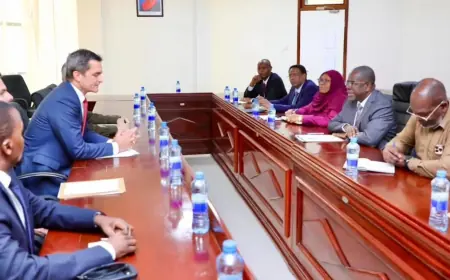
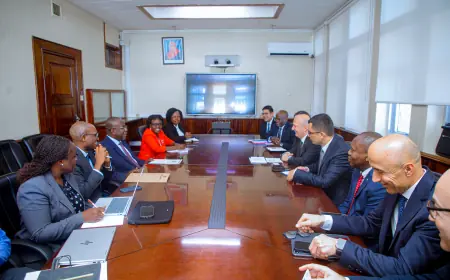
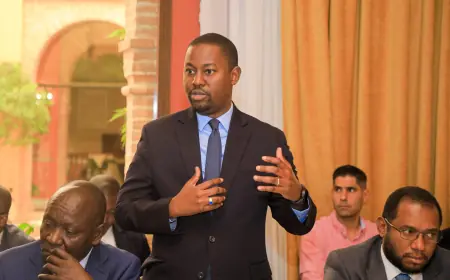
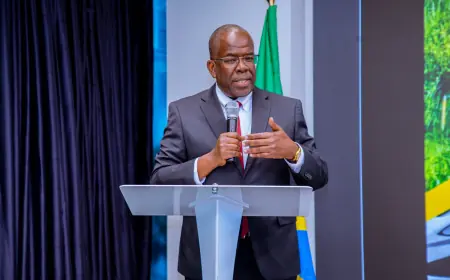
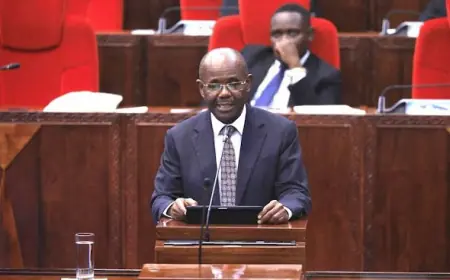
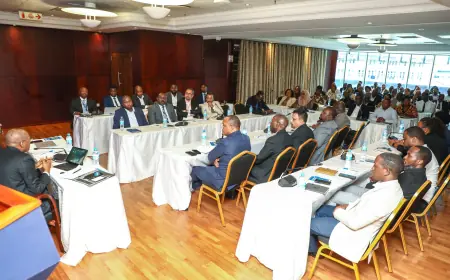
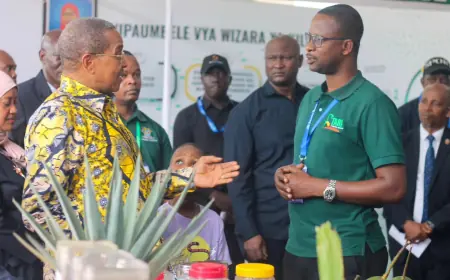
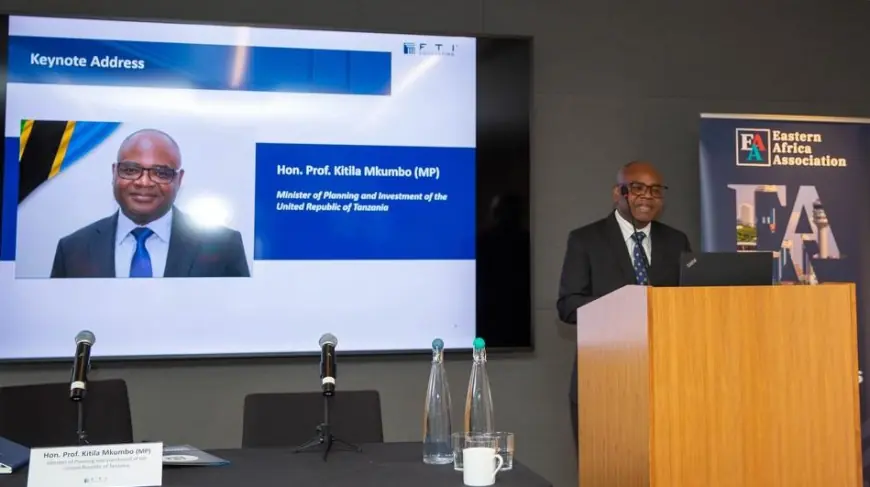
Last week the Minister of State in the President’s Office [Planning and Investment], Prof Kitila Mkumbo, was in the UK to meet investors, policy makers and other key stakeholders.
In one of the meetings, he told investors that negotiations on the LNG project were approaching their final stages.
“The government is now focused on completing the remaining legal and technical work. A project of this size would need a separate and specific piece of legislation,” he said.
Prof Mkumbo added that the legal process was expected to be concluded by June 2026.
His remarks are seen as an attempt to distinguish short-term political developments from longer-term economic fundamentals.
His emphasising on timelines and institutional processes presented Tanzania as a state that continues to function and honour long-term commitments regardless of political shocks.
For investors accustomed to assessing risk over extended horizons, such assurances carry particular weight.
Goa, India
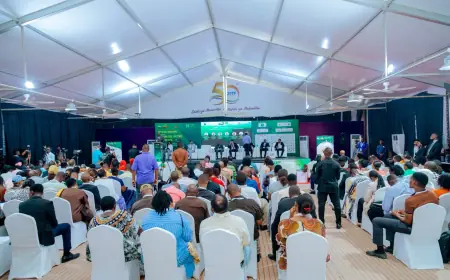
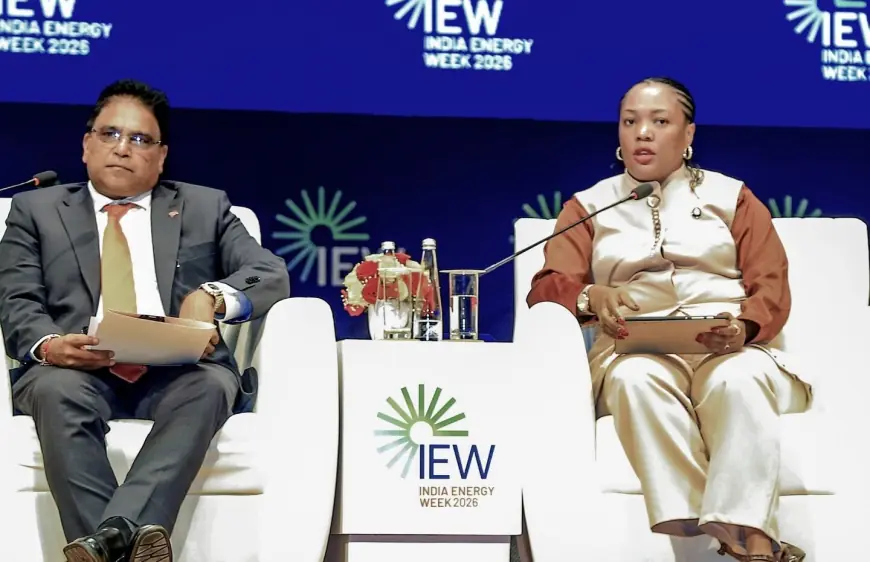
A similar message was delivered in Goa, India, by the Deputy Minister for Energy, Ms Salome Makamba, during a ministerial dialogue at the India Energy Week 2026.
“Tanzania is strengthening its investment framework and expanding international cooperation in the oil and gas sector,” Ms Makamba said last week.
She noted that these efforts were being complemented by the conclusion of negotiations with various investors aimed at unlocking major strategic projects, including the long-anticipated LNG development.
She described the LNG project as a cornerstone of Tanzania’s long-term energy and industrial strategy, citing its potential to boost export revenues, enhance energy security and stimulate broader economic development.
Progress on the project, she added, reflected sustained engagement between the government and private investors, supported by regulatory reforms and clearer policy direction.
The tone adopted by officials is notable. Rather than conveying urgency linked to crisis management, the LNG negotiations have been framed as the natural outcome of reforms already under way.
Ms Makamba’s remarks also placed the project firmly within a wider narrative of investment reform and international cooperation, rather than promotional messaging.
This approach appears intended to reassure investors that the LNG project is not a short-term political response, but the product of structured engagement and institutional readiness.
Such positioning is deliberate. The aftermath of the October 29, 2025 elections has increased scrutiny of Tanzania’s governance environment and political stability.
Reports of unrest and expressions of international concern have inevitably prompted questions among foreign investors, particularly those considering long-term infrastructure and energy investments.
In this context, the LNG project presents the government with an opportunity to demonstrate credibility through tangible action rather than rhetoric.
If concluded in the near term, the agreement would indicate that Tanzania can still provide policy certainty, honour contractual commitments and manage complex negotiations with multinational partners.
It would also suggest that recent political tensions have not altered the country’s broader economic trajectory.
For a government seeking to safeguard its position in increasingly competitive global capital markets, such a signal is significant.
Beyond its economic value, the LNG project also carries substantial symbolic weight.
Energy developments of this scale involve not only governments and investors, but also lenders, insurers, contractors and host communities.
Participation across this ecosystem depends heavily on confidence in legal safeguards, fiscal stability and dispute-resolution mechanisms.
A signed agreement would therefore have implications that extend beyond the energy sector, potentially influencing perceptions across Tanzania’s wider investment landscape.
Decisive actions crucial
Nevertheless, analysts caution that success will ultimately be measured not solely by the signing of an agreement, but by subsequent implementation. Investors will be watching closely for efficient execution, transparent governance and consistency between stated policy commitments and actual practice.
Any signs of reversal or administrative delay could quickly undermine the confidence generated by a deal.
For now, the government appears keenly aware of what is at stake.
The coordinated interventions by Prof Mkumbo in London and Ms Makamba in Goa suggest a calculated effort to reshape Tanzania’s investment narrative at a sensitive juncture.
By anchoring that narrative to progress on the LNG project, the authorities appear to be betting that a decisive outcome will help reassure international markets that Tanzania remains a viable destination for long-term investment.
In that sense, the LNG negotiations have come to represent more than a single project.
They serve as a measure of institutional resilience following political strain and a test of the government’s capacity to align economic ambition with investor confidence.
Should Tanzania succeed in concluding the deal within the projected timeframe, it could mark an important step towards restoring trust and repositioning the country within global investment circles.
What's Your Reaction?
 Like
0
Like
0
 Dislike
0
Dislike
0
 Love
0
Love
0
 Funny
0
Funny
0
 Angry
0
Angry
0
 Sad
0
Sad
0
 Wow
0
Wow
0