
























































Tanzania eyes Starlink as SpaceX expands satellite internet across Africa
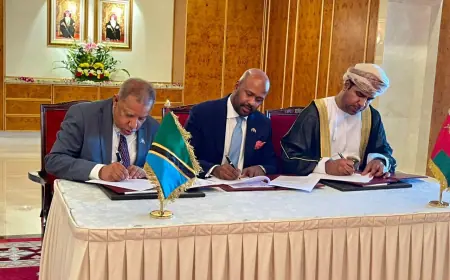
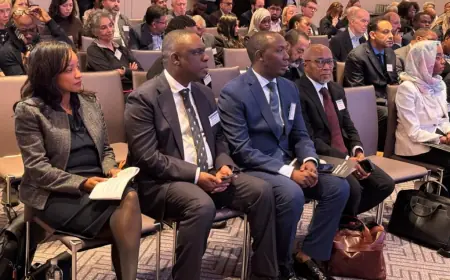
Prime Minister Mwigulu Nchemba met representatives of SpaceX and Starlink in London on October 7, 2026, to discuss potential investment by the companies in Tanzania’s communications and technology sectors


London. Tanzania has opened talks with Elon Musk’s SpaceX and its Starlink satellite internet unit as the government seeks to attract investment in communications and technology and expand access to high-speed internet across the country.
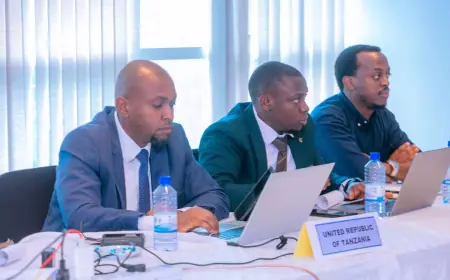
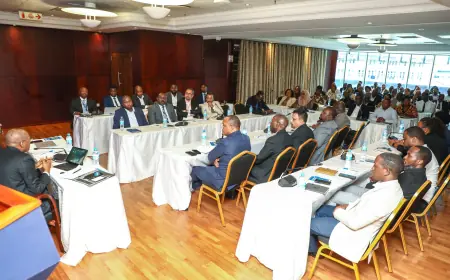
Prime Minister Mwigulu Nchemba met representatives of SpaceX and Starlink in London on October 7, 2026, to discuss potential investment by the companies in Tanzania’s communications and technology sectors.
The meeting took place at the Hyatt Hotel as part of the Prime Minister’s visit to the United Kingdom, where he is leading a Tanzanian delegation to promote investment opportunities and engage international businesses.
Dr Nchemba was accompanied by the Minister for Communications and Technology, Angela Kairuki, the minister for Finance Khamis Musa Omar, the minister of State in the President’s Office [Planning and Investment] Kitila Mkumbo.
The talks come as Starlink, SpaceX’s low-Earth-orbit (LEO) satellite internet service, continues to expand its presence across Africa, including in several countries bordering Tanzania.
Starlink uses a large constellation of satellites orbiting much closer to Earth than traditional geostationary communications satellites.
This allows it to provide broadband internet to locations where fibre-optic networks and conventional mobile infrastructure are difficult or expensive to deploy.
For Tanzania, the technology could be particularly relevant to remote communities, islands, rural businesses, mines, schools, health facilities and other locations where extending terrestrial networks can be costly.

Regulatory process
The discussions in London also revive a regulatory process that Starlink began in Tanzania two years ago.
In November 2024, the Tanzania Communications Regulatory Authority (TCRA) publicly confirmed that Starlink Satellite Tanzania Limited had applied for national network facilities and national application services licences.
The application followed consultations over issues including spectrum, data protection and compliance with Tanzania’s communications regulations.
TCRA's licensing framework now expressly covers satellite operators and satellite landing rights, under which foreign satellite operators require authorisation to provide satellite-based services in the country.
The latest government-level engagement therefore comes at a time when Tanzania is considering how satellite connectivity can complement, rather than simply compete with, existing telecommunications infrastructure.
Regional Starlink footprint
Tanzania would not be the first country in its neighbourhood to embrace Starlink.
Kenya became one of the earliest East African markets for the service, with Starlink launching commercially in July 2023. The service has since become an alternative source of broadband connectivity, particularly for users outside areas well served by fixed-line infrastructure.
Rwanda is also among the African markets where Starlink services and authorised retailers are available.
The same is true of Malawi, Mozambique and Zambia, all of which have authorised Starlink retail networks.
Further south, Zimbabwe approved Starlink's licence in 2024, with authorities presenting the service as a means of extending high-speed internet into rural areas.
The Democratic Republic of Congo, which shares a border with Tanzania across Lake Tanganyika, also granted Starlink a licence in 2025 after initially banning the service over national security concerns.

Starlink subsequently became available in the country.
Uganda presents a different case.
Although President Yoweri Museveni held talks with Starlink representatives over possible entry into the country, Starlink was not licensed there as of late 2025, despite some Ugandans using equipment brought into the country.
The contrasting experiences underline the importance of regulatory approval.
Starlink's satellite signals can cover wide geographical areas irrespective of national borders, but commercial services still require authorisation from individual governments.
Kenya's experience also shows that the arrival of satellite internet can generate debate among established telecommunications operators.
In 2024, Safaricom urged the Kenyan regulator to impose additional requirements on satellite providers, arguing that they should work with local operators and comply with rules designed to protect domestic investment and infrastructure.

Beyond internet access
For Tanzania, the potential opportunity extends beyond household broadband.
Starlink has increasingly positioned its network as a connectivity solution for businesses, governments, transport operators, maritime users and other organisations requiring reliable connections in locations where terrestrial networks are unavailable or vulnerable.
The technology could therefore have applications in Tanzania's mining, tourism, agriculture, logistics, maritime and energy industries, particularly at geographically isolated sites.
SpaceX is also developing a broader satellite communications business.
Its Starlink network is moving beyond fixed satellite broadband towards direct-to-device services, which are designed to allow compatible mobile phones to connect to satellites without a conventional terrestrial tower.
In December 2025, Airtel Africa announced a partnership with SpaceX to introduce Starlink's direct-to-cell service across 14 African markets, initially supporting services such as text messaging and selected data applications.
That evolution could eventually make satellite connectivity a more integrated component of Africa's communications infrastructure rather than a niche alternative for remote locations.
Tanzania's latest engagement with SpaceX and Starlink therefore comes as the boundary between conventional telecommunications and space-based communications is rapidly changing.

Dr Nchemba's London programme also extends beyond SpaceX.
During the visit, he is leading the Tanzanian delegation in meetings with investors, business leaders and other stakeholders in mining, banking, technology, transport and infrastructure as the government seeks to attract capital and promote investment opportunities.
What's Your Reaction?
 Like
0
Like
0
 Dislike
0
Dislike
0
 Love
0
Love
0
 Funny
0
Funny
0
 Angry
0
Angry
0
 Sad
0
Sad
0
 Wow
0
Wow
0