









































































Gold exports breach historic $5bn mark amid global commodities boom
Heightened geopolitical risks and macroeconomic instability worldwide have sustained gold's position as a premier safe-haven asset


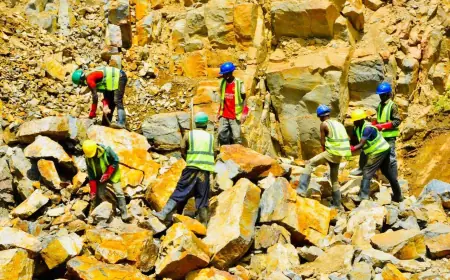
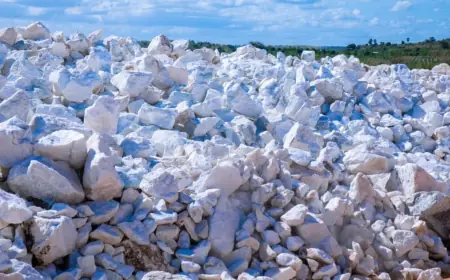
Dar es Salaam. Gold exports increased significantly by 38.5 percent to $5.2 billion in the year ending April 2026, benefiting from favourable global prices.
The Bank of Tanzania said this was a jump from the $3.7 billion in the year ending April 2025.
The surge comes amid a broader rally in the global gold industry.
Heightened geopolitical risks and macroeconomic instability worldwide have sustained gold's position as a premier safe-haven asset.
Central banks and institutional buyers globally have escalated purchases.
This international demand has kept global spot prices at elevated levels.
For major African producers like Tanzania, this pricing environment has maximised the value of domestic mineral output. It has significantly boosted national foreign exchange reserves.

“Gold exports, together with service receipts, accounted for 51.4 percent of total exports,” BoT said in its latest monthly economic review report.
Exports of goods amounted to $11. billion, up by 15.5 percent compared with the same period in 2025, largely supported by exports of gold, manufactured goods, tobacco, and coffee, the BoT added.
This performance highlights the maturity of the Tanzanian gold sector.
Regulatory updates in recent years have streamlined the domestic supply chain.
The establishment of local mineral trading hubs has brought small-scale artisanal mining into the formal economy.
This has significantly reduced the illicit cross-border smuggling of precious metals. Concurrently, major multinational mining firms have expanded operations in the country.
Improved operational efficiencies and infrastructure links have lowered production costs per ounce across the region.
“Similarly, exports of manufactured goods rose by 32 percent to $1.8 billion, supported by strong demand for iron and steel, and glassware from neighbouring countries,” the BoT said.
Exports of traditional goods increased by 8.2 percent, year‑on‑year, reaching $1.6 billion, supported by the strong performance of tobacco and coffee, both benefiting from favourable prices and volumes increase.
This offset a 9.2 percent drop in cashewnut export earnings, which was primarily due to a price decline.
On a monthly basis, goods exports increased to $815 million in March 2026 from $713.6 million in March 2025, largely driven by gold and manufactured goods.
Service receipts increased by nine percent to $7.5 billion in the year ending March 2026, compared with the corresponding period in 2025.
The growth was largely driven by higher receipts from travel and transport services.
Travel receipts increased by 9.3 percent to $4.3 billion, reflecting improved tourism performance in line with an increase in international tourist arrivals.
Similarly, transport service receipts increased to $2.7 billion from $2.4 billion, mainly on account of higher freight earnings from transit goods.

The increase in transit freight underlines the strategic role of the regional transport infrastructure.
The port of Dar es Salaam has expanded its handling capacity for landlocked neighbours.
This corridor regularly moves heavy machinery into central African mining regions and handles outbound mineral concentrates.
While the current commodity cycle provides substantial financial inflows, industry analysts emphasise long-term strategy.
Gold prices are subject to global market volatility. Sustaining this economic momentum will require converting immediate export revenues into durable domestic assets.
The ongoing diversification into manufacturing and the development of local gold refining capacities remain crucial steps for the country to capture more value within the global mining supply chain.
What's Your Reaction?
 Like
0
Like
0
 Dislike
0
Dislike
0
 Love
0
Love
0
 Funny
0
Funny
0
 Angry
0
Angry
0
 Sad
0
Sad
0
 Wow
0
Wow
0