





















































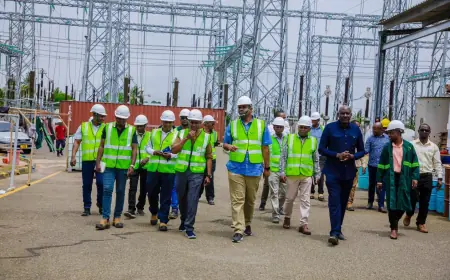








From Frontier to Gateway: How Kigoma is emerging as Tanzania's strategic link to central Africa
For Tanzania, Kigoma has now emerged as the focal point of that vision, transforming what was once regarded as a distant frontier into a potentially pivotal link in East and Central Africa's supply chains
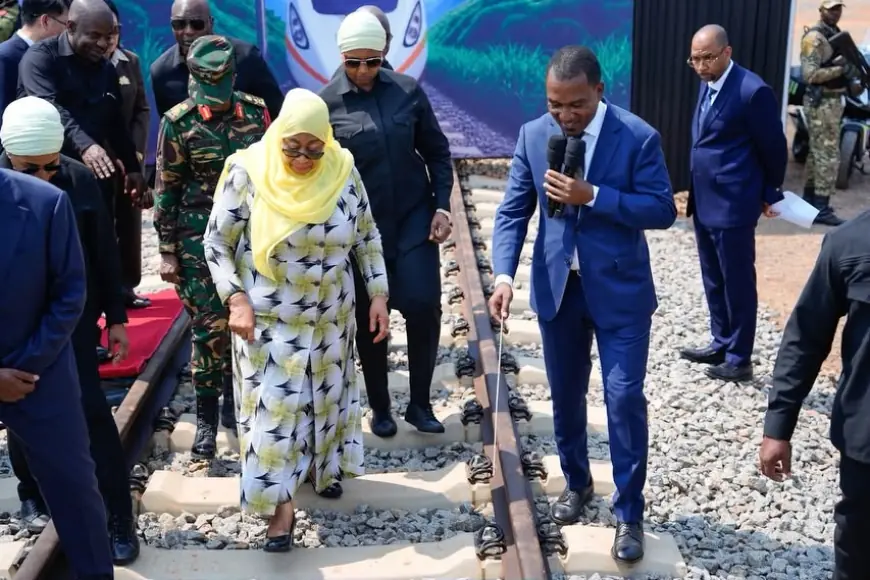
Kigoma. Deep in western Tanzania, on the shores of Lake Tanganyika, a sweeping infrastructure programme is attempting something that has eluded successive generations of policymakers.
This elusive issue involves turning one of the country's most geographically isolated regions into a strategic gateway linking the Indian Ocean with the vast markets of Central Africa.
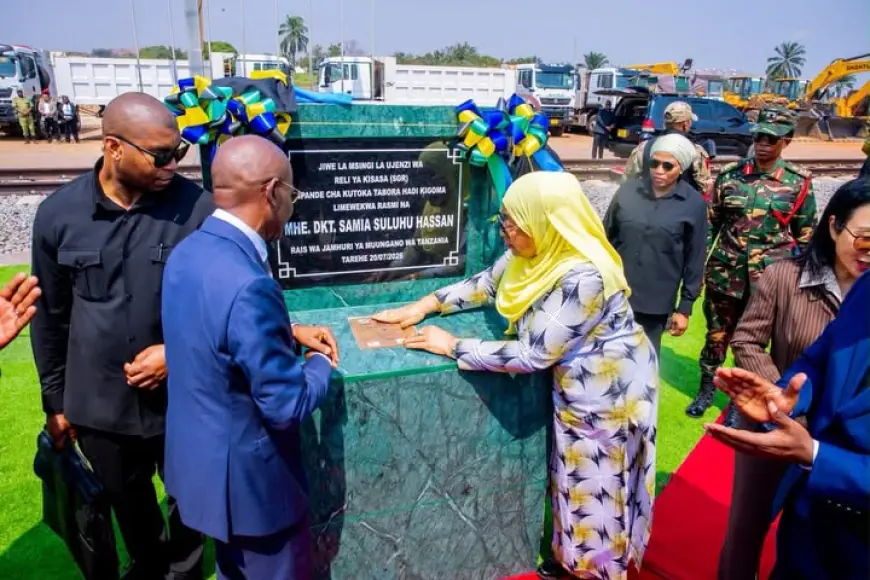
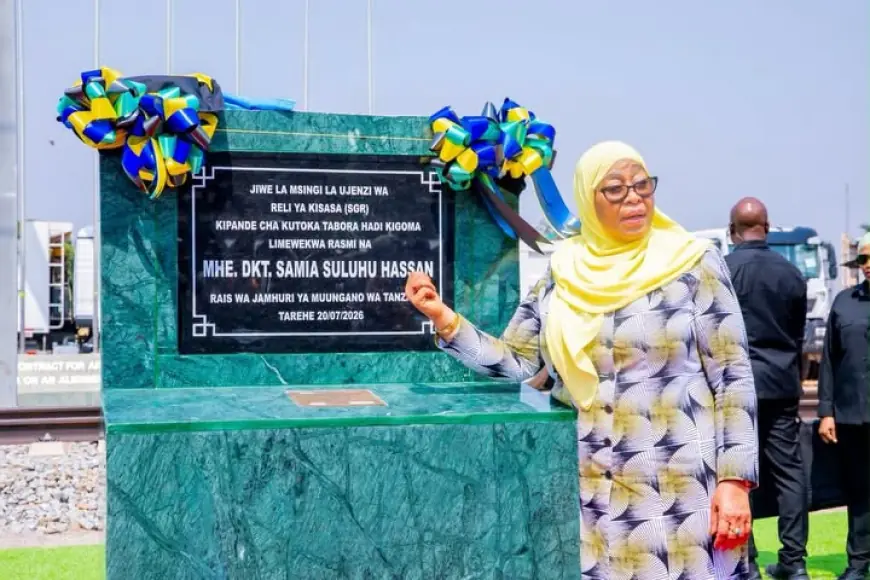
On Monday, July 20, 2026, President Samia Suluhu Hassan laid the foundation stone of the construction of a stretch of the standard gauge railway (SGR) from Tabora to Kigoma.
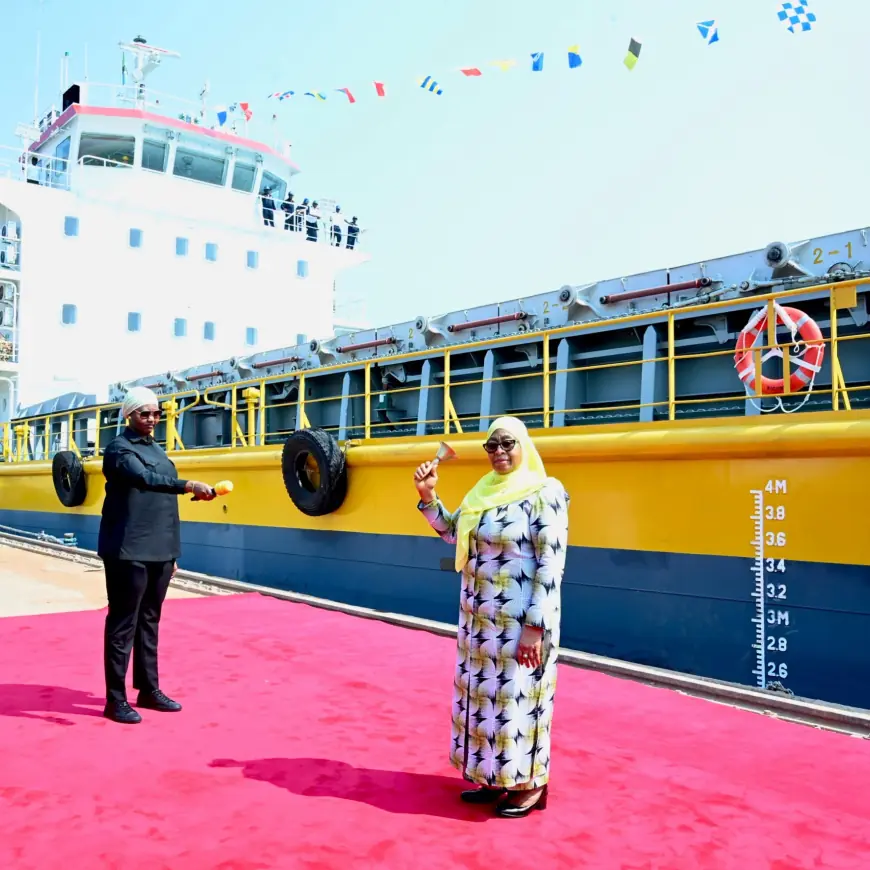
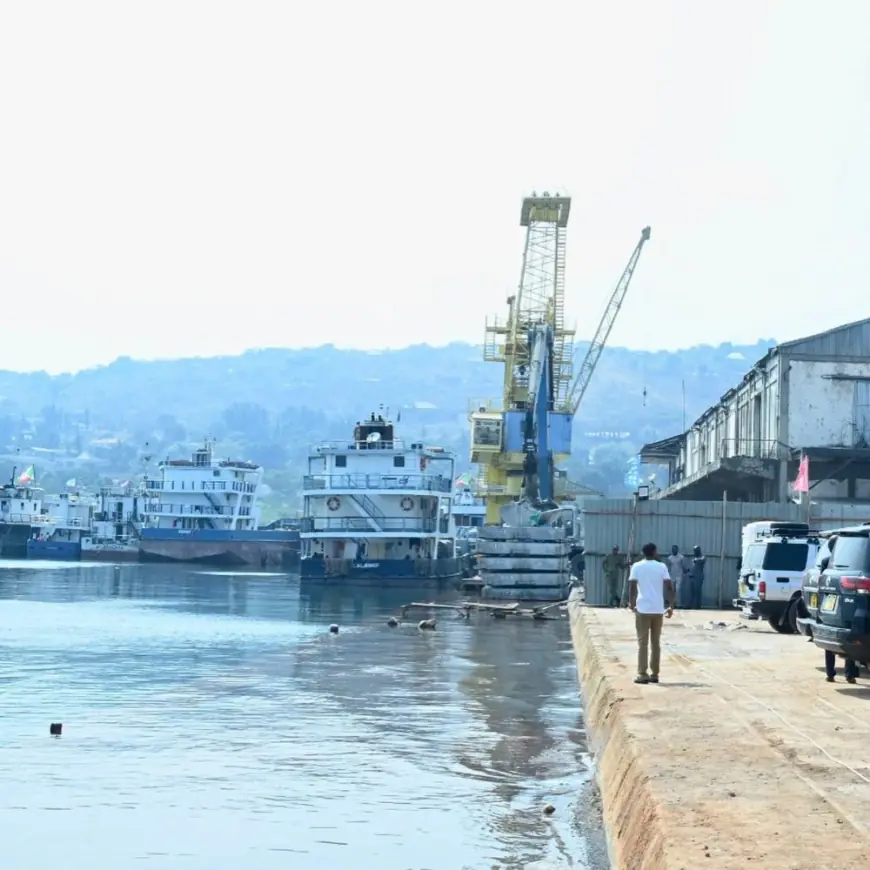
She also launched the modernization of the Kigoma lakeside port as well as overhaul and construction of cargo vessels.
Analysts say the launch signals the fact that the Tanzanian government is seeking to reshape regional trade routes and strengthen the country's position as a transport and commercial hub serving the Democratic Republic of Congo (DRC), Burundi, Zambia and the wider Great Lakes region.
The strategy reflects a growing recognition across Africa that economic competitiveness depends not only on production but also on the efficiency with which goods move between ports, factories and regional markets.
For Tanzania, Kigoma has emerged as the focal point of that vision, transforming what was once regarded as a distant frontier into a potentially pivotal link in East and Central Africa's supply chains.
It marks a striking departure from the perception that long defined the region.
Multimodal hub
For decades, Kigoma was widely viewed as the point where Tanzania's railway ended rather than where regional commerce began.
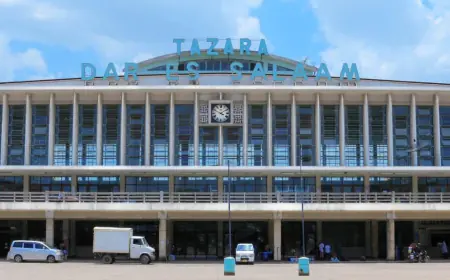
Today, policymakers increasingly see it as the country's western gateway, a multimodal transport hub capable of connecting the Port of Dar es Salaam with some of Africa's fastest-growing inland markets.
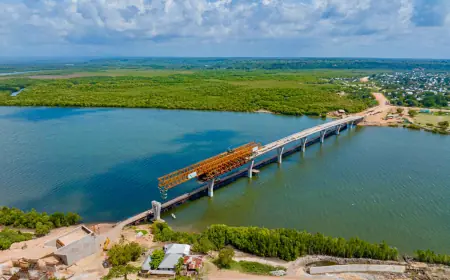
The 506-kilometre Tabora-Kigoma section of the SGR will cost approximately Sh6.23 trillion.
The project forms the sixth phase of the country's expanding SGR network and is expected to integrate western Tanzania into a modern rail corridor stretching from the Indian Ocean to the Great Lakes region.
Speaking during the groundbreaking ceremony for the railway and the launch of four new cargo vessels on Lake Tanganyika, President Samia said Kigoma would no longer be remembered as the end of the railway but as the beginning of new opportunities for trade, transport and investment.
Her remarks captured a broader policy shift that extends beyond infrastructure construction.
Rather than developing roads, railways, ports and airports independently, the government is pursuing an integrated transport strategy in which every mode complements the others.
Cargo arriving at the Port of Dar es Salaam is expected to travel by SGR to Kigoma before continuing by lake transport to Burundi and eastern DRC, creating a seamless logistics corridor designed to reduce costs and shorten delivery times.
Global trends
The approach mirrors global trends in freight transportation, where integrated multimodal networks increasingly determine the competitiveness of ports and national economies.
International studies consistently show that logistics efficiency plays a decisive role in attracting investment, improving export competitiveness and supporting industrial growth.
Kigoma's geographical position has long suggested such a role.
Bordering Burundi and lying on Lake Tanganyika, the region sits within reach of eastern DRC, one of Africa's largest consumer markets and one of Tanzania's most important trading partners.
Yet for decades, inadequate transport infrastructure limited the region's ability to capitalise on its strategic location.
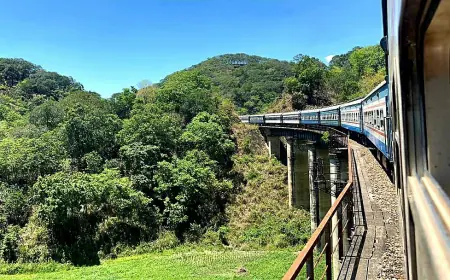
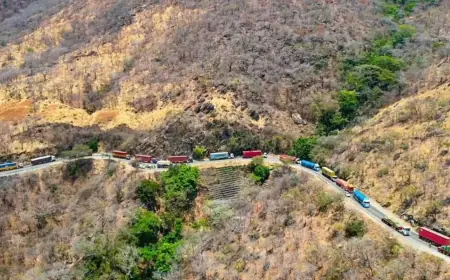
Transporting cargo between Dar es Salaam and Kigoma often depended on the ageing metre-gauge railway or long-distance road haulage, increasing freight costs and reducing the competitiveness of Tanzanian exports.
The consequences extended beyond western Tanzania.
The World Bank has repeatedly identified efficient transport corridors as essential to improving connectivity between East African ports and landlocked economies in Central Africa.
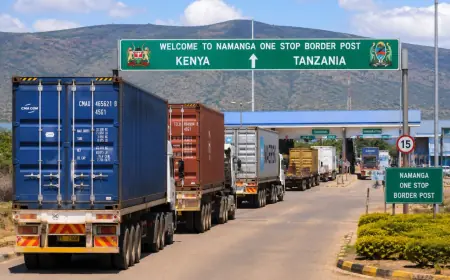
Dar es Salaam serves several neighbouring countries, including Zambia, Burundi, Rwanda, Uganda, Malawi and eastern DRC, making inland transport capacity just as important as port efficiency itself.
Completion of the SGR western corridor is therefore expected to strengthen not only Kigoma's economy but also Tanzania's broader ambition to consolidate Dar es Salaam's position as one of Africa's leading regional gateways.
According to Tanzania Railways Corporation (TRC) Director General Machibya Shiwa, the Tabora-Kigoma railway includes 411 kilometres of main line, 95 kilometres of passing loops, 27 major bridges, 75 minor bridges and 475 box culverts.
Passenger trains will operate at speeds of up to 160 kilometres per hour, while freight services will reach 120 kilometres per hour.
Such improvements are expected to reduce transport times dramatically between Kigoma and Dar es Salaam, lowering logistics costs for importers and exporters while improving supply chain reliability.
The railway also reflects a long-term commitment to Kigoma's economic future.
Plans for Kigoma Station to become Tanzania's fourth-largest railway terminal after Dar es Salaam, Dodoma and Mwanza suggest the region is expected to handle substantially larger freight volumes over the coming decades.
Maritime transport
Yet rail alone cannot unlock Kigoma's potential.
Lake Tanganyika has historically been one of Africa's most important inland waterways, linking Tanzania with Burundi, Zambia and the DRC.
Before the expansion of road networks, the lake served as a critical commercial artery connecting communities and facilitating regional trade.
Over time, however, ageing vessels and limited investment reduced its importance.
The commissioning of four new cargo vessels signals the government's intention to restore Lake Tanganyika as a major transport corridor.
The minister for Transport, Prof Makame Mbarawa, says the vessels will improve safety, reduce transport costs and expand cargo capacity between Tanzania and neighbouring countries.
They are complemented by the ongoing modernisation of Kigoma Port, including new cargo and passenger berths capable of handling greater freight volumes.
Together with the railway, these investments are expected to create a continuous transport chain from the Port of Dar es Salaam to inland Central Africa.
President Samia has directed the Ministry of Transport to work with the private sector to establish a modern ship repair facility in Kigoma.
The proposal reflects a wider economic objective.
Modern logistics hubs generate value not only through cargo movement but also through engineering services, warehousing, maintenance, cold-chain logistics and industrial activities that support transport operations.
A ship repair yard would create skilled employment while encouraging private investment in marine engineering and related industries.
Agriculture
The wider economic implications extend into agriculture, fisheries and manufacturing.
Kigoma is among Tanzania's leading producers of coffee, maize, beans, cassava, ginger and avocados.
Reliable transport is expected to lower freight costs, reduce post-harvest losses and enable farmers to access larger domestic and export markets.
Improved logistics may also encourage investment in agro-processing industries, allowing greater value to be added before products leave the region.
The fisheries sector is similarly expected to benefit from improved lake transport and expanded market access across neighbouring countries.
Kigoma Regional Commissioner Simon Sirro says cross-border trade through the Kobero and Manyovu border posts has already increased by 35 per cent over the past two years, demonstrating growing commercial activity even before completion of the SGR.
He says the railway, new cargo vessels and expanded port facilities are expected to accelerate that growth while strengthening Kigoma's position within regional supply chains.
Airport
Infrastructure investment has also extended beyond rail and ports.
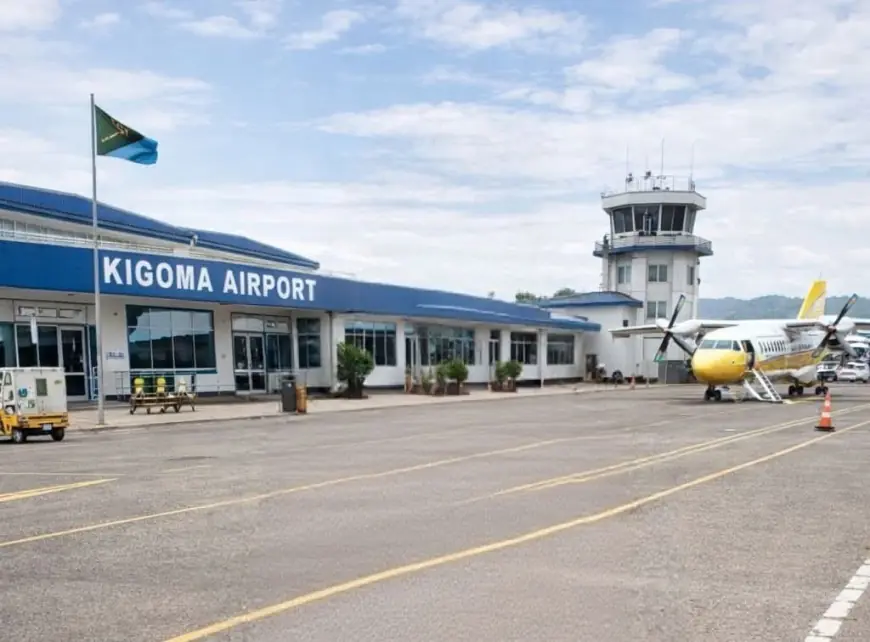
The government has invested approximately Sh51.4 billion in upgrading Kigoma Airport, improving passenger services and enhancing the movement of high-value and time-sensitive cargo.
Together with improvements in electricity access, roads and social infrastructure, these investments form part of a broader effort to make the region more attractive to investors.
The integrated approach aligns with Tanzania's Development Vision 2050, which identifies modern transport infrastructure as a cornerstone of industrialisation, regional integration and long-term economic transformation.
The vision envisages Tanzania becoming a leading logistics and commercial hub serving both East and Central Africa through efficient transport corridors that connect domestic producers with regional and international markets.
The strategy also complements the objectives of the African Continental Free Trade Area (AfCFTA), whose success depends not only on reducing tariffs but also on improving the infrastructure that enables goods to move efficiently across borders. Regional economic communities have increasingly emphasised that transport connectivity will determine how effectively African countries benefit from deeper economic integration.
Challenges nevertheless remain.
Infrastructure alone cannot guarantee economic transformation.
Sustained maintenance, efficient customs procedures, competitive freight tariffs, strong private-sector participation and political stability across regional markets will all influence whether Kigoma achieves its full potential as a logistics gateway.
Eastern DRC, one of the corridor's largest potential markets, continues to face periodic security challenges that affect trade flows.
Competition from other regional transport corridors is also intensifying as neighbouring countries continue investing in their own railways, ports and logistics infrastructure.
Even so, the scale and coordination of Tanzania's investments suggest that Kigoma is entering a markedly different chapter in its economic history.
What's Your Reaction?
 Like
0
Like
0
 Dislike
0
Dislike
0
 Love
0
Love
0
 Funny
0
Funny
0
 Angry
0
Angry
0
 Sad
0
Sad
0
 Wow
0
Wow
0