






































Power infrastructure upgrades seen as catalyst for Dar es Salaam’s economic expansion
In the past four years more than Sh280 billion has been invested in upgrading substations and transmission lines, with the stated objective of ensuring stable and dependable electricity supply for both domestic and industrial users
Dar es Salaam. The government’s ongoing investment in electricity infrastructure is increasingly being viewed as a strategic intervention with far-reaching implications for Dar es Salaam’s economy, which remains the single largest contributor to national tax revenues.
As the country’s commercial and industrial nerve centre, the city accounts for more than 70 percent of taxes collected by the Tanzania Revenue Authority (TRA), making the reliability of its power supply a matter of national economic significance.
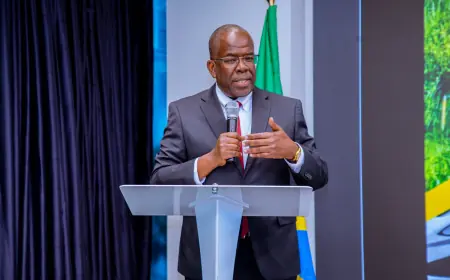
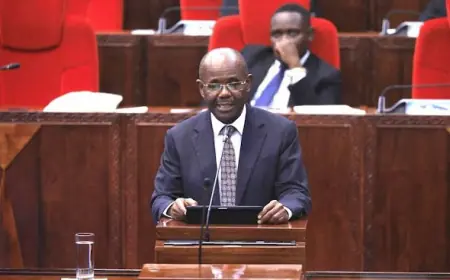
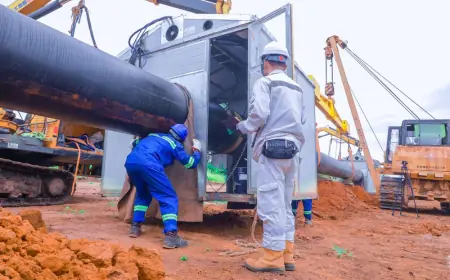
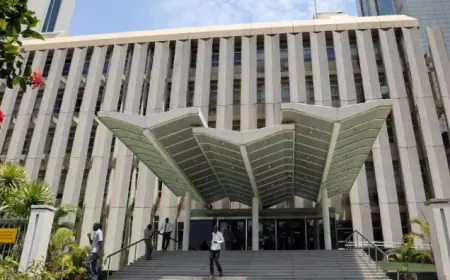
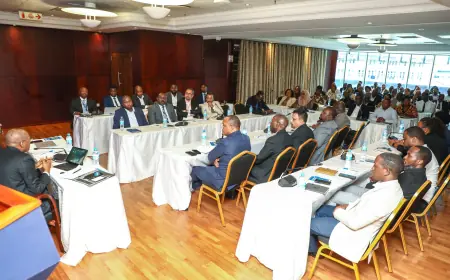
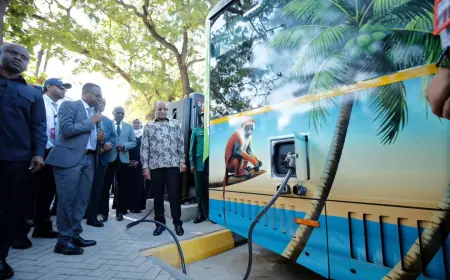
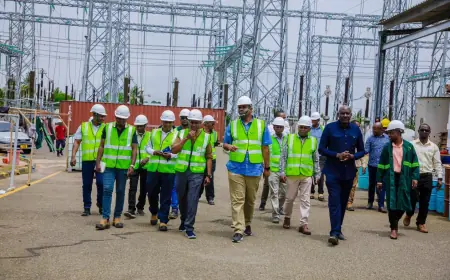
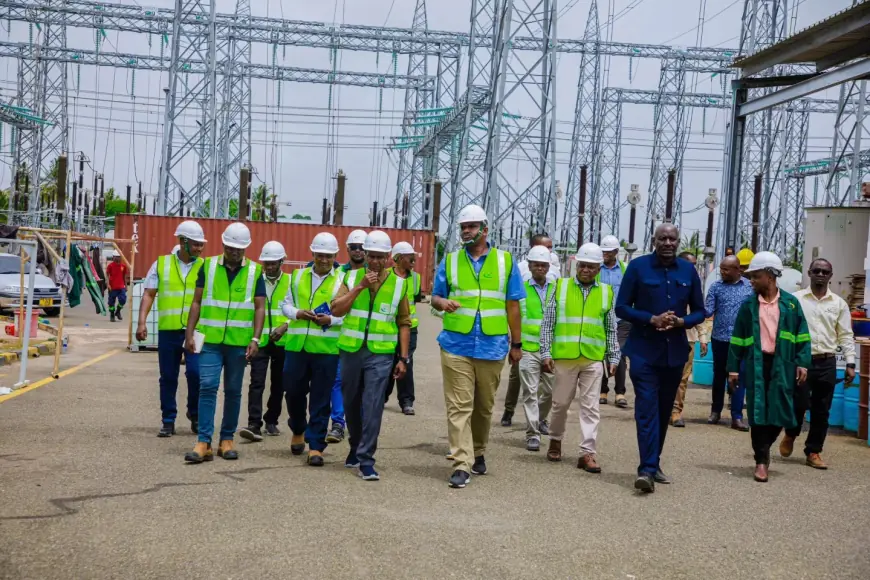
This week’s inspections of key electricity reception and cooling substations in Gongolamboto, Kinyerezi, Mabibo and Ubungo by the Minister for Energy, Mr Deogratius Ndejembi, have underscored the scale and intent of the government’s infrastructure drive.
In the past four years more than Sh280 billion has been invested in upgrading substations and transmission lines, with the stated objective of ensuring stable and dependable electricity supply for both domestic and industrial users.
Dar es Salaam is the country’s largest consumers of electricity, with average demand estimated at about 750 megawatts, while the neighbouring Coast Region consumes around 100 megawatts, largely driven by industrial activity.
Combined consumption exceeding 800 megawatts highlights not only the intensity of economic activity in the corridor, but also the vulnerability of the national economy to power disruptions in these areas.
Economists argue that improved electricity generation and infrastructure reliability could significantly ease operational pressures on Dar es Salaam’s multiple and energy-intensive industries.
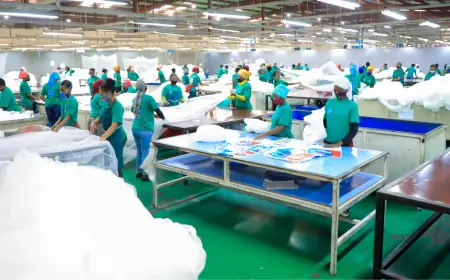
Many factories and large businesses have for years relied on costly alternative power sources, particularly diesel generators, to cushion themselves against outages.
These stop-gap measures inflate production costs, erode competitiveness and, in some cases, discourage further investment.
A more reliable grid, supported by upgraded substations such as Gongolamboto and Mabibo, is therefore expected to lower operating costs for manufacturers, logistics firms, commercial facilities and service providers whose activities are highly power-dependent.
The Gongolamboto substation upgrade, which involves replacing a 50 MVA transformer with one of higher capacity and is scheduled for completion in July 2026, is projected to improve electricity availability in industrial and fast-growing residential areas including Mbagala, Kigamboni and their surroundings.
Similarly, the Mabibo substation, expected to be completed by August 2026, is set to strengthen supply across the city.
From a fiscal perspective, analysts note that any sustained expansion of Dar es Salaam’s economy tends to have a multiplier effect on national revenue collection.
Increased industrial output, business expansion and job creation in the city translate into higher corporate taxes, value-added tax, excise duties and income taxes, ultimately strengthening state coffers.
In this sense, investments in power infrastructure are not merely service-delivery projects but foundational economic interventions.
However, economists caution that improved electricity generation must be matched by equally robust distribution and supply systems.
Without addressing bottlenecks in transmission, maintenance and last-mile connectivity, the benefits of increased capacity risk being diluted.
They also stress the importance of timely project completion, a point echoed by the Energy minister in his call for contractors to adhere strictly to implementation schedules.
What's Your Reaction?
 Like
0
Like
0
 Dislike
0
Dislike
0
 Love
0
Love
0
 Funny
0
Funny
0
 Angry
0
Angry
0
 Sad
0
Sad
0
 Wow
0
Wow
0