







































































5G expansion, mobile money growth reshape Tanzania’s communications sector
The latest Tanzania Communications Regulatory Authority (TCRA) Communications Sector Performance Report for the quarter ending March 2026 shows that while telecom subscriptions, internet usage and mobile money services continued to grow strongly, usage of conventional voice and SMS services declined, underlining changing consumer behaviour across the country

Dar es Salaam. Tanzania’s communications sector is undergoing a profound transformation, with consumers increasingly shifting from traditional voice calls and text messages to internet-based services, video streaming, mobile money and digital platforms.
The latest Tanzania Communications Regulatory Authority (TCRA) Communications Sector Performance Report for the quarter ending March 2026 shows that while telecom subscriptions, internet usage and mobile money services continued to grow strongly, usage of conventional voice and SMS services declined, underlining changing consumer behaviour across the country.
The report indicates that total telecommunications subscriptions rose by 4.6 percent to 111.9 million from 106.9 million recorded in December 2025.
Internet subscriptions also increased by 1.5 percent to 58.9 million, while total data consumption jumped by 15.3 percent to 932 petabytes during the quarter.
The surge in data usage came despite a decline in traditional communication services. Local voice traffic fell by 3.8 percent to 45.4 billion minutes, while SMS traffic dropped by 4.7 percent to 55.1 billion messages.

The figures point to a market increasingly dominated by internet-based communication. Consumers are now relying more heavily on social media platforms, messaging applications, video streaming and other over-the-top services that use data rather than conventional voice and SMS channels.
TCRA data shows that YouTube emerged as the most heavily used online platform in the country during the quarter, followed by TikTok, Facebook, Instagram and WhatsApp.
The trend suggests that video content is becoming one of the strongest drivers of internet demand in Tanzania.
The rapid growth in data consumption has coincided with expanding broadband infrastructure and increasing smartphone ownership.
“The number of smartphones connected to operators’ networks grew by 4.6 percent to 29.8 million during the quarter,” the report reads in part.
Even so, smartphones account for only 42.5 percent of the population, highlighting both the progress achieved and the substantial room for further growth.
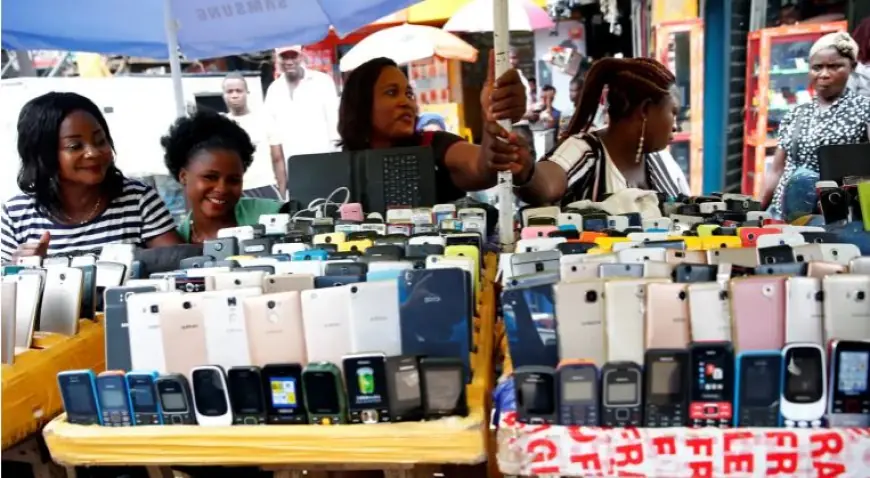
“More than 58.5 million feature phones remain active on networks, indicating that a large segment of the population has yet to fully participate in the digital economy,” the report reads.
The report identifies low smartphone penetration as one of the key obstacles to broader uptake of digital services.
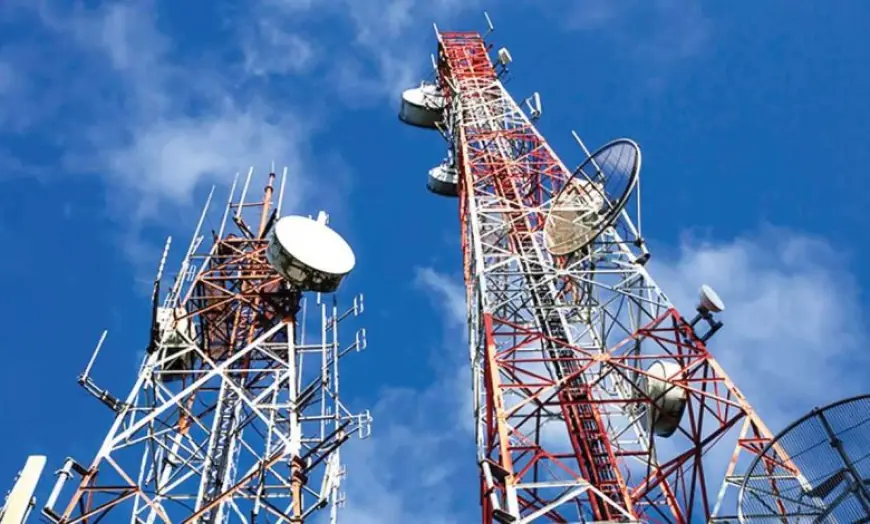
Network operators have continued investing heavily in infrastructure to support growing demand.
“The number of telecommunications towers increased to 10,084, while the rollout of advanced technologies accelerated,” the report says.
Particularly notable was the expansion of fifth-generation mobile technology.
“The number of 5G base stations rose by 44 percent to 1,804, while 5G population coverage expanded from 30.13 percent to 32.83 percent,” the report reads in part.
Geographical coverage increased from 10.54 percent to 11.04 percent.
Fourth-generation networks now cover 94.32 percent of the population, while 3G coverage stands at 93.94 percent, giving operators a strong platform for broadband growth.
The figures show operators increasingly positioning themselves as digital service providers rather than traditional telecommunications companies.
Another major trend emerging from the report is the growing role of machine-to-machine communications, a key building block for the Internet of Things (IoT).
Machine-to-machine subscriptions rose by 4.4 percent to more than 1.18 million connections.
Such services allow devices to communicate automatically without human intervention and are increasingly used in sectors such as logistics, transport, utilities, agriculture, security and financial services.
TCRA said the growth signals gradual progress in digital automation and IoT deployment across the economy.
Mobile money services also continued their remarkable expansion, reinforcing the close relationship between telecommunications and financial inclusion.
Mobile money accounts increased by 5.9 percent to nearly 81 million, while transactions rose by 7.4 percent during the quarter.
Vodacom’s M-Pesa maintained its market leadership with 40.97 percent of subscriptions, followed by Mixx by Yas with 31.02 percent and Airtel Money with 17.79 percent.
The sustained growth of mobile money demonstrates how telecommunications networks have evolved into critical financial infrastructure, enabling payments, transfers, savings and business transactions across the country.

Meanwhile, operators appear to be relying increasingly on bundled services to attract and retain customers.
The report shows that 99.9 percent of telecom users subscribe to bundles rather than paying standard tariffs. Industry average bundled voice rates remained significantly lower than basic pay-as-you-go charges, reflecting intense competition among operators.
The internet market itself remains highly competitive.
Vodacom led mobile internet subscriptions with approximately 33 percent market share, followed by Yas, Airtel and Halotel.
Fixed broadband services also continued expanding, although mobile broadband remains dominant.
More than 34.2 million subscriptions were connected through mobile broadband networks compared with about 508,000 fixed internet subscriptions.
The report further shows that Tanzania possesses significant unused international internet capacity.
Of the country's 17,690 gigabits per second of international bandwidth capacity, only about 16.5 percent is currently activated, leaving substantial room for future broadband expansion.
Industry analysts say the combination of rising data consumption, growing mobile money adoption, expanding 4G and 5G coverage, and increasing use of digital platforms reflects a broader shift in how Tanzanians communicate, transact and consume information.
The latest figures reinforce a trend observed over several years: telecommunications growth is no longer being driven primarily by voice calls and text messages but by broadband connectivity, digital content, mobile financial services and emerging technologies.
As Tanzania advances towards its Vision 2050 digital economy ambitions, the communications sector is increasingly becoming the backbone of commerce, innovation, government services and everyday life.
What's Your Reaction?
 Like
0
Like
0
 Dislike
0
Dislike
0
 Love
0
Love
0
 Funny
0
Funny
0
 Angry
0
Angry
0
 Sad
0
Sad
0
 Wow
0
Wow
0