
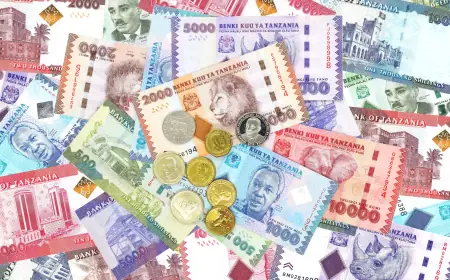




































































Tanzania’s inflation enters a new phase with services emerging as a key driver
For years, the main factor determining whether household budgets came under pressure was the harvest, with fluctuations in crop yields often dictating the direction of food prices and, consequently, overall inflation but that pattern is now changing as a broader range of economic forces begins to influence consumer prices

Dar es Salaam. A structural change is quietly taking place in Tanzania’s economy, altering how increases in the cost of living are felt by households across the country.
For years, the main factor determining whether household budgets came under pressure was the harvest, with fluctuations in crop yields often dictating the direction of food prices and, consequently, overall inflation.
That pattern is now changing as a broader range of economic forces begins to influence consumer prices.
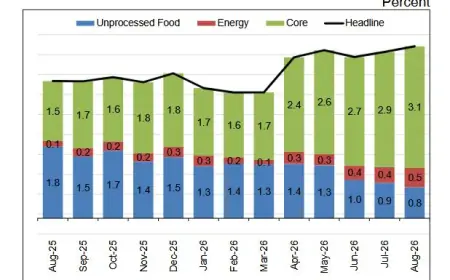
According to the latest Monthly Economic Review published by the Bank of Tanzania on October 6, 2026, headline inflation rose slightly to 4.3 percent in August 2026, from 4.2 percent in July and 3.4 percent in August 2025.
Although the rate remains within the central bank’s target range of 3 to 5 percent and meets the inflation convergence benchmarks of both the East African Community (EAC) and the Southern African Development Community (SADC), the composition of inflation has changed significantly.
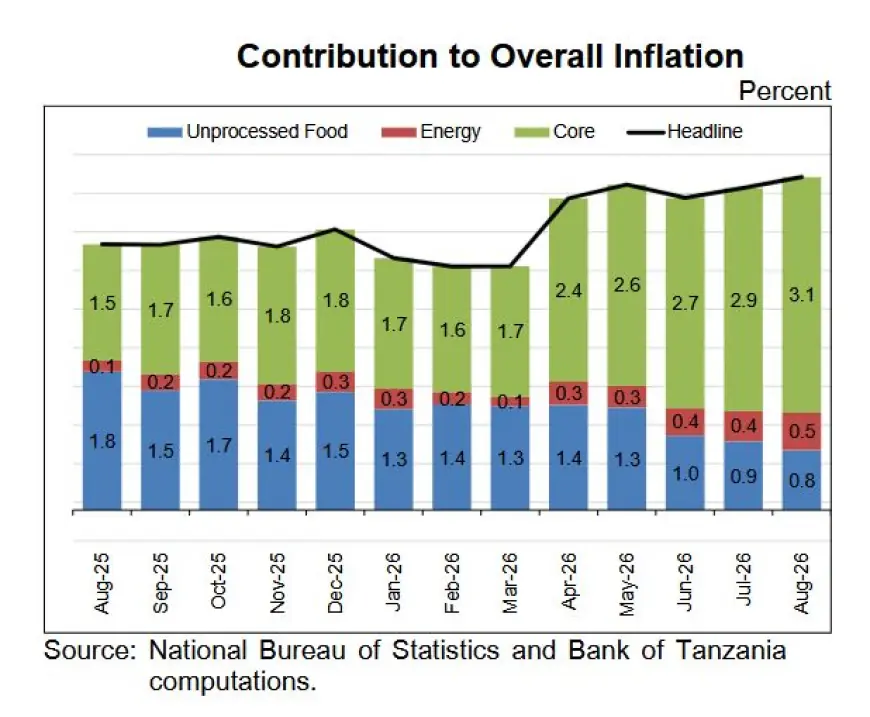
Core inflation, which excludes more volatile items such as unprocessed food, energy and utilities, contributed 3.1 percentage points to the 4.3 percent headline rate in August. A year earlier, it contributed only 1.5 percentage points.
At the same time, the contribution of unprocessed food fell sharply, from 1.8 percentage points in August 2025 to 0.8 percentage points in August this year.
A changing inflation pattern
The shift marks an important change in the way price pressures are developing in Tanzania.
In largely agricultural economies, inflation often follows the farming cycle.
Poor rains, drought or disruptions to the movement of crops can quickly push up the prices of staple foods, while good harvests and improved supplies tend to bring them down.
Recent agricultural conditions illustrate that pattern.
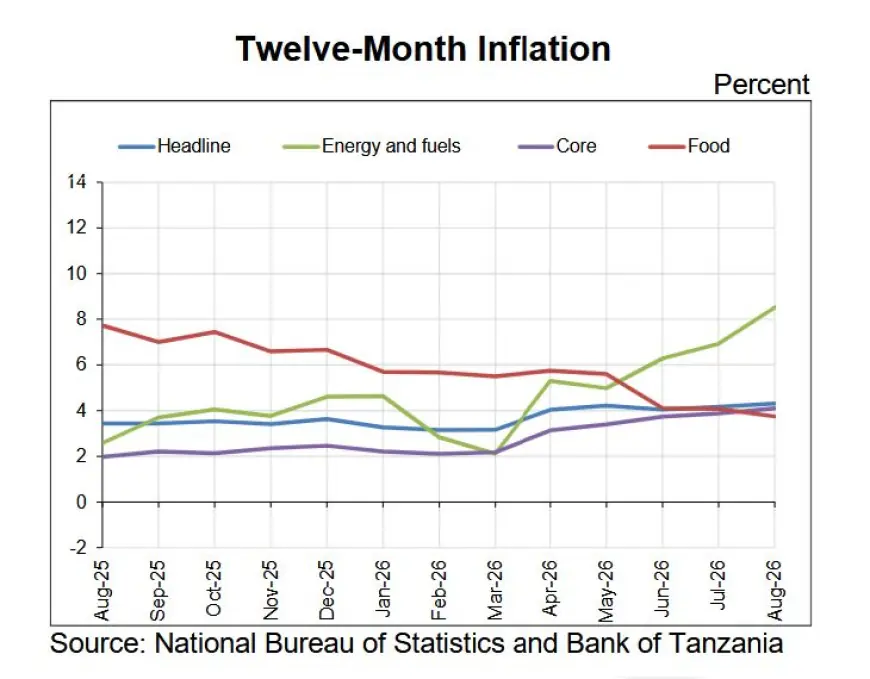
Food inflation fell to 3.7 percent in August 2026, from 4.1 percent in July and 7.7 percent in August 2025.
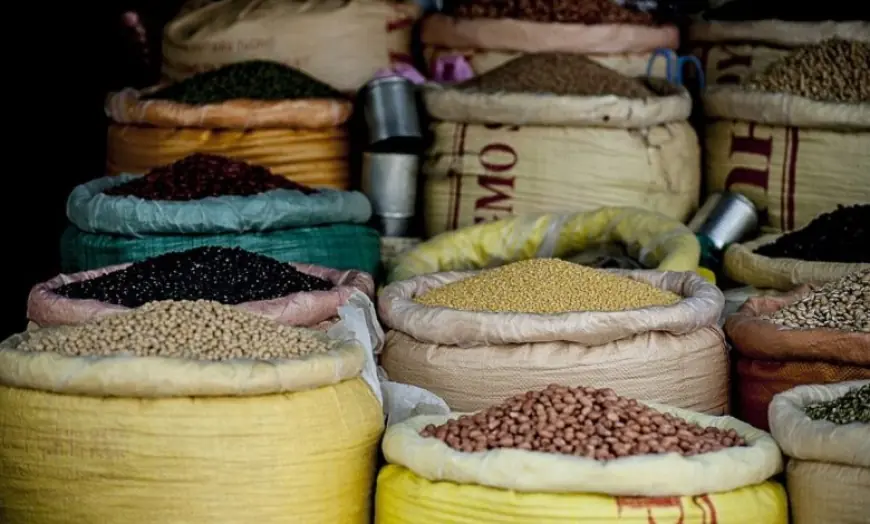
Favourable weather and stronger domestic supplies helped reduce the prices of major staples such as maize, rice and beans, with market prices remaining below those recorded a year earlier.
Under normal circumstances, such a sharp decline in food inflation would be expected to pull overall inflation down.
But this time, stronger price pressures elsewhere in the economy have offset much of the relief coming from food.
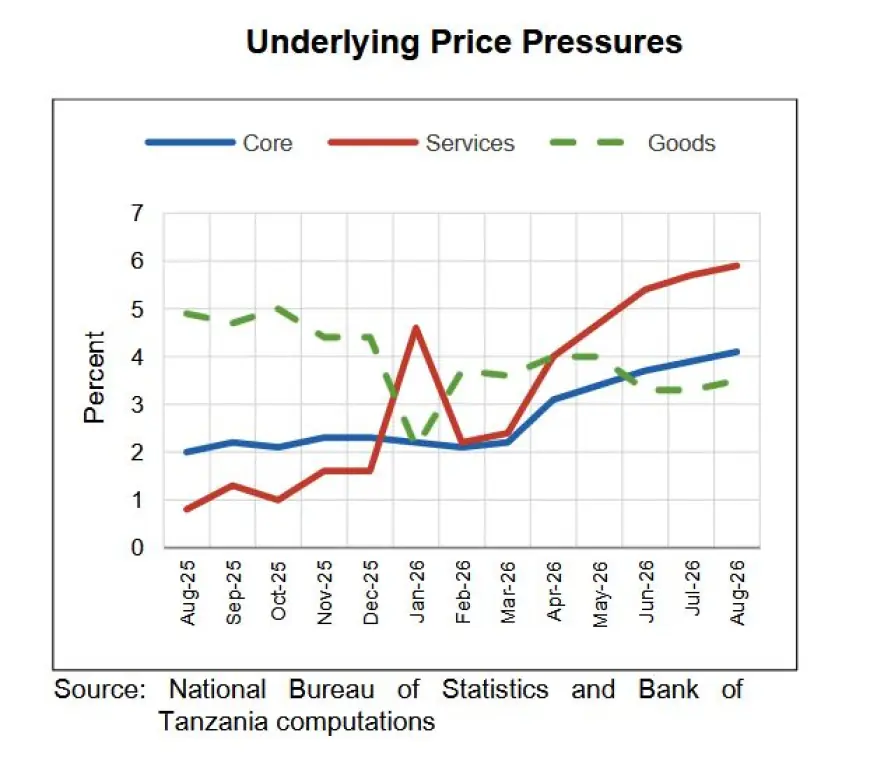
Core inflation has risen steadily since March, reaching 4.1 percent in August, compared with 3.9 percent in July and 2.0 percent in August 2025.
One of the main factors behind the increase has been the delayed impact of earlier rises in global and domestic fuel prices.
Higher fuel costs increased the operating expenses of transport providers, eventually feeding through into fares for buses, taxis and motorcycle taxis, commonly known as Boda bodas.
Transport is an important input into almost every part of the economy, meaning higher fares can raise the cost of moving workers, goods and services.
That pressure has subsequently spread into other areas of the service economy.
Services inflation climbed to 5.9 percent in August 2026, from just 0.8 percent a year earlier.
The increases were not limited to transport. Higher prices were also recorded in areas such as information and communication, private education, accommodation and restaurants.
Energy, fuel and utilities inflation also rose to 8.5 percent in August, the highest level since October 2024.
The increase is notable because petrol and diesel prices in major commercial centres such as Dar es Salaam were below their June peak.
The pressure instead came partly from other domestic energy sources, particularly charcoal and firewood, demonstrating how rising energy costs can affect households even when conventional pump prices moderate.
What the shift means
The growing contribution of core inflation does not necessarily point to an economic crisis.
Rather, it suggests that a wider range of domestic economic activities is now influencing the cost of living.
As the economy becomes more urbanised and more people depend on transport, commercial services and formal markets, prices are increasingly influenced by operating costs, consumer demand and labour expenses alongside agricultural production.
This also changes the challenge facing monetary policymakers.
When inflation is mainly caused by poor food production, monetary policy has limited power to address the underlying problem.
Higher interest rates cannot produce rainfall, increase crop yields or repair damaged roads.
But when inflation is increasingly driven by services and other core components, monetary policy becomes more relevant because persistent price increases can reflect stronger demand, rising operating costs and expectations that prices will continue increasing.
This makes core inflation particularly important for the Bank of Tanzania to monitor.
Policy challenges ahead
The changing inflation structure presents both opportunities and risks.
The moderation in food prices provides welcome relief to households, particularly lower-income families that spend a large proportion of their income on food.
Continued adequate grain supplies could help keep food inflation relatively contained in the near term.
The greater concern, however, is the persistence of service prices.
Once businesses raise fares, school fees, restaurant prices or charges for other services to cover higher operating costs, those prices do not necessarily fall when the original cost pressures ease.
This can make core inflation more persistent than food inflation.
The risk is therefore that temporary increases in fuel and other input costs become embedded in broader prices and eventually influence wage and pricing decisions across the economy.
External developments remain another source of uncertainty.
Global oil prices could come under renewed pressure from geopolitical tensions in the Middle East, while adverse weather conditions associated with El Niño could disrupt domestic food supplies and distribution.
A renewed increase in international fuel prices would therefore pose a particular risk to Tanzania because of the strong link between energy, transport and services.
Tanzania’s experience is consistent with a broader pattern seen in emerging economies as they urbanise and become more commercially integrated.
As households move away from predominantly subsistence-based consumption towards greater reliance on transport, processed goods and commercial services, inflation becomes less closely tied to agricultural harvests and more influenced by services, labour, energy and business costs.
Tanzania appears to be moving in that direction.
The headline inflation rate remains within regional and domestic targets, but the forces behind it are changing.
Maintaining price stability will therefore require more than ensuring adequate food supplies. Transport efficiency, energy costs, infrastructure, productivity and the broader cost of providing services are becoming increasingly important parts of Tanzania’s inflation equation.
What's Your Reaction?
 Like
0
Like
0
 Dislike
0
Dislike
0
 Love
0
Love
0
 Funny
0
Funny
0
 Angry
0
Angry
0
 Sad
0
Sad
0
 Wow
0
Wow
0