

















































A great week for Tanzania's natural gas exploration
A new discovery at Mnazi Bay and a decisive shift of operatorship to the state, which comes with, promise, but so are the risks

Dar es Salaam. In the space of 48 hours, Tanzania has announced a fresh gas discovery in the south and handed its national oil company licences over four exploration and development blocks. Together, the two events mark one of the most consequential weeks for the country's upstream sector in a decade.
Kasa: the first discovery in a decade
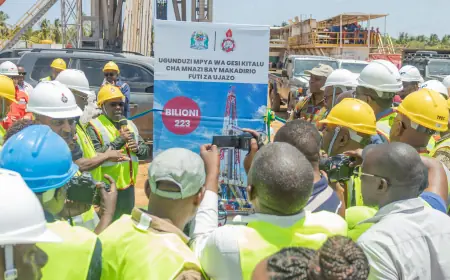
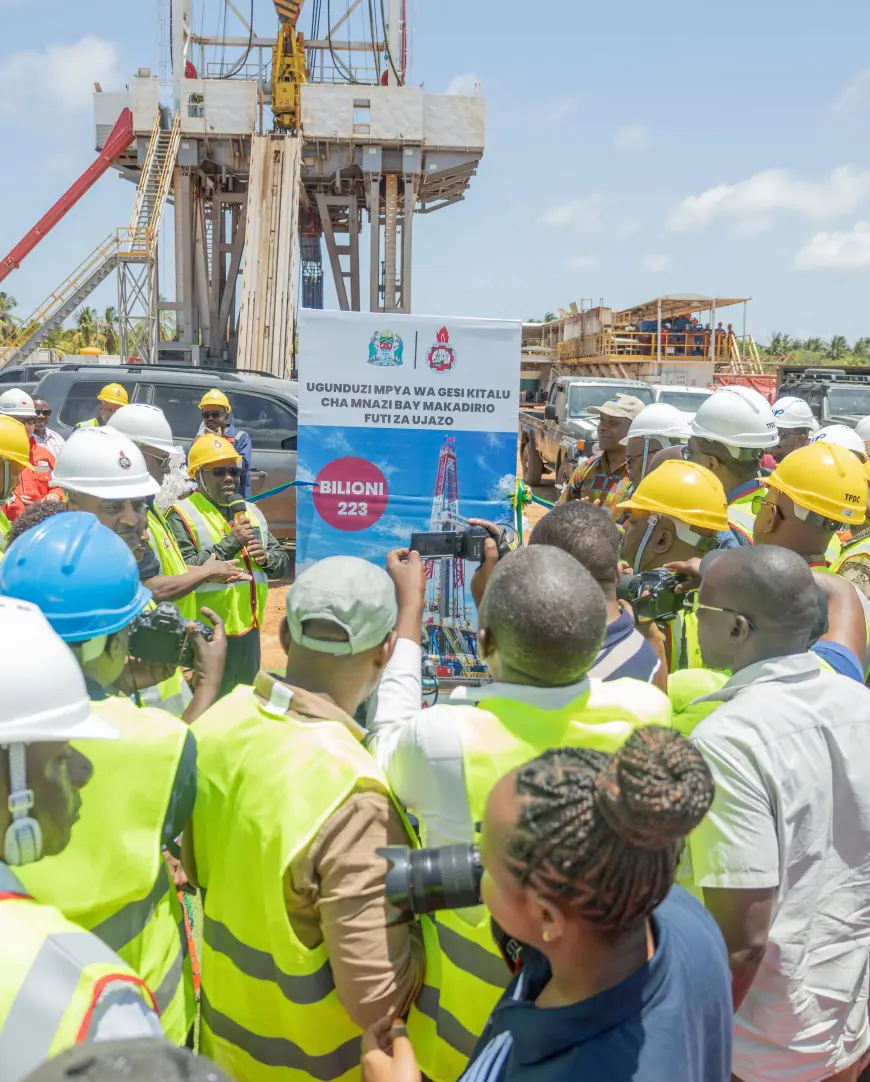
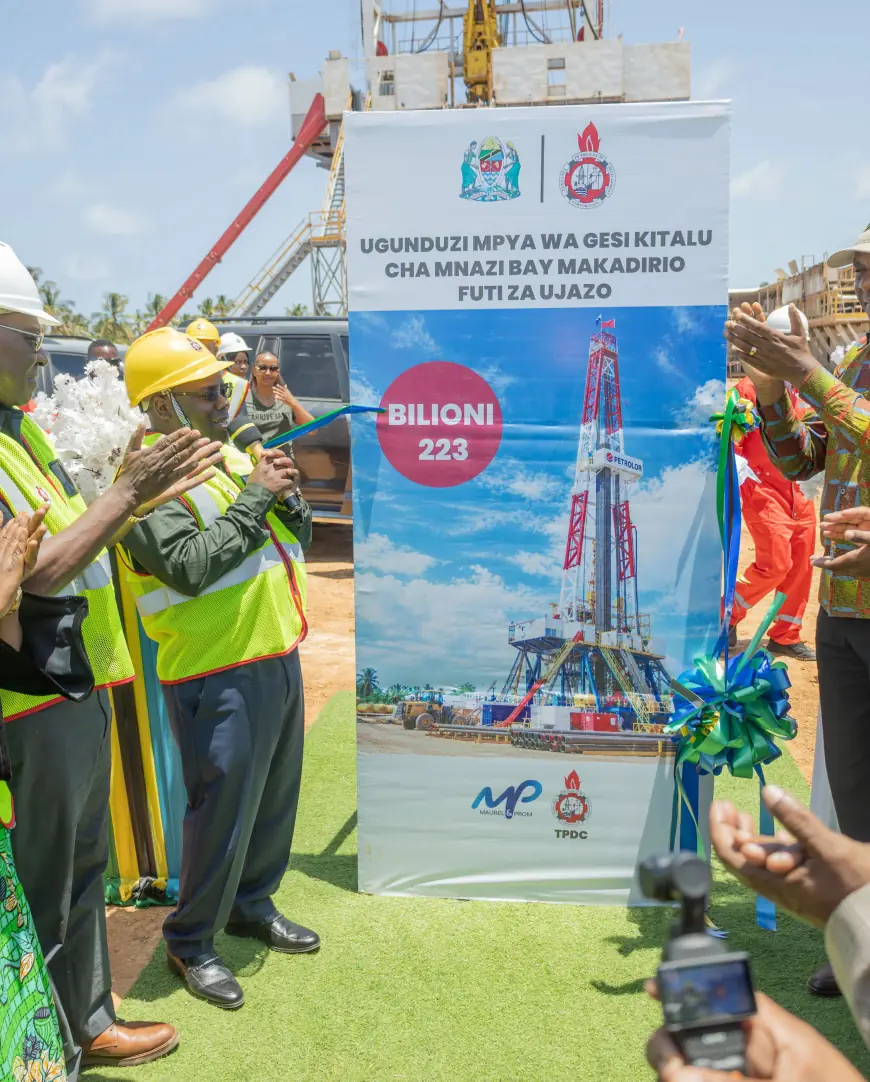
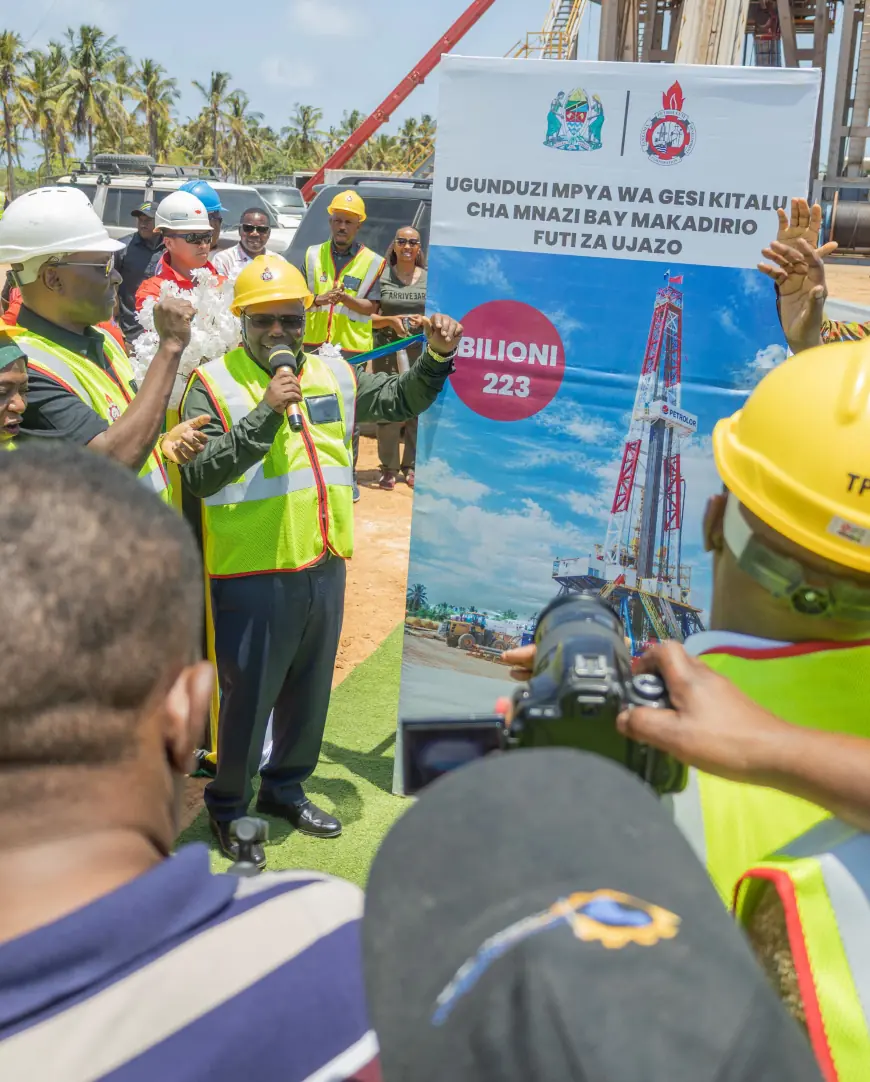
On October 27, 2026 the minister for Energy Dr Juma Homera announced a discovery of 223 billion cubic feet (bcf) of natural gas at the Kasa well in the Mnazi Bay block, Mtwara Region.
He described it as a major moment for the sub-sector.
Dr Homera said it was the first discovery since 2015 and the first made by TPDC and its partner in 10 years.
Kasa was the exploration leg of a three-well campaign.
Two of the wells are production wells at an already operating field, while the third is an exploration well.
The project is valued at Sh235 billion, with two wells (MB-5 and MS-2) aimed at raising output and Kasa-1 expected to open a new field.
The development wells are arguably the more immediate commercial news.
Maurel & Prom, which holds 60 percent of the licence, reported test rates of 47 and 50 million cubic feet a day for MB-5 and MS-2, lifting the field's production potential to nearly 200 million cubic feet a day against about 125 million in the first half of July.
That is a significant cushion for a power system that leans heavily on gas.
Putting 223 bcf in perspective
The figure needs context. Tanzania's reserves are officially put at 57.54 trillion cubic feet, so Kasa is equivalent to roughly 0.4 percent of that total.
Measured against Mnazi Bay itself it looks far larger.
TPDC officials have previously put recoverable reserves at the block at 641 bcf, so Kasa would add around a third if the volume is recoverable.
Whether 223 bcf is gas in place or recoverable gas was not clear from the announcement, and this distinction will matter.
When the Kasa campaign was in progress, Maurel & Prom had not published results for the Kasa-1X well.
Independent verification and a formal reserves assessment will be the real test.
TPDC takes the operator's seat
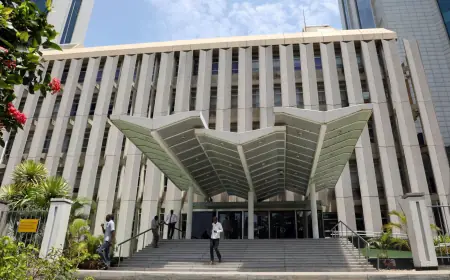
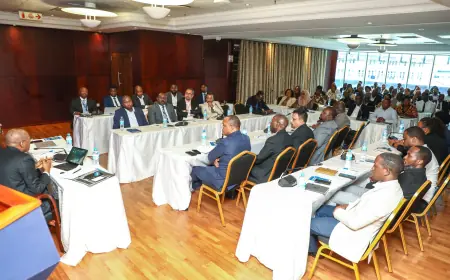
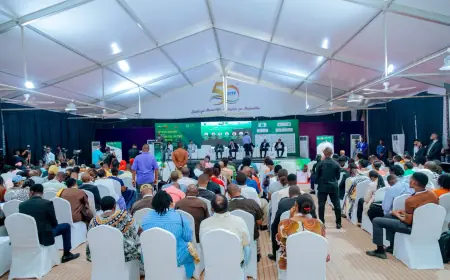
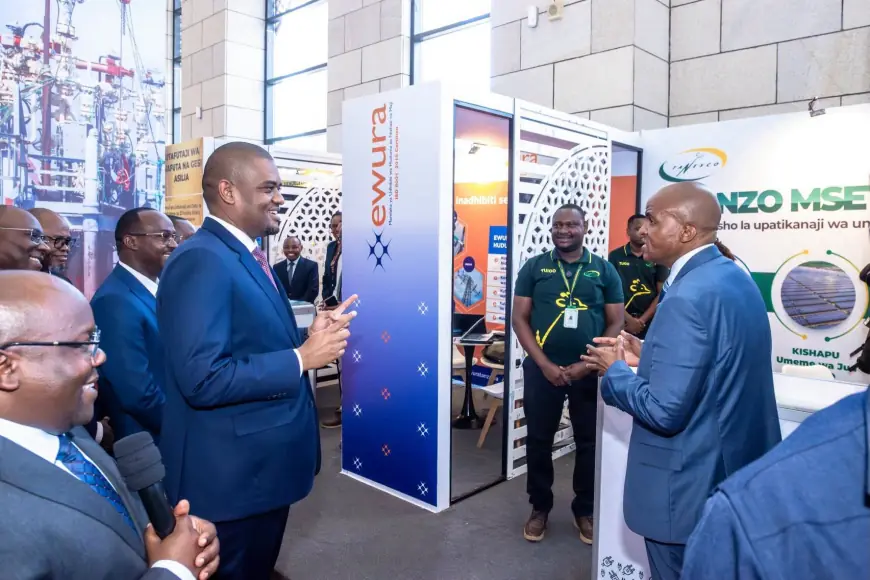
The following day, on July 28, 2026 at the Julius Nyerere International Convention Centre, TPDC was formally granted licences covering Mnazi Bay North, West Songo Songo, Eyasi-Wembere and Lindi–Mtwara.
The guest of honour was Vice-President Deogratius Ndejembi.
TPDC's managing director, Mussa Makame, welcomed the move as a way to deepen the corporation's role in managing the resource.
He cautioned that success should be measured not by discoveries alone but by how far they translate into economic opportunity for citizens, with Tanzanians given priority in services and supply chains.
The ministry of Energy’s Permanent Secretary [Oil and Gas], Dr James Mataragio, said the government decided to grant the licences because of the heavy investment already made in the sector.
He added that foreign companies have long developed these blocks, while the state is now better placed to strengthen TPDC's participation.
Taken together with TPDC's rising stake at Mnazi Bay, where it lifted its interest from 20 percent to 40 percent for $23.6 million, the direction of travel is plain: the state intends to be an operator and decision-maker, not merely a passive partner.
Songo Songo: the sternest test
Dr Mataragio said the operating Songo Songo block will be transferred to TPDC from PanAfrican Energy, which has run the field since 2004 under a 2001 production sharing agreement.
Dr Mataragio said the handover process is under way and is expected to be complete on 29 November 2026.
The timing follows a dispute. Tanzania granted TPDC a 25-year development licence for Songo Songo in 2001, expiring on October 10, 2026.
Orca Energy, the Canadian-listed parent of PanAfrican Energy, filed arbitration claims against the government and TPDC, alleging among other things that TPDC failed to apply properly for an extension.
Orca values its damages claim at more than $1.2 billion.
In April, Orca agreed to sell its Tanzanian business to Taifa Gas Tanzania and Amber Energy Investment for a nominal $10, citing contingent liabilities.
That transaction remains clouded. The buyers are Taifa Gas (49%) and Amber (51%). TanzaniaInvest reports that the two buyers lodged an appeal on 20 October against a block on the sale.
The October timetable was tight. According to TanzaniaInvest, the Minister of Energy issued a notice of intention to grant an extension on October 1, and PanAfrican Energy has rejected the proposed terms as uneconomic.
The operator says it will keep running the field under existing terms while operations pass to TPDC and Songas Limited, and intends to stop operating by November 29, 2026, or earlier if both are ready.
The government’s date therefore coincides with the operator’s own.
The licence signed this week is for West Songo Songo, a separate block where TPDC is still assessing commerciality.
The producing Songo Songo field is governed by the expired development licence and the extension process that followed.
It is not clear which legal instrument will give TPDC authority to run the producing field after November 29.
The stakes are national. Orca says the field supplies about 54 percent of daily gas output.
Beyond the south: frontier oil and the next gas wave
Eyasi-Wembere. TPDC's flagship oil frontier, in the Rift Valley, has been explored since 2015 at a cost of Sh47.47 billion, fully financed by TPDC, and shares geological similarities with Uganda's Lake Albert and Kenya's Turkana basins.
TPDC notes that the basin lies close to the Hoima–Tanga oil pipeline, which would ease transport of any crude.
A second phase is adding 914.7 line-kilometres of 2D seismic.
Mr Makame says a 3D survey is the next step.
The caveat remains: no commercial quantities of oil have yet been discovered.
Lindi–Mtwara. 3D seismic is being acquired over roughly 736 square kilometres.
The ministry says acquisition in Eyasi-Wembere and Lindi–Mtwara should be completed by December 2026.
Ntorya. Not part of this week's licences, but central to the story.
Production is projected for early 2027 at about 40 million cubic feet a day.
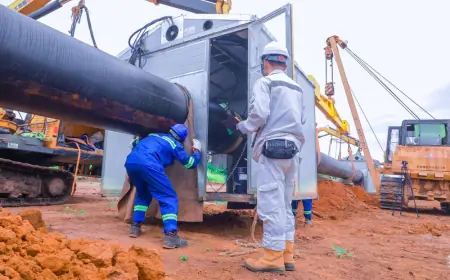
The 35-kilometre Ntorya–Madimba pipeline is 70 percent complete and due by December 2026.
The operator's 3D seismic interpretation suggests 3.45 trillion cubic feet of potential, up from 1.87 trillion previously reported.
A shadow hangs over it, however: in August, Ndovu Resources issued a notice of dispute over alleged breaches by the operator of the farm-out and joint operating agreements.

The bigger picture: offshore giants and onshore ambition
Tanzania's large offshore discoveries remain the long-term prize, with Equinor's Block 2 estimated at more than 20 trillion cubic feet and Shell's Blocks 1 and 4 at 16 trillion.
The LNG project they underpin is a $42 billion venture, led by Shell and Equinor, whose negotiations have stretched across a decade.
Onshore gas serves a different purpose, and this week's developments sit squarely in that category: cheaper power, industrial feedstock and energy security at home, delivered through TPDC and a pipeline network.
The two tracks are complementary rather than competing, but they compete for state attention, capital and technical talent.
What to watch
Capability. Holding a licence is not the same as operating a field.
Songo Songo is a producing asset feeding power stations and industry, with no margin for a stumble.
TPDC's record in exploration, notably Eyasi-Wembere, is encouraging.
Running a large producing operation is a different discipline.
Investor confidence. International companies weighing Tanzanian acreage will read the Songo Songo dispute, ICSID claims and the contested sale closely.
How the transition is handled will shape the cost of capital for the next licensing round.
Verification of Kasa. Volumes, recoverability, commercial timing and the route to market all need to be set out clearly.
Delivery. Dates for the Ntorya pipeline, the seismic programmes and the handover are tight, and several have slipped before.
Local content. The pledge to prioritise Tanzanians is welcome. It will count only if it is backed by measurable targets and capacity-building.
The week has handed Tanzania a discovery, a licence portfolio and a mandate.
It is a good week. The test of whether it becomes a good decade lies in operations over the next few months.
What's Your Reaction?
 Like
0
 Dislike
0
 Love
0
 Funny
0
 Angry
0
 Sad
0
 Wow
0