













































































Tanzania's tourism boom faces a new test
Tanzania tourism is experiencing structural shifts that reshape its growth and necessitates changes in how to market and promote the destination

Dar es Salaam. Tanzania’s tourism industry is being reshaped by changing source markets, a growing preference for organised travel and a widening gap between the behaviour of visitors to the mainland and Zanzibar.
This has revealed an evolving market whose future performance will depend increasingly on how effectively the country converts international interest into longer stays and greater economic value.
The changes emerge from the latest International Visitors’ Exit Survey Report, published this month by the National Bureau of Statistics (NBS) and the Bank of Tanzania (BoT), which examines the origins, demographics, travel arrangements and activities of international visitors.
While established markets continue to anchor demand, the findings point to gradual diversification, rising dependence on package tours and a tourism market increasingly characterised by first-time visitors, particularly in Zanzibar.
These developments matter because tourism performance is determined not only by the number of people entering a destination but also by where they come from, how they organise their trips, how long they stay and how much they spend.
Tanzania recorded 2.29 million international tourist arrivals in 2025, up 6.7 percent from 2.14 million in 2024.
Earnings increased by 13 per cent to $4.41 billion, compared with $3.90 billion in the preceding year.
The difference between the growth rates of arrivals and earnings suggests that increased spending per visitor also contributed to the sector’s performance. However, the exit survey reveals a more complex picture beneath the headline figures.

The source-market equation is changing
The US and Italy retained their positions as Tanzania’s leading tourism source markets in 2025, reflecting the continuing importance of established international demand.
“The 15 largest source markets accounted for more than 75 percent of visitors to the United Republic of Tanzania, with their composition remaining broadly unchanged from 2024,” the report reads in part.
It adds that The Netherlands and India replaced Australia and Burundi on the list.
The report attributes the broader diversification of source markets to intensified promotional efforts, although the continued dominance of a relatively concentrated group of countries shows that established markets remain central to the industry.
“The results exhibit a more diversified source markets, owing to the enhanced promotional efforts,” the report says.
The US, Italy, France and the United Kingdom continued to dominate long-haul arrivals, while Kenya, Zambia and the Democratic Republic of Congo led African source markets.
This combination of long-haul and regional demand gives Tanzania access to visitors with different travel patterns.
International holidaymakers may plan extended trips around wildlife safaris and other attractions, while visitors from neighbouring countries can take advantage of geographical proximity and easier cross-border movement.
The survey found that repeat visitors mainly came from Kenya, Zambia, the Democratic Republic of Congo and Zimbabwe.
First-time visitors, by contrast, were drawn largely from more distant markets, including Spain, the US, the Netherlands, Germany and Italy.
The distinction suggests that different markets serve different functions.
Long-haul countries are important for introducing Tanzania to new audiences, while regional markets provide a foundation for repeat travel.
For destination marketers, the challenge is to sustain established demand while broadening the geographical base of visitors.
Diversification can widen the pool of potential tourists, although the survey alone does not establish whether the changes will reduce the industry's exposure to external shocks affecting particular markets.
Zanzibar's first-time visitor dilemma
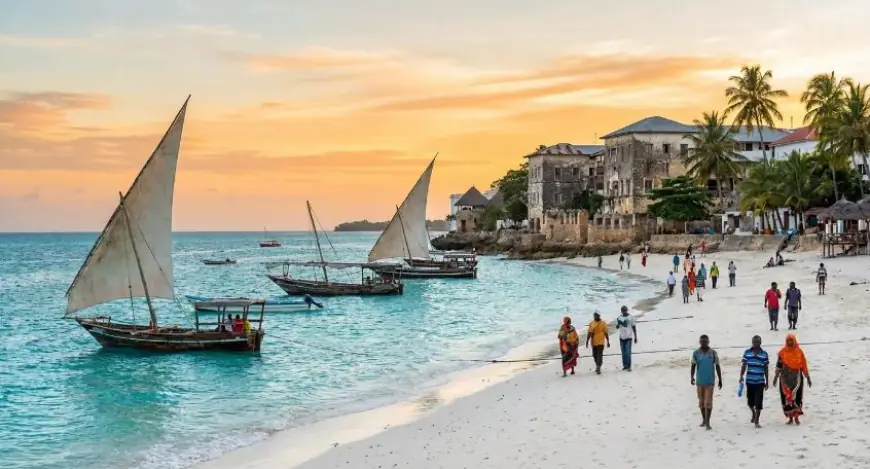
Zanzibar offers a particularly revealing illustration of the changing tourism landscape.
The 15 leading source markets accounted for about 77 percent of the island's international visitors, with Italy retaining its position as the principal source market, followed by important European markets such as France and the United Kingdom.
More strikingly, first-time visitors accounted for more than 78 per cent of arrivals in 2025.
The report notes that this pattern has persisted since 2023.
The figure points to the island's continued ability to attract new visitors, but it also raises a question about the conversion of initial interest into repeat business.
A destination that attracts large numbers of first-time visitors must continually reach new audiences.
Encouraging satisfied visitors to return could complement that effort by building on existing familiarity with the destination.
The report does not establish why Zanzibar's repeat-visitor share remains comparatively low.
Nor does it demonstrate that the trend reflects dissatisfaction.
Nevertheless, the contrast with mainland Tanzania, where the mix of first-time and repeat visitors is more balanced, makes visitor retention an important area for further examination.
The source markets also differ. Greece, Spain, Poland, the Netherlands and Germany supplied the largest proportions of first-time visitors to Zanzibar, while Kenya and Australia featured prominently among repeat visitors.
For holidays and leisure, Italy, France and the United Kingdom were leading markets.
Visitors from the United Kingdom and Kenya were also prominent among those travelling to see friends and relatives.
The findings demonstrate that Zanzibar's international appeal extends beyond a single market, but its heavy concentration of first-time arrivals makes the relationship between destination promotion, visitor experience and repeat travel particularly significant.
Package tours reshape the visitor experience

Another structural shift is the growing popularity of package tours.
Their share of visitors to the United Republic of Tanzania increased to 58.8 percent in 2025, from 56.3 percent in 2024, reaching a new high in the post-pandemic period.
Demand was particularly strong among long-haul visitors from Israel, Poland and the United States.
Package tours were especially popular with first-time visitors, who tended to favour the convenience and reliability of organised arrangements.
Repeat visitors were more inclined towards non-package travel, which offers greater flexibility to select services and activities according to individual preferences and budgets.
The distinction reflects two different approaches to experiencing a destination.
New visitors may value the reassurance of a structured itinerary, while returning tourists may already understand local transport, accommodation options and attractions well enough to make independent arrangements.
For Tanzania's tourism businesses, the increasing popularity of package tours presents opportunities to coordinate accommodation, transport, guiding and other services into products that appeal to international markets.
However, the survey does not establish how the additional spending associated with these arrangements is distributed among tour operators, accommodation providers, transport companies and local communities.
That question is important when assessing how effectively rising tourism demand translates into wider domestic economic benefits.
The figures therefore reveal a change in travel arrangements, but further evidence would be needed to establish its implications for local value creation.
Longer stays remain an opportunity
The duration of visits presents another dimension of the industry's performance.
Visitors to the United Republic of Tanzania stayed for an average of nine nights in 2025, down from 10 nights in the previous survey.
Zanzibar's average fell to six nights, from seven in 2024.
Although mainland Tanzania's average has fluctuated between nine and 10 nights over the years, the latest decline in both destinations raises questions about how tourism products and itineraries can encourage visitors to spend more time in the country.

The national averages, however, conceal significant differences between source markets.
Chinese visitors stayed for an average of 16 nights on the mainland, the longest among the reported markets, followed by visitors from the Netherlands, Canada and the Democratic Republic of Congo.
In Zanzibar, Austrian visitors recorded the longest average stay at 12 nights, followed by visitors from France, the Netherlands and Poland, who averaged eight nights.
These differences suggest that the duration of visits varies considerably according to the origin of travellers and their travel preferences.
Extending stays could create additional opportunities for spending on accommodation, food, transport, excursions and other tourism services.
But the survey does not quantify how much additional revenue would result from longer visits, nor does it establish why the average duration declined.
The figures nevertheless underline the importance of measuring tourism performance through more than arrivals and aggregate earnings.
The length of stay, spending patterns and distribution of economic benefits are also relevant indicators of the sector's contribution to the economy.
The market behind the numbers
Visitor demographics provide another insight into the industry's structure.
People aged between 25 and 44 accounted for about half of all visitors in 2025, while those aged between 45 and 64 represented approximately one-third.
Younger travellers below 24 formed a smaller share, and visitors aged 65 and above were more prominent on the mainland than in Zanzibar.
The 25–44 age group accounted for more than 60 per cent of visitors from Italy, the Democratic Republic of Congo, China, Burundi and Uganda.
Senior visitors were more prominent among travellers from the United States and India, while African regional markets were more heavily represented by younger and mid-career travellers.
These patterns provide a basis for understanding the composition of demand, although age alone does not determine spending capacity or travel preferences.
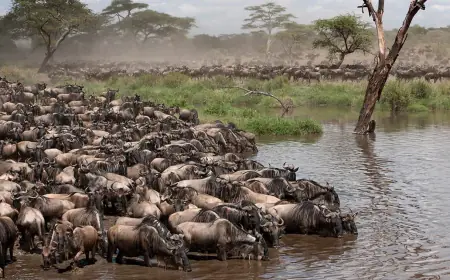
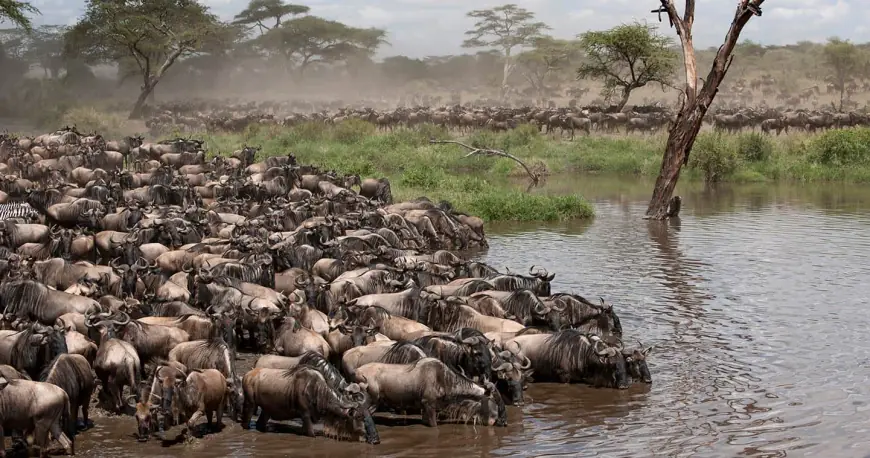
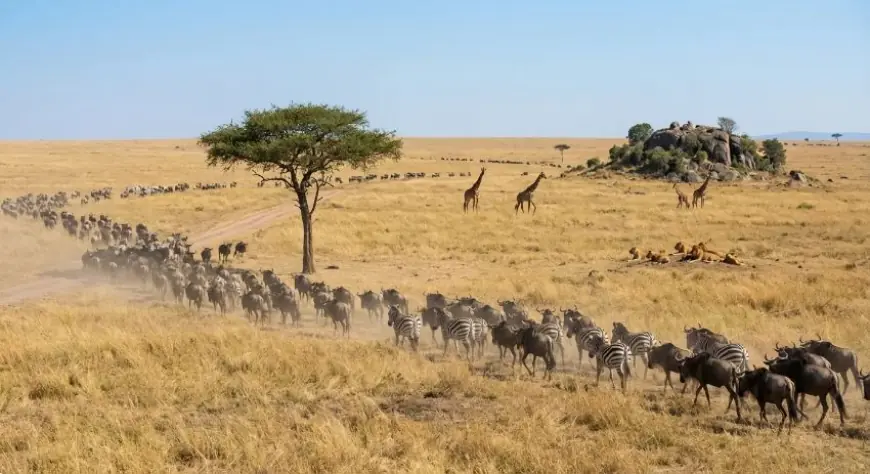
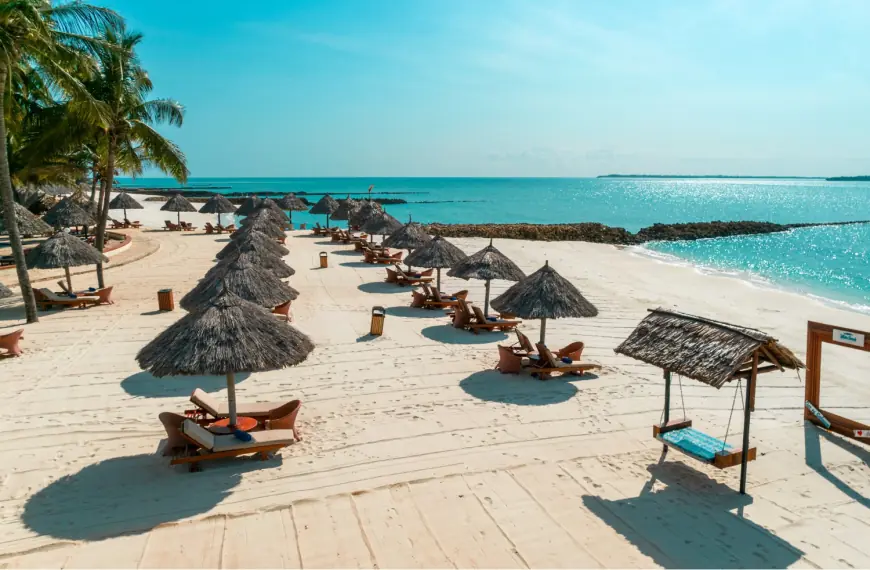
The activities visitors pursue also differ by destination. Wildlife viewing remained the leading tourism activity on the mainland, followed by beach tourism, visits to friends and relatives, and business travel. In Zanzibar, beach tourism continued to dominate.
The distinction reinforces the complementary character of the two destinations, with mainland attractions centred heavily on wildlife experiences and Zanzibar drawing predominantly on its coastal and leisure appeal.
Beyond arrival targets
The survey captures an industry that has recovered strongly from the Covid-19 disruption and is continuing to expand.
In 2025, tourism earnings reached $4.41 billion, up 13 per cent from the previous year, while international arrivals increased by 6.7 percent.
The report attributes the recovery to robust global demand, improved air connectivity and intensified promotional efforts.
It also records a recovery in arrivals of more than 150 per cent from 2019 levels.
Yet the more revealing story lies in the composition of that growth.
Established source markets remain dominant even as new markets emerge; package tours account for an increasing share of travel; Zanzibar attracts a particularly high proportion of first-time visitors; and average stays have shortened in both destinations.
Taken together, these findings point to a tourism industry whose next phase of development will require attention to the quality and composition of demand, not merely the volume of arrivals.
Diversifying source markets, converting first-time visitors into repeat customers and developing products that encourage longer stays are potential avenues for strengthening the sector.
The survey does not establish the likely economic returns from these measures, but it identifies the patterns that policymakers and tourism operators need to understand.
Tanzania's tourism challenge is therefore not simply to attract more visitors.
It is to understand the changing behaviour of those visitors and build on the country's established attractions to generate sustained economic value from every market it serves.
What's Your Reaction?
 Like
0
Like
0
 Dislike
0
Dislike
0
 Love
0
Love
0
 Funny
0
Funny
0
 Angry
0
Angry
0
 Sad
0
Sad
0
 Wow
0
Wow
0