































































Taifa Gas moves into upstream sector with major Orca stake acquisition
The transaction comes at a time when Tanzania is positioning natural gas as a central pillar of its economic transformation


Dar es Salaam. Tanzania’s energy landscape is poised for a defining shift after Taifa Gas Tanzania Limited agreed to acquire a significant stake in assets linked to Orca Energy Group Inc, marking one of the most consequential transitions in the country’s gas industry in decades.
The agreement will see Taifa Gas acquire a 49 percent stake in PanAfrican Energy Corporation, Orca’s Tanzanian subsidiary, while Amber Energy Investment L.L.C-FZ takes the remaining 51 percent stake.
The transaction effectively transfers control of the historic Songo Songo gas project to the new consortium, ending Orca’s long-standing operational presence in Tanzania.
The move represents a major expansion for Taifa Gas, which has grown from a domestic liquefied petroleum gas (LPG) supplier into a regional energy powerhouse with ambitions extending beyond household fuel distribution.
Strategic shift in Tanzania’s gas industry
The Songo Songo gas project, operated through PanAfrican Energy Tanzania Limited, has long stood at the centre of Tanzania’s natural gas sector.
It supplies gas for electricity generation and industrial use and has been a cornerstone of the country’s transition towards cleaner energy sources.
Orca Energy’s decision to divest its Tanzanian business follows years of operational uncertainty, including disputes over licence extensions and regulatory obligations tied to the Songo Songo development licence, which is due to expire in October 2026.
Company officials indicated that continued operations would have required significant financial commitments to address potential liabilities and capital demands, prompting a strategic withdrawal and orderly transition of assets.
For Tanzania, the transaction signals a shift towards stronger local participation in strategic natural resource projects, a policy direction that has gathered momentum in recent years.
Taifa Gas builds regional gas empire
The acquisition marks another milestone in Taifa Gas’s transformation from a domestic LPG distributor into a vertically integrated energy enterprise with regional ambitions.
Founded as Mihan Gas Company Limited and rebranded as Taifa Gas, the firm initially focused on building storage and distribution infrastructure.
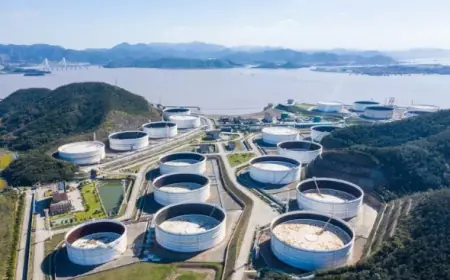
Over time, it expanded aggressively across Tanzania, constructing depots and filling plants across multiple regions and establishing one of the country’s largest LPG storage facilities in Kigamboni, with a capacity exceeding 7,000 metric tonnes.
This infrastructure enabled the company to scale exports to neighbouring markets, including Kenya, Uganda, Rwanda, Zambia and the Democratic Republic of Congo, laying the foundation for regional dominance in LPG logistics and supply chains.
Beyond Tanzania, Taifa Gas has been advancing large-scale projects in Kenya, notably at the strategic Dongo Kundu Special Economic Zone near the Port of Mombasa.
The facility is expected to host one of Africa’s largest LPG storage terminals, with projected storage capacity reaching tens of thousands of metric tonnes once fully operational.
Industry analysts have increasingly described this expansion as the emergence of a Tanzanian-led gas logistics network spanning East Africa’s major commercial corridors.
From cylinders to upstream gas
Historically, Taifa Gas built its reputation in the downstream segment of the energy value chain, particularly LPG retail and bulk supply.
However, the Orca-linked acquisition signals a decisive move into upstream and midstream natural gas operations, a transition that could reshape the competitive dynamics of the sector.
Ownership stakes in upstream gas infrastructure offer access not only to fuel supply but also to the strategic pipelines and processing facilities that underpin electricity generation and heavy industry.
The Songo Songo gas field itself remains one of Tanzania’s most important energy assets.
Commercial production began in 2004, supplying natural gas through a pipeline network to Dar es Salaam for power generation and industrial consumption.
With growing electricity demand driven by industrialisation and urbanisation, control of such infrastructure carries long-term strategic significance.
Wider economic implications
The transaction comes at a time when Tanzania is positioning natural gas as a central pillar of its economic transformation.
Natural gas has been widely viewed as a transitional fuel capable of supporting industrial growth while reducing reliance on more carbon-intensive energy sources.
The Songo Songo system remains a key contributor to this objective, supplying fuel to power plants and industrial consumers across the country.
If approved by regulators, the deal will require clearance from authorities including competition and petroleum regulators, as well as shareholders linked to the divesting entity.
A defining moment for local ownership
For Taifa Gas, the acquisition represents more than a commercial expansion.
It marks a shift from distribution dominance to resource control.
Industry observers view the development as a defining moment in Tanzania’s energy history, reflecting a broader trend towards indigenous ownership of strategic assets.
With established operations across East Africa and large-scale infrastructure investments already underway, the company now stands at the threshold of becoming a fully integrated regional energy player.
Should the transaction proceed to completion, it may usher in a new era in which locally driven enterprises assume a central role in shaping the direction of Tanzania’s natural gas industry and the wider East African energy market.
What's Your Reaction?
 Like
0
Like
0
 Dislike
0
Dislike
0
 Love
0
Love
0
 Funny
0
Funny
0
 Angry
0
Angry
0
 Sad
0
Sad
0
 Wow
0
Wow
0