













































































Why British Airways is returning to Tanzanian skies after a 14-year hiatus
For Tanzania, securing a direct connection to London Heathrow restores a vital geopolitical and trade artery
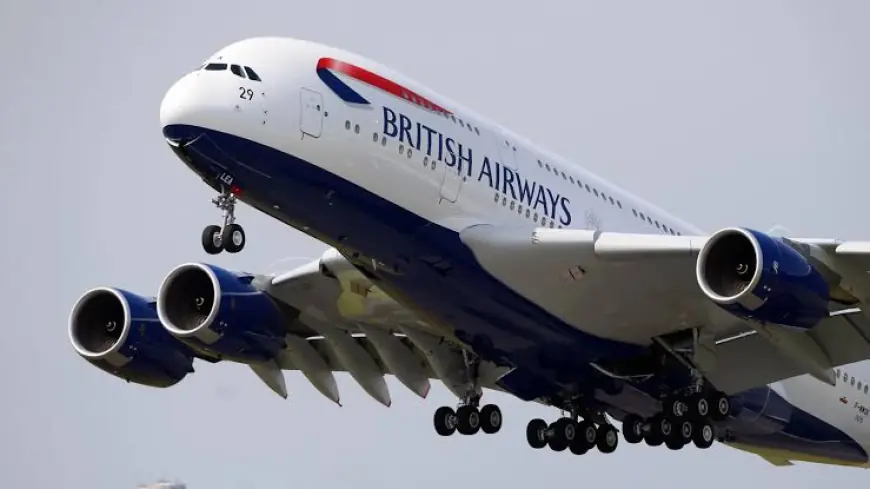
London. When British Airways permanently unclasped its direct London-to-Dar es Salaam air link on March 31, 2013, it marked the end of an era spanning over eight decades of continuous services to Tanzania.
The commercial reasoning at the time was blunt: the route had suffered from deteriorating yields, high operational costs on aging Boeing 767 long-haul assets, and an inability to deliver commercial profitability.
Fourteen years later, the macroeconomic and aviation landscape in East Africa has undergone a fundamental transformation.
The announcement made on October 7, 2026 by Moran Birger, British Airways' Commercial Director for Africa, Asia, and the Pacific, confirming the carrier’s planned return in May 2027, is more than a simple route expansion.
Delivered before 300 international delegates at the UK–Tanzania Investment Forum at the Peninsula Hotel in London, the decision highlights a significant realignment in British long-haul strategy across Sub-Saharan Africa.
Between 2013 and 2026, air travelers moving between the UK and Tanzania were forced onto indirect routing through Middle Eastern hubs such as Doha and Dubai, or regional African hubs like Nairobi and Addis Ababa.
During this interim period, European legacies steadily ceded point-to-point East African market share to Gulf carriers.
Two major developments have prompted British Airways to reverse its decision.
Firstly, modern long-haul fleet efficiency
The 2013 withdrawal was largely driven by aircraft economics.
Operating twin-aisle Boeing 767-300ERs on thin long-haul routes became financially unsustainable as fuel prices flared.
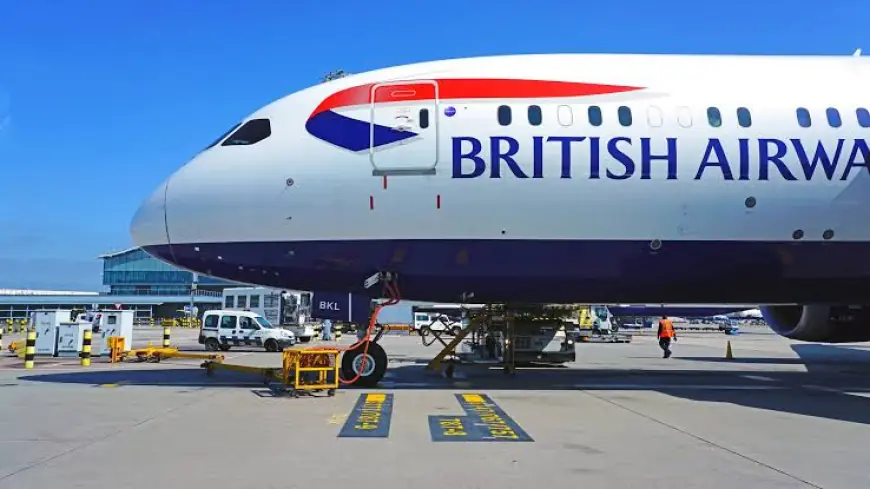
The rollout of next-generation, fuel-efficient widebody aircraft—such as the Boeing 787 Dreamliner and Airbus A350-1000—has fundamentally redefined the profit margins of long-haul secondary routes.
The dramatically lower seat-mile costs of these aircraft enable legacy carriers to profitably serve markets that were previously unviable.
Shifting Economic and Tourism Dynamics
Tanzania's economic footprint has expanded steadily over the last decade, transforming from a primarily leisure-focused destination into a multi-sector regional commercial hub.
Speaking at the forum, Tanzanian Prime Minister Dr Mwigulu Nchemba framed the country as a primary launchpad into the broader East African Community (EAC) and the Southern African Development Community (SADC).
While high-yield tourist traffic to the Serengeti and Zanzibar remains a core demand driver, foreign direct investment (FDI) in infrastructure, energy, and mining has generated a critical base of premium, year-round corporate travel.
Secondly, regional Competitive Implications
British Airways’ planned entry in May 2027 puts direct pressure on regional competitors.
A direct non-stop London flight reduces transit times by 4 to 7 hours compared to Middle Eastern or European connection options, giving British Airways a distinct advantage for high-yield corporate travelers and premium leisure passengers.
For Tanzania, securing a direct connection to London Heathrow restores a vital geopolitical and trade artery.
For British Airways, the move signals a calculated return to East African routes, driven by modern fleet economics and a rapidly expanding market.
What's Your Reaction?
 Like
0
Like
0
 Dislike
0
Dislike
0
 Love
0
Love
0
 Funny
0
Funny
0
 Angry
0
Angry
0
 Sad
0
Sad
0
 Wow
0
Wow
0