





































Tanzania tightens compliance drive on mining licensees, citing safety, revenue, environmental duties
Deputy Minister tells Parliament that compliance with the Mining Act, mineral rights rules and environmental regulations underpins a sector that now sits at the centre of Tanzania's economy

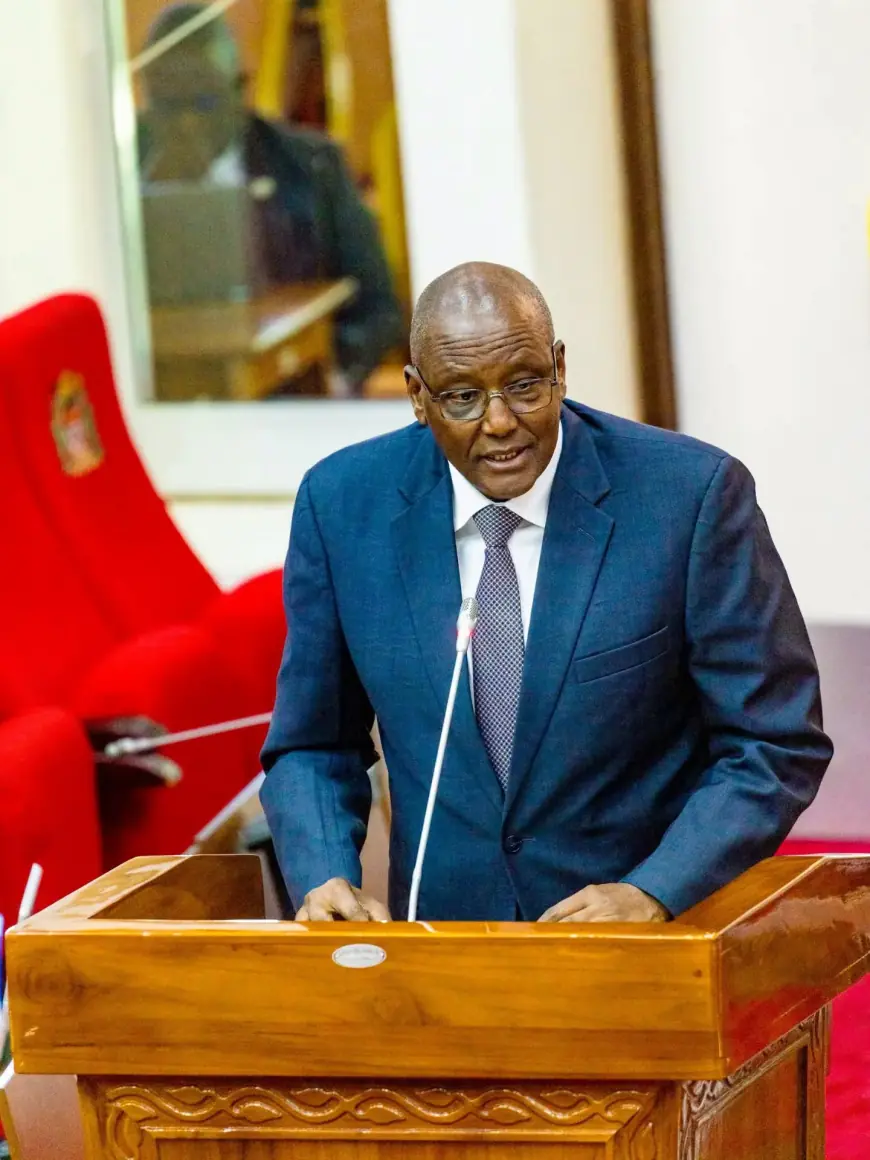
Dodoma. The government has set out the legal framework and supervisory mechanisms it uses to regulate holders of mining licences.
The aim is to ensure that mineral resources deliver tangible benefits to the nation while protecting workers and the environment.
The Deputy Minister for Minerals, Dr Steven Kiruswa, outlined the measures in Parliament when he was responding to a question by Member of Parliament for Kahama Urban, Benjamin Ngayiwa, who asked what steps the government was taking to supervise holders of gold-mining licences so that small-scale miners can benefit.
Speaking in Parliament on October 30, 2026 Dr Kiruswa said oversight rests on existing laws and regulations, which are designed to ensure that no investor or miner breaches the established procedures.
Licence conditions and fiscal obligations
Citing the Mining Act, Cap. 123, and the Mining (Mineral Rights) Regulations, 2018, Dr Kiruswa said every licence holder must comply fully with the conditions attached to their licence.
These include commencing production on schedule, paying royalties, taxes and government fees on time, and submitting accurate production reports.
Environmental restoration
On environmental protection, Dr Kiruswa said the government closely monitors implementation of the Environmental Protection Plan (EPP) under the 2010 regulations governing small-scale mining.
Under the plan, small-scale miners must restore the environment to a safe condition once operations end, to prevent damage to ecosystems and water sources.
Health, safety and working conditions
Dr Kiruswa also drew attention to the Mining (Safety, Occupational Health and Environmental Protection) Regulations, 2010.
He stressed that they oblige each licence holder to establish robust systems to safeguard workers' health, prevent accidents, and ensure that working conditions meet international safety standards.
A sector with much at stake
The emphasis on compliance comes as mining has become one of the country's most important economic pillars.
Officials say the sector contributed 10.3 per cent of GDP in 2025 and accounts for more than half of Tanzania's export earnings.
Mineral exports reached $5.401 billion in 2025, against $4.119 billion in 2024, with gold exports rising 39 percent to $4.754 billion.
Minerals made up 52.57 percent of all traditional and non-traditional exports last year, up from 45.17 per cent in 2024.
That growth raises the stakes for enforcement. Royalties, fees and taxes on gold are central to government revenue, and accurate production reporting is the basis on which they are calculated.
How the legal framework evolved
The regulatory architecture Dr Kiruswa described has its roots in the Mining Act of 2010, which was substantially reshaped in 2017.
The Written Laws (Miscellaneous Amendments) Act, 2017 established a Mining Commission to administer the Act, leaving the ministry to focus mainly on policy.
The amendments also gave the government the right to hold at least a 16 percent free carried interest in medium and large-scale mining operators.
They were followed by the Mining (Local Content) Regulations, 2018, which set a new local content regime for mines, their contractors and suppliers.
The licensing categories matter for Mr Ngayiwa's question.
Small-scale operations are those with capital investment below $100,000, and licences for them are reserved for Tanzanians.
Compliance duties therefore fall on a wide range of operators, from the large gold mines around Kahama to individual pit owners.
Small-scale miners
Small-scale miners are a major force in the industry. The minister for Minerals Anthony Mavunde has said they account for about 40 pe cent of the sector's output.
Between July 2025 and March 2026, the Mining Commission issued 8,878 small-scale mining licences.
State-owned STAMICO supported 451 miners through its demonstration centres, and 99 areas have been identified for possible allocation to small miners.
Part of the reclaimed land is also due to be reorganised for small-scale miners, investors, women and youth groups under a five-year programme, Mining for a Brighter Tomorrow, running from 2025/26 to 2029/30.
The government has also tried to bring small-scale gold into formal channels.
In March 2019 it established 28 mineral trading centres in producing areas to formalise artisanal and small-scale mining and reduce smuggling, and cancelled about 1,000 inactive licences with a view to redistributing them to small-scale miners.
Kahama
Kahama is a fitting setting for the debate.
The district hosts large operations alongside many small-scale workings, and relations between the two have often been tense.
Analysts have long noted a conflict between small-scale artisanal miners and large foreign-owned mining corporations.
The Ministry has listed resolving disputes between large and small-scale miners, and among small-scale miners themselves over ownership and licensing, as a priority.
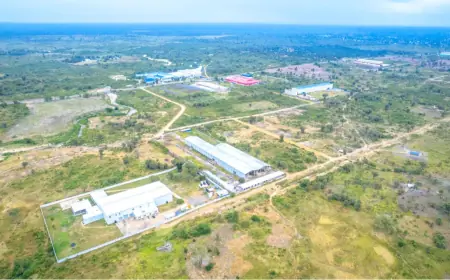
The district is also in transition. The Buzwagi gold mine, on which Kahama Municipal Council relied for revenue for more than 16 years, is in its closure phase, and the 1,333-hectare site is being repurposed as a special industrial park.
Pressure points
Compliance and affordability remain live issues. Legislators have urged the government to review levies affecting small-scale miners, describing some charges as a significant burden.
Safety is a further concern: pit collapses in Kahama district have previously killed small-scale miners. These are the risks the 2010 safety regulations are meant to address.
What's Your Reaction?
 Like
0
 Dislike
0
 Love
0
 Funny
0
 Angry
0
 Sad
0
 Wow
0