









































































Tanzania tightens regulatory grip to end mineral licence hoarding
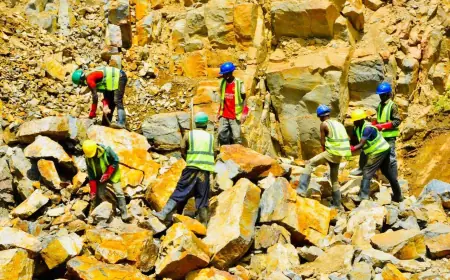
The Ministry recently revoked 40 mineral exploration licences. This move recovered approximately 900 square kilometres of land. These areas were previously held by entities that failed to meet statutory development obligations despite multiple warnings


Dodoma. The Tanzanian government has initiated a robust regulatory shift to transform the mining sector from a landscape of speculative land-holding into an active engine of national wealth.
Under the leadership of Minister for Minerals, Anthony Mavunde, the state is aggressively tackling the issue of "passive investment."
This strategy aims to ensure that exploration licences serve as precursors to active extraction rather than mere placeholders for international speculators.
The Ministry recently revoked 40 mineral exploration licences. This move recovered approximately 900 square kilometres of land.
These areas were previously held by entities that failed to meet statutory development obligations despite multiple warnings.
The government views such inactivity as a direct hindrance to economic growth, as dormant sites deprive the treasury of revenue and the citizenry of employment.
Automated Enforcement
Central to this new era of accountability is the overhaul of the Mineral Licensing Digital System.
The government is moving away from manual oversight, which is often susceptible to delays or human interference.
The upgraded system will automate the entire lifecycle of a licence.
It will track quarterly reports, issue default notices, and facilitate automatic cancellations for non-compliance.
Mr Mavunde has signalled that the days of ministerial discretion in licence revocation are ending.
The system itself will act as the enforcer.
This transparency is intended to provide a predictable environment for serious investors while making it impossible for "licence hoarders" to remain undetected.
By removing human intervention from the enforcement process, Tanzania aims to bolster investor confidence in its legal framework.

Strategic Redistribution, Economic Impact
The reclamation of these vast tracts of land is not merely punitive. It is a strategic reallocation of national assets.
A significant portion of the recovered land is earmarked for the Mining for a Brighter Tomorrow initiative.
This programme focuses on empowering domestic stakeholders, including women, youth, and people with disabilities.
The goal is to formalise small-scale mining and integrate local talent into the value chain.
The mining sector currently contributes 10.1 percent to Tanzania’s Gross Domestic Product.
However, the government maintains that this figure remains below potential due to the high volume of exploration areas currently lying fallow.
By forcing a "use it or lose it" policy, the state intends to accelerate the transition from exploration to medium and large-scale mining operations.
A Final Warning to the Private Sector
The recent revocations serve as a bellwether for the remaining 43 licence holders currently under scrutiny.
These entities have been granted a 30-day grace period to rectify their defaults.
Failure to demonstrate tangible investment or resolve outstanding statutory fees will result in immediate termination.
This professional hardline approach marks a departure from historical leniency.
Tanzania is clearly positioning itself as a destination for high-velocity capital.
The government's message to the global mining community is unambiguous: mineral wealth is a shared resource, and the right to explore it is contingent upon the commitment to develop it.
What's Your Reaction?
 Like
0
Like
0
 Dislike
0
Dislike
0
 Love
0
Love
0
 Funny
0
Funny
0
 Angry
0
Angry
0
 Sad
0
Sad
0
 Wow
0
Wow
0