
































Tanzania opens its state-enterprise portfolio to South African banking giant RMB
Treasury Registrar has invited bank to propose financing for projects across infrastructure, energy and agriculture as government pushes public firms to rely less on the budget

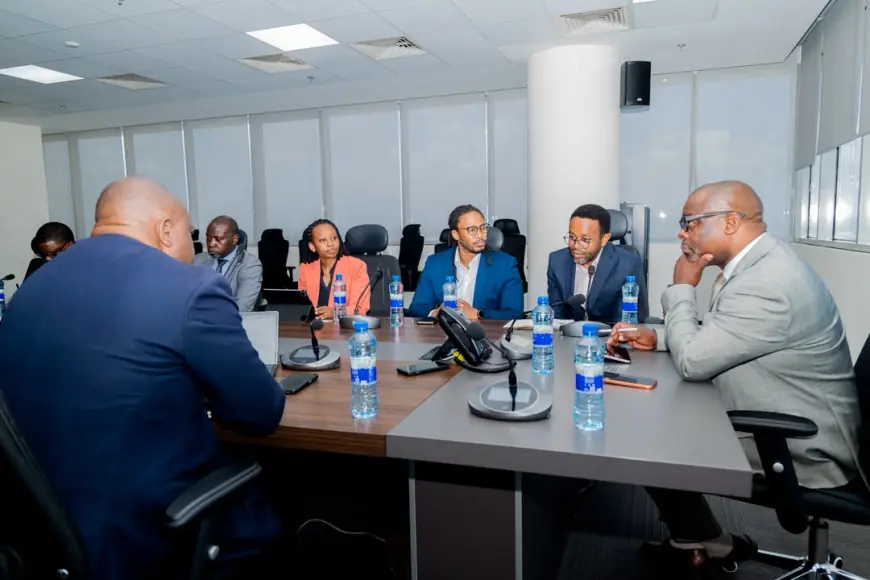
Dar es Salaam. The Office of the Treasury Registrar (OTR) has invited Rand Merchant Bank (RMB) to explore financing and investment opportunities across Tanzania's public enterprise portfolio, in an effort to unlock capital for strategic projects.
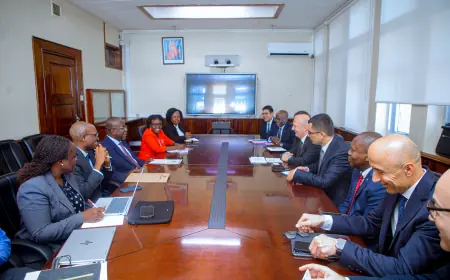
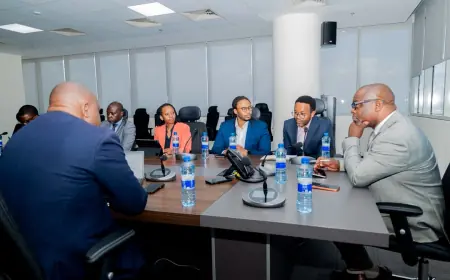
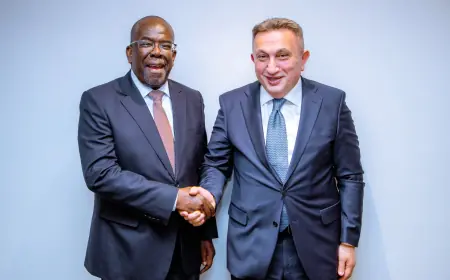
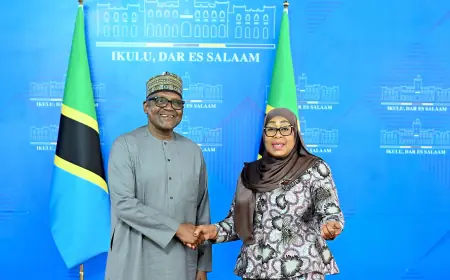
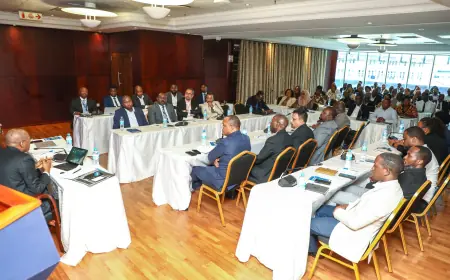
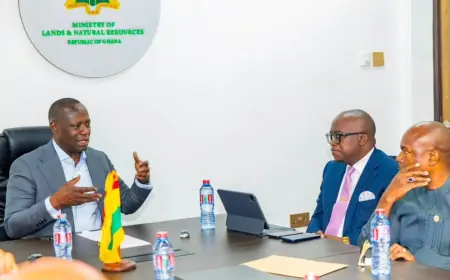
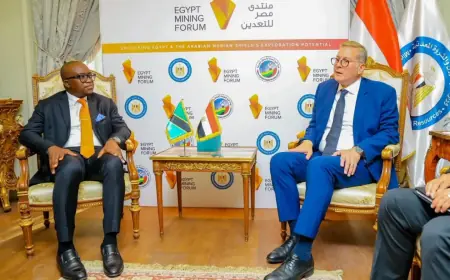
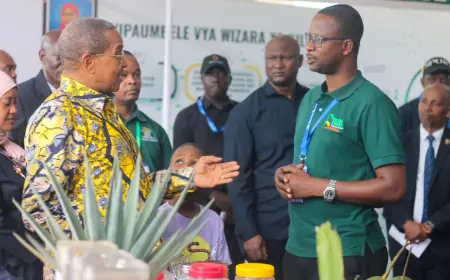
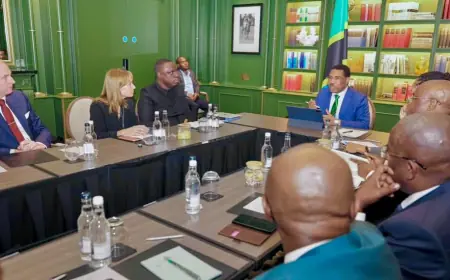
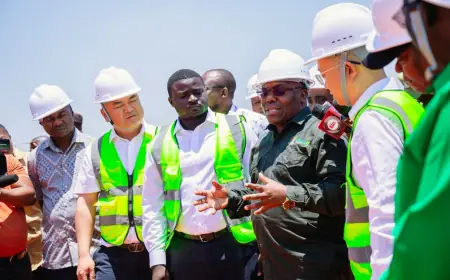
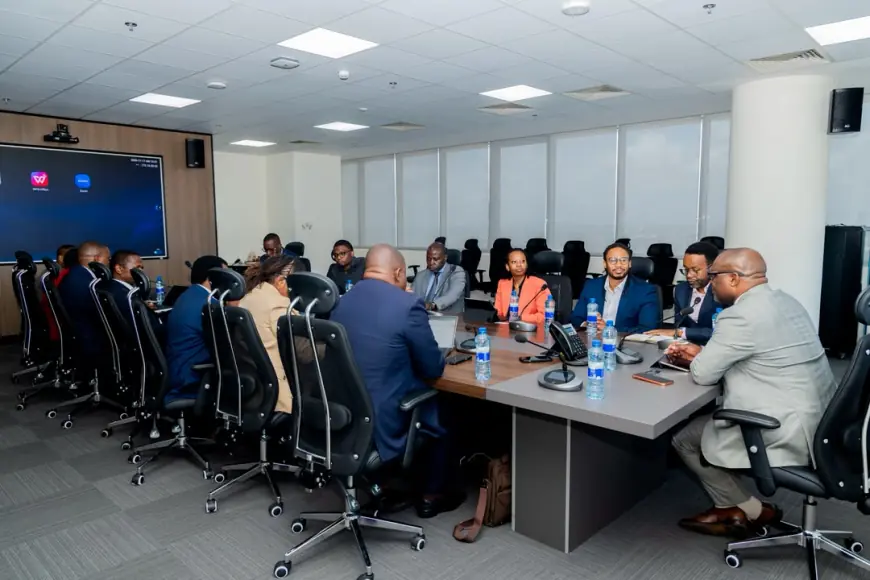
The invitation was extended on Tuesday by Treasury Registrar Nehemiah Mchechu to a delegation from FirstRand Bank Limited, which operates mainly through RMB. The delegation was led by John Njuguna, the bank's Lead Banker for the East Africa Institutional Clients Segment.
FirstRand is dual-listed in Johannesburg and Windhoek and has a market capitalisation above $30 billion. That makes it one of Africa's largest financial institutions.
The OTR oversees 308 public entities: 252 majority-owned companies and 56 in which the state holds minority stakes.
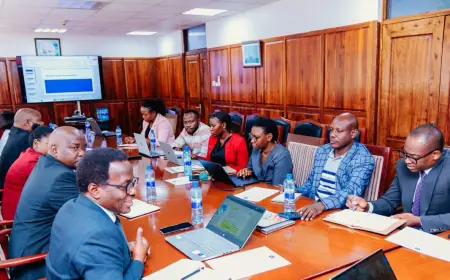
Their combined investment value is Sh92.3 trillion. Mr Mchechu said the OTR would help the bank engage the enterprises, identify viable projects and develop proposals to be assessed jointly.
A policy shift in the making
The meeting reflects a broader change in how Tanzania expects its state companies to behave. Mr Mchechu said the government wants them to make better use of their balance sheets and seek alternative capital, rather than lean heavily on budgetary support.
The options include commercial loans, bond issues and listing on the stock market.
The shift is already visible. President Samia Suluhu Hassan praised the Tanzania Ports Authority, which paid Sh205.5 billion to the Treasury, for its new ability to borrow against its own balance sheet rather than relying on the national treasury.
She has also asked the Treasury Registrar to keep assessing which entities could list on the Dar es Salaam Stock Exchange.
The state is also demanding more in return. The OTR collected Sh1.327 trillion in dividends and statutory contributions in the 2025/26 financial year.
That is a record, about Sh300 billion above the Sh1.028 trillion of the previous year. The OTR has set itself a Sh2 trillion non-tax revenue target for 2026/27.
What RMB brings
RMB's team outlined several routes: project finance, public-private partnerships (PPPs), export credit agency-backed facilities and renewable energy financing.
The bank pointed to experience in solar, wind and hydropower across Africa. It also discussed cash-flow financing, longer-term funding and access to international capital markets. Agricultural input financing and the wider value chain were also on the agenda.
The choice of structure, said RMB's Sindisiwe Mosoeu, would depend on each project's commercial viability, expected revenues and capacity to attract outside funding.
The benefits
If it works, the gains are considerable. Entities that finance themselves ease pressure on a Treasury that has to fund many priorities.
Commercial scrutiny from lenders can also sharpen governance, since banks insist on credible revenue forecasts and repayment plans. International lenders may also bring longer tenors and structuring skills that domestic markets cannot always provide.
The timing matters too. The government is trying to prove that its state-owned portfolio can be productive as well as large. In December 2025, Minister of State Prof Kitila Mkumbo said it was unacceptable that several enterprises delivered minimal dividends despite substantial investment, and he promised a Public Investment Act to drive efficiency. Outside capital, with the discipline that comes with it, is one way to raise performance.
The risks
The risks are real, and the discussion itself touched on one. Participants stressed matching instruments to a project's economic life and revenue capacity. Short-term money funding long-term assets creates refinancing risk. That is a familiar cause of distress for state-owned enterprises (SOEs) across the continent.
Three further concerns deserve scrutiny:
Contingent liabilities. Enterprise borrowing that carries an explicit or implied state guarantee is public debt in all but name. Analysts have urged Tanzania to maintain an integrated fiscal-risk register covering public corporations, guarantees, PPPs and arrears.
Currency exposure. Fitch notes that 68 per cent of Tanzania's debt is external, which exposes it to exchange-rate risk. Most enterprises earn in shillings. Foreign-currency borrowing can become costly if the shilling weakens.
Public debt headroom. Public debt rose by 8.97 per cent to Sh114.34 trillion, though a November 2025 assessment put the present value of debt at 39.6 per cent of GDP, below the 55 per cent threshold. Parliament's Budget Committee has nonetheless warned that sustainability indicators are edging closer to their limits. Any state-linked borrowing that ends up on the sovereign's books narrows that headroom.
There is also the question of transparency. Few details were disclosed of which enterprises or projects might be involved, and no financing terms or timelines were announced. The next step is simply that RMB develop proposals.
Part of a wider continental trend
Tanzania is not alone. African governments and SOEs are courting foreign lenders as global conditions allow. Sub-Saharan Eurobond issuance opened 2026 at its strongest pace in more than a decade, led by a $2.25 billion Kenyan deal. The Democratic Republic of Congo raised $1.25 billion in its debut Eurobond.
The window may not stay open. Later deals have been fewer and costlier, higher US interest rates are expected to narrow the window further, and sub-Saharan Eurobond repayments are projected to rise from about $3.5 billion in 2026 to a peak of $8.6 billion in 2028. S&P Global Ratings expects African governments to lean more on multilateral lenders in 2026, even as debt-distress risks remain elevated.
Seen against this backdrop, the OTR's outreach to a bank with RMB's reach is a bid to diversify funding sources before conditions tighten. Whether it delivers cheaper, longer-dated capital without piling hidden liabilities onto the state will depend on how rigorously each deal is selected, structured and disclosed.
What's Your Reaction?
 Like
0
 Dislike
0
 Love
0
 Funny
0
 Angry
0
 Sad
0
 Wow
0