


































































Tanzania unveils strategic Sh144.85 billion budget to anchor Vision 2050
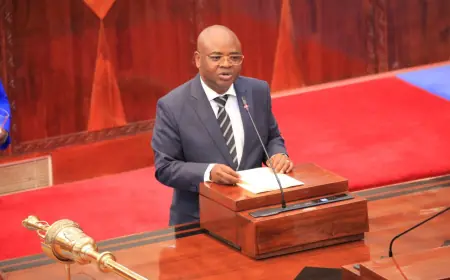
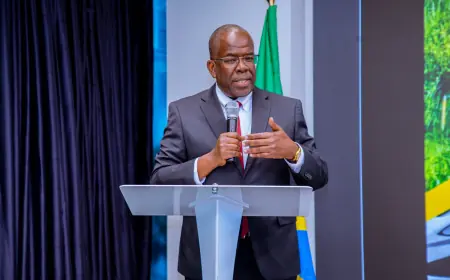
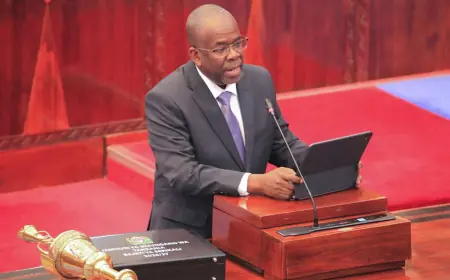
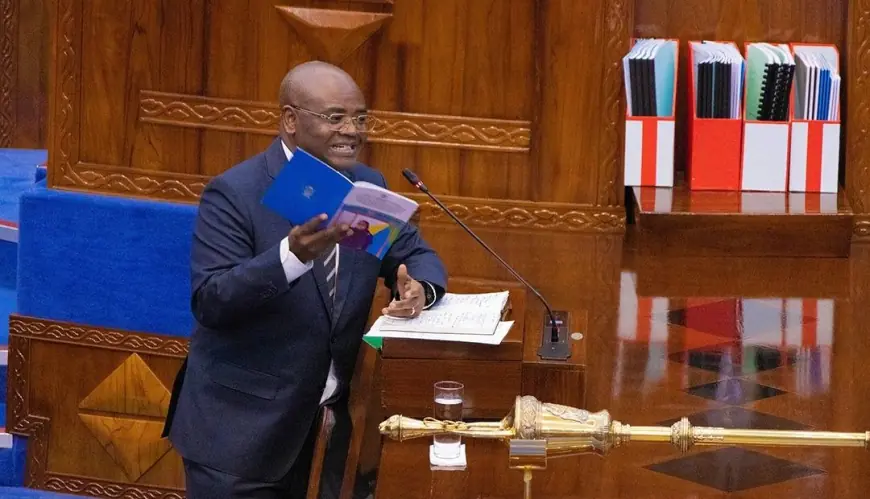
The Minister of State in the President's Office for [Planning and Investment], Prof Kitila Mkumbo, presented the budget estimates to Parliament on Thursday, April 16, 2026 requesting an allocation of Sh144.85 billion to spearhead the initial phase of the National Development Vision 2050

Dodoma. The government of Tanzania has outlined a comprehensive fiscal and strategic roadmap for the 2026/27 financial year, aimed at transforming the nation into a competitive, investment-led economy.
The Minister of State in the President's Office for [Planning and Investment], Prof Kitila Mkumbo, presented the budget estimates to Parliament on Thursday, April 16, 2026 requesting an allocation of Sh144.85 billion to spearhead the initial phase of the National Development Vision 2050.
The proposed budget allocates Sh126.02 billion for recurrent expenditure, while Sh18.83 billion is earmarked for critical development projects.
This funding is designed to support the ministry’s expanded mandate, which now includes the oversight of private sector development and the coordination of national poverty reduction programmes.
Revenue projections and public investment
Parallel to the expenditure requests, the government expects a significant rise in non-tax revenue.
Through the Office of the Treasury Registrar, the state projects a collection of Sh1.79 trillion for the 2026/27 fiscal year.
This capital will be channelled into the Consolidated Fund to support broader national interests.
These revenues are primarily generated from dividends in public institutions, 15 percent levies on gross revenues from specific entities, and income from the Tanzania Telecommunications Management System.
Prof Mkumbo reported a positive trend in current revenue performance. By March 2026, non-tax revenue collections had reached Sh773.37 billion.
This represents a notable increase from the Sh664.53 billion recorded during the same period in the previous year.
The Treasury Registrar is currently overseeing the performance of public investments, which grew by 7 per cent to reach Sh90.61 trillion in the 2024/25 period
A Research-Driven Development Framework
A central pillar of the new budget is the integration of evidence-based planning.
The National Planning Commission is set to implement a National Research and Innovation Guideline.
This framework will ensure that development strategies are underpinned by scientific data rather than intuition.
To support this, the government will establish a National Research Portal to archive and analyse research findings for policy-making.
The Minister also announced the introduction of the National Development Plans and Project Management Information System (NPMIS).
Starting July 1, 2026, all government institutions must submit development project reports through this digital platform.
This move is intended to ensure transparency and timely monitoring of the Fourth Five-Year National Development Plan (FYDP IV).
Driving Private Sector Investment
Tanzania continues to position itself as a premier investment destination in Africa.
Foreign Direct Investment (FDI) rose by 28.3 per cent to reach $1.72 billion in 2024.
The country currently ranks third in the East African region for attracting foreign capital.
To maintain this momentum, the government plans to review the Special Economic Zones (SEZ) framework to enhance industrial competitiveness.
Strategic focus areas for the coming year include:
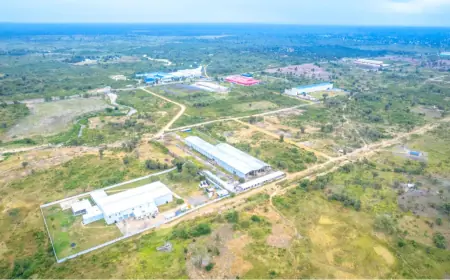
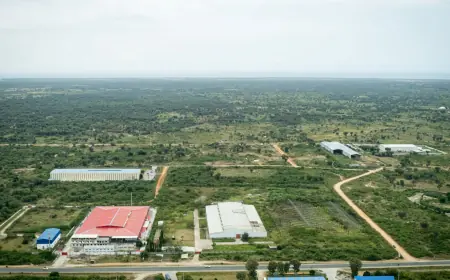
- Infrastructure for Investment: The government will expand the national land bank by identifying suitable areas and developing essential services such as electricity, water, and gas.
- Automotive Hub Aspirations: A targeted strategy is being developed to attract strategic investment in vehicle assembly and manufacturing, with the goal of making Tanzania a regional hub by 2030.
- Youth Empowerment: New Youth Industrial Special Economic Zones will be established in regions including Dodoma, Pwani, and Mara to provide young entrepreneurs with land for industrial activities.
- Information Transparency: A single compendium of investment incentives across all sectors will be published to simplify the information-seeking process for potential investors.
Institutional Reforms and Poverty Reduction
The government is also set to finalise the Public Investment Bill.
This legislation proposes the establishment of a public investment management authority and a dedicated investment fund.
Crucially, it will introduce a competitive recruitment system for the heads of public institutions to ensure professional management.
On the social front, the ministry will take a more active role in poverty alleviation.
A national poverty status report will be prepared in collaboration with the National Bureau of Statistics to evaluate the effectiveness of current interventions.
A National Poverty Monitoring Framework will also be developed to provide accurate data for future budgeting.
The Path to 2050
Prof Mkumbo emphasised that the 2026/27 budget is the foundational step for Vision 2050.
He stressed that while Tanzania is rich in natural resources, these must be combined with modern capital and technology to generate real value for citizens.
The Minister called for a culture of hard work and fiscal discipline, noting that the ultimate success of the nation will be measured by economic growth and improved livelihoods.
The government remains committed to strengthening the partnership between the public and private sectors, viewing them as a single team working towards the goal of a self-reliant and prosperous Tanzania.
What's Your Reaction?
 Like
0
Like
0
 Dislike
0
Dislike
0
 Love
0
Love
0
 Funny
0
Funny
0
 Angry
0
Angry
0
 Sad
0
Sad
0
 Wow
0
Wow
0