
















































































Tanzania narrows trade gap as exports surge by over 10pc
In 2025, the total value of exported goods and services rose by 10.2 percent to $17.99 billion while total imports of goods and services rose to $17.826 billion

Dar es Salaam. Tanzania is successfully narrowing its trade deficit as growth in export earnings outpaces the rise in import costs.
Data from the Bank of Tanzania’s Monthly Economic Report for January last week reveals that the gap between the country’s imports and exports moved closer to alignment in 2025.
Total exports of goods and services rose by 10.2 per cent to reach $17.599 billion, compared to $15.968 billion in 2024.
While imports also increased to $17.826 billion, the surge in high-value exports like gold and travel services has significantly strengthened the nation’s commercial position.
Gold, manufacturing lead goods growth
Goods exports alone climbed to $10.28 billion, a substantial increase from the $9.12 billion recorded the previous year.
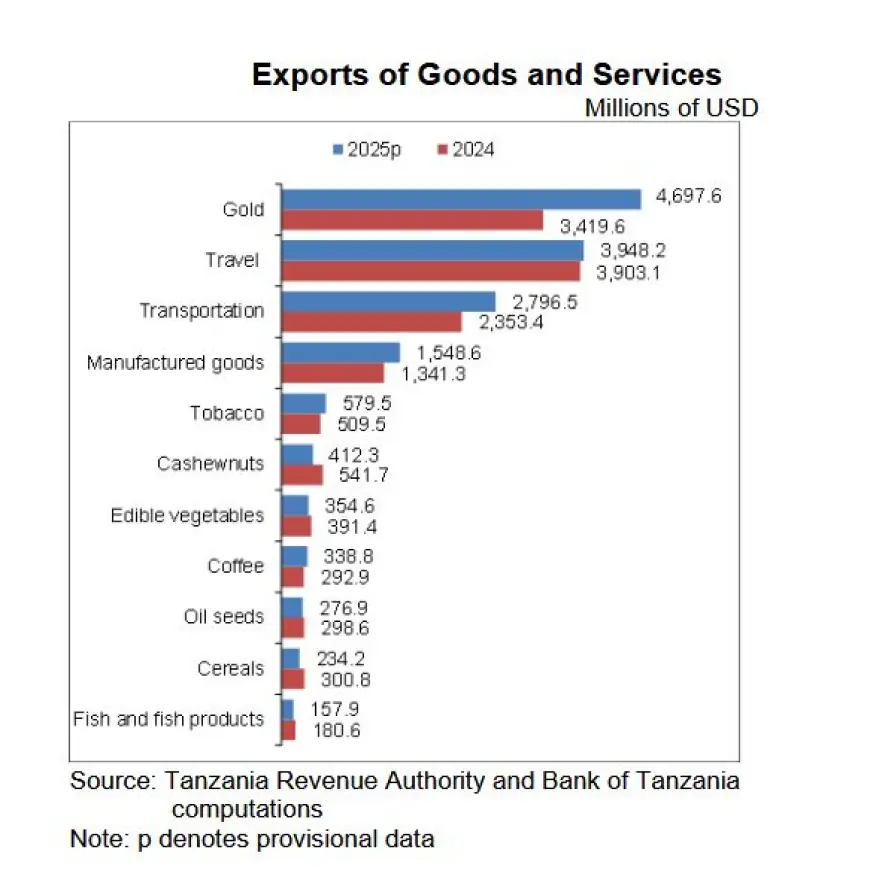
Gold remains the crown jewel of the Tanzanian economy, accounting for 45.7 percent of all goods exports.
High global prices and increased domestic production pushed gold revenue up by 37.4 percent to reach $4.697 billion.
Beyond minerals, the industrial sector showed encouraging signs of resilience.
Manufactured goods strengthened to $1.55 billion, compared to $1.34 billion in 2024.
Traditional agricultural exports also contributed to the upward trend, reaching $1.51 billion.
This growth was driven largely by tobacco and coffee, which benefited from a combination of higher export volumes and favourable international market prices.
Robust recovery in services
The services sector played an equally vital role in bolstering the nation's foreign exchange receipts.
Total service receipts grew to $7.32 billion in 2025.
The travel industry was a major contributor, with receipts rising to $3.948 billion.
This performance aligns with a 7.1 percent increase in international tourist arrivals, which totalled over 2.2 million visitors.
Transport services also saw a significant boost, rising to $2.796 billion as freight earnings from transit goods grew by 34 percent.
Strategic import shifts
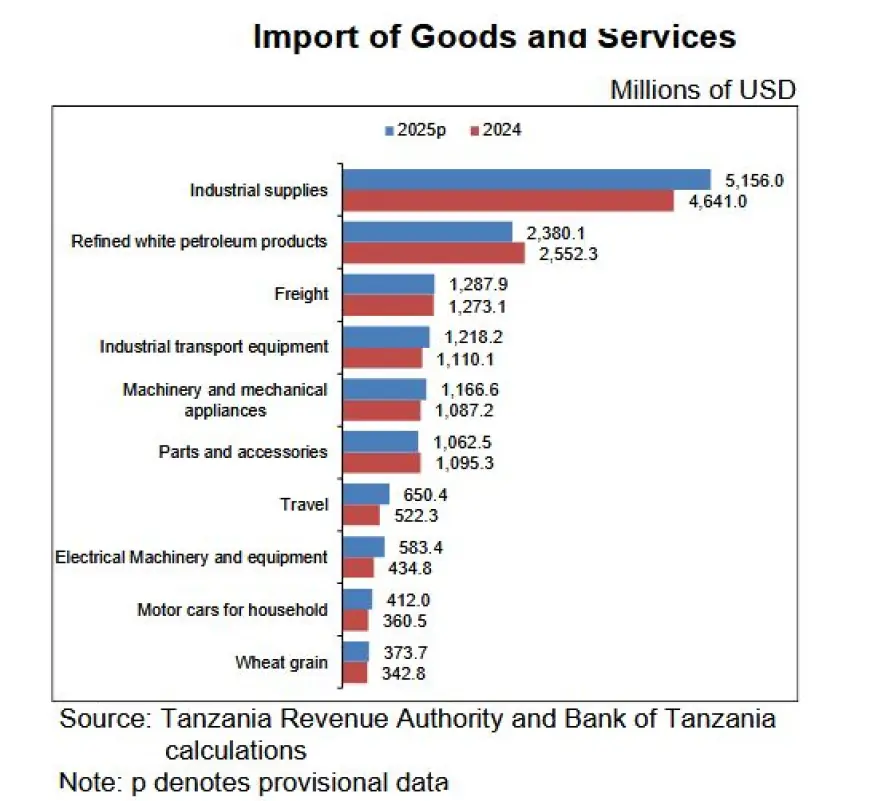
On the other side of the ledger, imports also saw an increase, though the composition of these purchases suggests a focus on long-term development.
Total imports of goods and services rose to $17.826 billion from $16.99 billion in 2024.
The increase was driven by capital and intermediate goods, including industrial supplies, transport equipment, and machinery.
These items are essential for sustaining the country’s industrial momentum.
A notable highlight in the import data was the reduction in the national fuel bill.
Oil imports declined by 6.7 percent, dropping from $2.55 billion to $2.38 billion.
This decline was attributed to the moderation of global oil prices throughout the year.
While service payments increased by 12.5 percent to $3.144 billion due to higher freight costs, the overall trajectory shows a more competitive trade position.
The convergence of record-breaking gold exports and a robust recovery in tourism has allowed Tanzania to move closer to a trade surplus.
What's Your Reaction?
 Like
0
Like
0
 Dislike
0
Dislike
0
 Love
0
Love
0
 Funny
0
Funny
0
 Angry
0
Angry
0
 Sad
0
Sad
0
 Wow
0
Wow
0