














































































New Public Investment Bill targets efficiency in state-owned firms
Presenting his ministry’s Sh144.85 billion budget proposals for 2026/27, the Minister of State in the President’s Office [Planning and Investment], Kitila Mkumbo, said the forthcoming Public Investment Bill would anchor this transformation

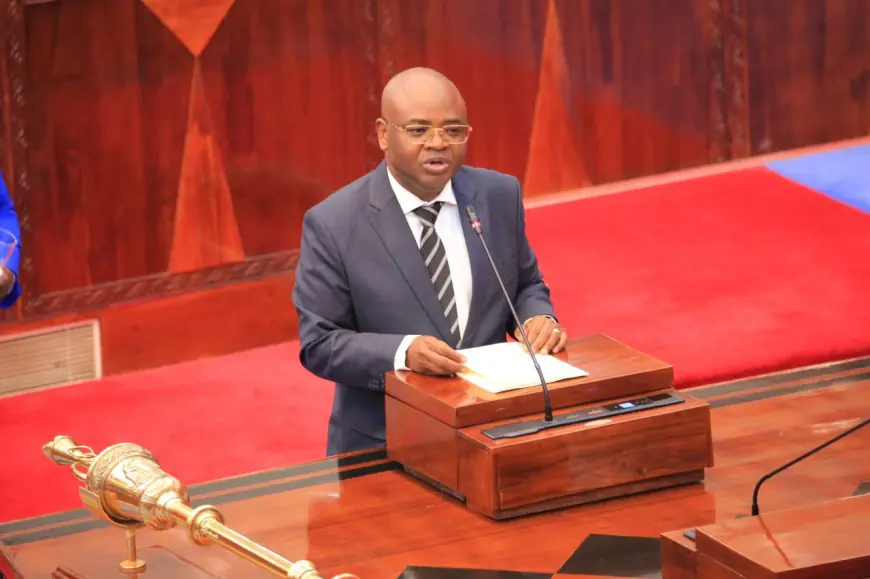
Dodoma. Tanzania is preparing to overhaul the legal and institutional framework governing public investments, in a move that reflects a broader push to reposition state-owned enterprises and government-linked companies as engines of growth rather than fiscal burdens.
Presenting his ministry’s Sh144.85 billion budget proposals for 2026/27, the Minister of State in the President’s Office [Planning and Investment], Kitila Mkumbo, said the forthcoming Public Investment Bill would anchor this transformation.
The legislation is expected to be finalised in the next financial year.
At its core, the Bill seeks to introduce a modern governance architecture for public investments.
It will establish a Public Investment Management Authority to oversee state assets under a unified national strategy.
It will also create a Public Investment Fund designed to mobilise capital without eroding revenues allocated to the Treasury.
The reforms come at a time when Tanzania is reassessing the role of its state-owned enterprises (SOEs).
Historically, many of these entities have struggled with inefficiencies, weak governance, and persistent reliance on government subsidies.
Several have posted losses or delivered modest returns despite commanding significant asset bases.
The Treasury Registrar’s Office currently oversees 308 entities, including firms in which the government holds minority stakes.
Their combined investment value stands at Sh92.3 trillion, with 91 classified as commercial enterprises.

These include firms in strategic sectors such as energy, telecommunications, transport, and agriculture, where the state retains influence to safeguard national interests.
In recent years, the government has intensified efforts to improve performance.
Reforms have centred on strengthening oversight, enforcing dividend policies, and introducing performance contracts for executives.
The proposed law builds on these measures by introducing competitive recruitment for chief executives and boards.
This is intended to curb political patronage and enhance professionalism.
Equally significant is the planned expansion of operational autonomy. Commercial SOEs will be granted greater flexibility to make business decisions, invest, and compete.
However, this autonomy will be matched with stricter accountability mechanisms, including performance benchmarks and regular evaluations.
The reforms align with the long-term national development blueprint, Dira 2050, which envisions a more dynamic and self-sustaining public sector.
Authorities aim for public entities to contribute up to eight percent of gross domestic product by mid-century.
Restructuring has already begun. Following a 2023 performance review, the government ordered the merger of 14 institutions and the dissolution of three others.
Progress has been gradual but notable. The consolidation of the Tanzania Investment Centre and the Export Processing Zones Authority into the Tanzania Investment and Special Economic Zones Authority is among the most prominent examples.
Parallel efforts are underway to rationalise state assets.
The government is advancing the privatisation of several re-vested industries, including NMC Mzizima and Kilimanjaro Paddy.
It has also undertaken valuations of agricultural estates and industrial facilities to attract strategic investors and unlock value.
Revenue performance is showing early signs of improvement. Non-tax revenues from public entities are projected to reach Sh1.79 trillion in 2026/27.
By March 2026, collections had already risen to Sh773.37 billion, reflecting stronger dividend flows and enhanced compliance.
Taken together, these measures signal a decisive shift.
The state is not retreating from commercial activity. Rather, it is seeking to redefine its role.
The emphasis is on efficiency, profitability, and strategic oversight.
Whether the new legal framework will deliver sustained results will depend on implementation discipline and the insulation of institutions from political interference.
What's Your Reaction?
 Like
0
Like
0
 Dislike
0
Dislike
0
 Love
0
Love
0
 Funny
0
Funny
0
 Angry
0
Angry
0
 Sad
0
Sad
0
 Wow
0
Wow
0