










































































Global trade growth continues on gains from Africa, Asia
Trade in goods accounted for most of this expansion, rising by about 7 per cent and contributing nearly $1.8 trillion to the overall increase


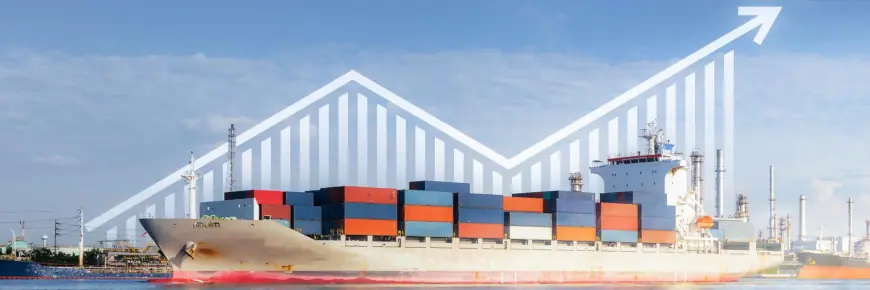
Global trade expanded robustly in 2025, with total trade in goods and services increasing by about $2.5 trillion, or roughly 7.5 percent, to a record $35 trillion, according to the latest Global Trade Update from the United Nations Conference on Trade and Development.
Trade in goods accounted for most of this expansion, rising by about 7 per cent and contributing nearly $1.8 trillion to the overall increase.
Trade in services grew at an even faster rate, at about 8 per cent, adding around $700 billion.
The growth was geographically broad‑based but especially strong among developing economies.
Trade between countries in the global South outpaced the world average, expanding by about 9 percent, and underscored the increasing role of East Asian and African economies in international commerce.

Momentum into 2026, but rising risks
Preliminary indicators suggest that the expansion of trade carried into early 2026, particularly for goods. However, some data point to emerging signs of a slowdown in services trade.
Official forecasts for the full year signal a deceleration in trade growth later in 2026, driven by persistent geopolitical tensions, higher trade costs and policy uncertainty.
The ongoing conflict in the Middle East and disruptions to critical shipping routes, such as in the Strait of Hormuz, are weighing on global shipping and energy flows.
This has the potential to raise costs and fuel inflationary pressures in an already strained global economy.
Rising tariffs, regulatory shifts and the erosion of long‑standing trade rules are adding to upward pressure on trade costs.
These factors, coupled with limited fiscal space for stimulus in many countries, could dampen the trade outlook.
Technology and green sectors underpin trade
Despite these headwinds, demand for technology‑related goods and green‑industry products has bolstered trade.
Strong global demand for artificial intelligence (AI) ‑enabled goods, digital technologies and related components supported much of the manufacturing trade expansion in 2025 and is expected to remain a key driver in the coming quarters.
Analysis by industry specialists indicates that sectors such as semiconductors, servers and networking equipment aimed at AI data centres accounted for a sizeable share of the overall trade increase last year.
In contrast, energy trade remained volatile over the period, and the automotive sector showed subdued performance as protectionist pressures persisted.

US‑China trade slump reshapes global flows
A marked contraction in trade between the United States and China has been a defining feature of recent global trade dynamics.
Data indicate that trade flows between the two largest economies declined sharply in 2025, driven in part by tariff escalation and shifting supply chains.
Total bilateral trade volumes fell by an estimated quarter, or roughly $170 billion, compared with the previous year.
This slump has reflected broader shifts in sourcing patterns and geopolitical divergence.
Global trade flows have adapted to these changes. Economies such as Cambodia, Egypt, Viet Nam and Indonesia have emerged as important hubs in regional value chains, often serving as logistical or assembly points that help connect production networks.
These “connector economies” have contributed to stabilising trade flows and mitigating the impact of geopolitical fragmentation.
As trade continues to evolve in 2026, the interplay between structural shifts, geopolitical risks and emerging technological demand will shape the future trajectory of global commerce.
What's Your Reaction?
 Like
0
Like
0
 Dislike
0
Dislike
0
 Love
0
Love
0
 Funny
0
Funny
0
 Angry
0
Angry
0
 Sad
0
Sad
0
 Wow
0
Wow
0