









































Tanzania targets 6.3pc economic growth in 2026 as development spending rises
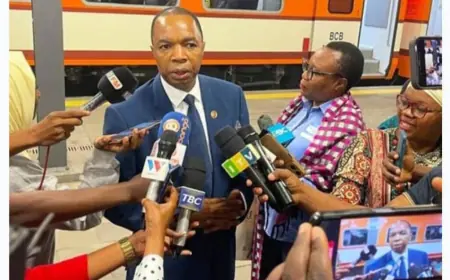
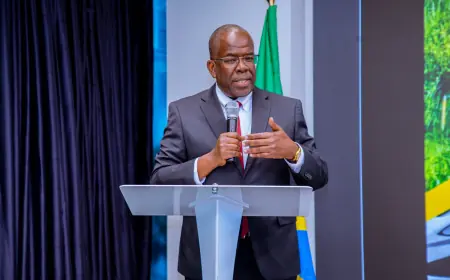
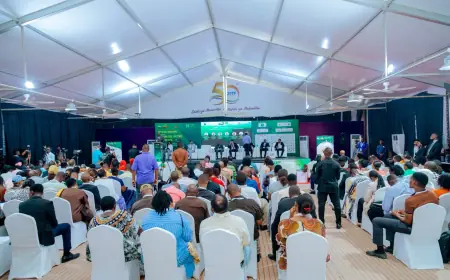
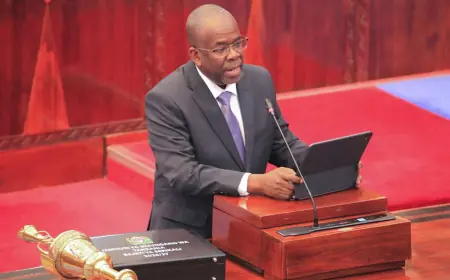
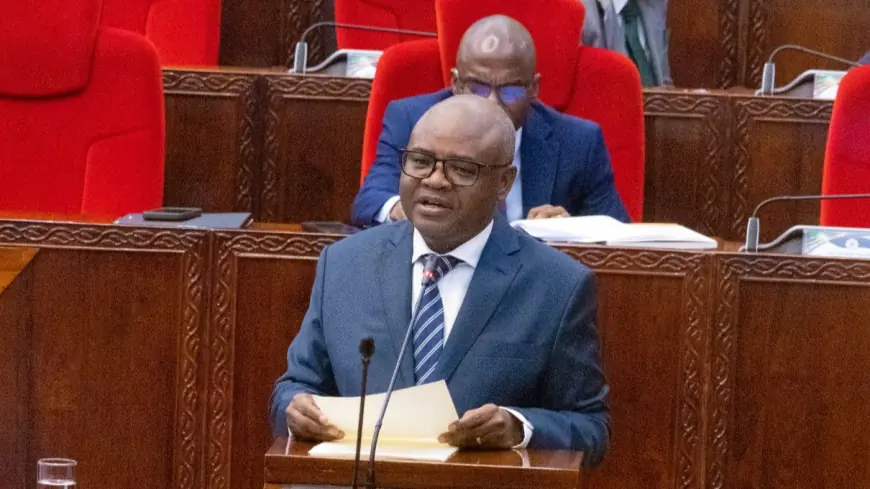
Presenting the State of the Economy report in Parliament on Thursday, June 11, 2026, the minister of State in the President’s Office [Planning and Investment], Prof Kitila Mkumbo, said the government aims to increase real Gross Domestic Product (GDP) growth to 6.3 percent in 2026 from an estimated 5.9 percent in 2025

Dodoma. Tanzania has set an ambitious economic agenda for 2026, targeting stronger growth, higher domestic revenues and the creation of 1.7 million jobs as the government seeks to build on gains achieved during the past five years.
Presenting the State of the Economy report in Parliament on Thursday, June 11, 2026, the minister of State in the President’s Office [Planning and Investment], Prof Kitila Mkumbo, said the government aims to increase real Gross Domestic Product (GDP) growth to 6.3 percent in 2026 from an estimated 5.9 percent in 2025.
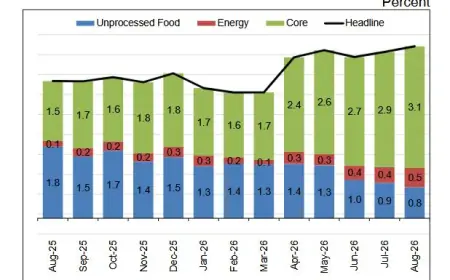
“The government also plans to maintain inflation within the medium-term target range of 3.0 to 5.0 percent to safeguard households’ purchasing power amid global economic uncertainties,” Prof Mkumbo said.
He mentioned other key macroeconomic targets as including raising domestic revenue to 17.1 percent of GDP in the 2026/27 financial year from 16.8 percent in 2025/26, increasing tax revenue to 13.7 percent of GDP from 13.3 percent, maintaining foreign exchange reserves sufficient to cover at least four months of imports, and keeping the budget deficit below 3.0 percent of GDP.
Employment
He noted that the government also intends to accelerate employment creation, targeting 1.7 million jobs in 2026, compared with 981,000 jobs generated in 2024.
Prof Mkumbo said Tanzania’s economy has demonstrated remarkable resilience since President Samia Suluhu Hassan assumed office in March 2021, a period marked by the lingering effects of the Covid-19 pandemic and global geopolitical tensions.
According to him, economic growth has risen steadily from 4.7 percent in 2021 to 5.9 percent in 2025 and is expected to reach 6.3 percent this year.
Export earnings have also increased significantly, climbing from $6.4 billion in 2021 to $10.6 billion in 2025.
The latest economic data show that Tanzania’s GDP expanded to Sh234.1 trillion in 2025, measured at constant 2019 prices, up from Sh212 trillion in 2024.
In dollar terms, the economy was valued at approximately $91.8 billion.
GDP per capita

The expansion translated into improved income levels, with GDP per capita rising by 7.4 percent to Sh3.54 million, equivalent to about $1,390 per person, compared with Sh3.3 million in 2024.
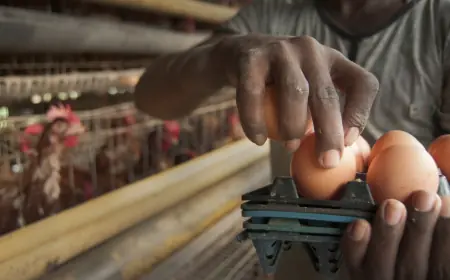
Agriculture remained the backbone of the economy, accounting for 24.3 percent of GDP.
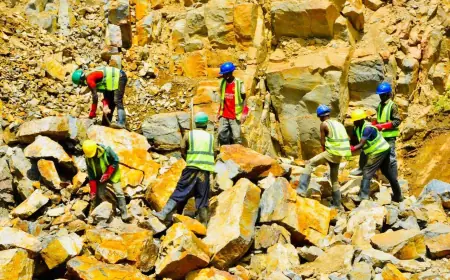
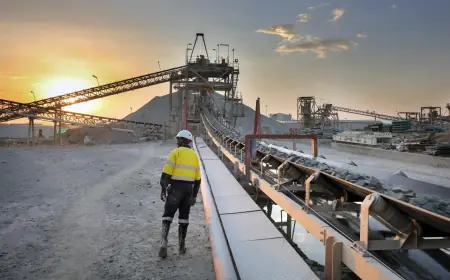
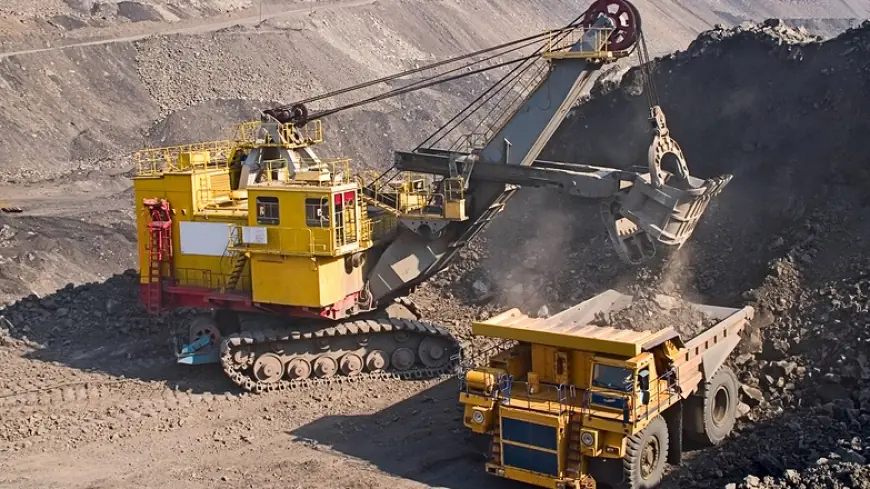
Construction contributed 11.9 percent, while mining and quarrying accounted for 10.3 percent.
Trade contributed 8.6 percent and transport and storage 8.3 percent.
Several sectors recorded particularly strong growth.
Financial and insurance activities expanded by 15.7 percent, the fastest among all sectors.
Electricity and gas grew by 11.8 percent, mining and quarrying by 9.4 percent, information and communication by 8.8 percent, arts and entertainment by 8.5 percent, and transport and storage by 8.0 percent.
Inflation averaged 3.3 percent in 2025, slightly higher than 3.1 percent in 2024, but remained comfortably within the government’s target range and regional convergence criteria.
FDIs
Foreign investor confidence also strengthened considerably.
Tanzania attracted $1.72 billion in Foreign Direct Investment (FDI) inflows in 2025, representing a 28.3 percent increase from $1.34 billion previously.
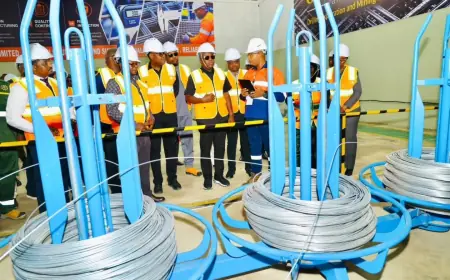
Mining and quarrying attracted the largest share of foreign investment at $442.2 million, followed by financial and insurance services at $401.3 million.
Manufacturing received $223.1 million, while information and communication secured $152.1 million.
Together, these sectors accounted for nearly three-quarters of total FDI inflows.
The minister highlighted major infrastructure achievements completed during the period.
These include 680.38 kilometres of the Standard Gauge Railway, with operational services already running between Dar es Salaam and Dodoma.
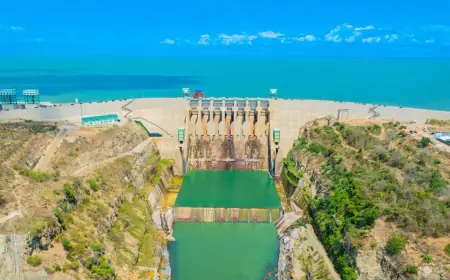
The 2,115-megawatt Julius Nyerere Hydropower Project has also been completed, helping raise the country’s electricity generation capacity to 4,522.54 megawatts as of March 2026.
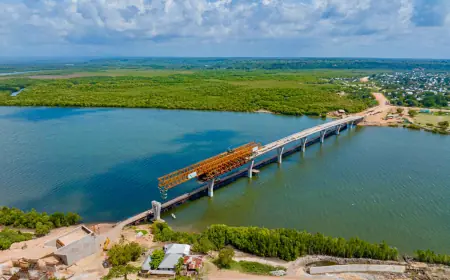
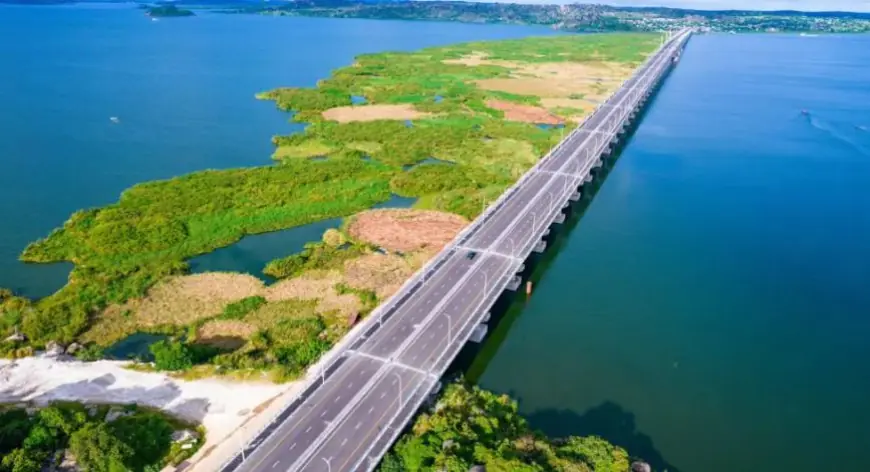
Other milestones include the completion of the JPM Bridge linking Kigongo and Busisi and the near completion of the Kilwa fishing port project and associated vessels, which have reached 97 percent implementation.
Labour market
Professor Mkumbo said improvements in the business and investment climate have continued to attract capital and stimulate economic activity.
Labour market indicators have also improved significantly.
The labour force reached 27.3 million people, equivalent to 73.2 percent of the working-age population, compared with 72.1 percent in 2020/21.
Of those employed, 54.2 percent work in agriculture, 35.5 percent in services and 10.3 percent in industry.
The unemployment rate fell to 6.2 percent in 2024 from 8.7 percent in 2020/21, while annual employment growth increased to 7.8 percent from 2.3 percent over the same period.
The government has also expanded recruitment in the public sector.
Over the past five years, more than 32,800 public servants have been employed, including teachers and health workers.
Social indicators have shown notable progress.
Maternal mortality declined sharply to about 104 deaths per 100,000 live births in 2025 from 556 deaths in 2021. Literacy improved to 85.1 percent from 83.1 percent in 2022, while university graduates increased to 62,570 in 2024 from 54,810 in 2021.
Looking ahead
The National Development Plan for 2026/27 will focus on five priority areas: strengthening good governance, democracy, peace and stability; building a strong, inclusive and competitive economy; enhancing human capital and social development; improving environmental conservation and climate resilience; and advancing key reform drivers including energy, transport infrastructure, research, innovation and digital transformation.
The government plans to begin implementing 38 strategic projects drawn from seven flagship development programmes under the Fourth Five-Year National Development Plan.
These include the Bagamoyo Marine Eco-City and Integrated Transport Programme, the Mchuchuma Coal and Liganga Iron Complex, a national irrigation and agro-processing programme, a rare earth minerals processing hub in Dodoma, the LNG project in Lindi, an industrial and blue economy hub in the Great Lakes region and an integrated urban development programme.
The total cost of implementing the 2026/27 development plan is estimated at Sh86.3 trillion, representing 18.1 percent of the overall Sh477.7 trillion budget required for the Fourth Five-Year National Development Plan.
The private sector is expected to finance the largest share of the investment programme, contributing Sh60.1 trillion or 69.6 percent of total funding.
The public sector will provide Sh26.2 trillion, including Sh5.5 trillion from public corporations and Sh20.8 trillion from the government budget to be presented later on Thursday by the Minister for Finance.
The government believes the combination of sustained macroeconomic stability, strategic infrastructure investments and rising private sector participation will provide the foundation for faster growth and broader economic transformation in the years ahead.
What's Your Reaction?
 Like
0
Like
0
 Dislike
0
Dislike
0
 Love
0
Love
0
 Funny
0
Funny
0
 Angry
0
Angry
0
 Sad
0
Sad
0
 Wow
0
Wow
0