


















































































Tanzania overhauls company registration fees in new capital-based structure
The proposed amendments to the Companies (Fees Payable to the Registrar) Regulations introduce a tiered system in which registration costs are determined by a company’s nominal share capital, a shift the government says is intended to modernise the fee structure and align charges with the scale of business operations

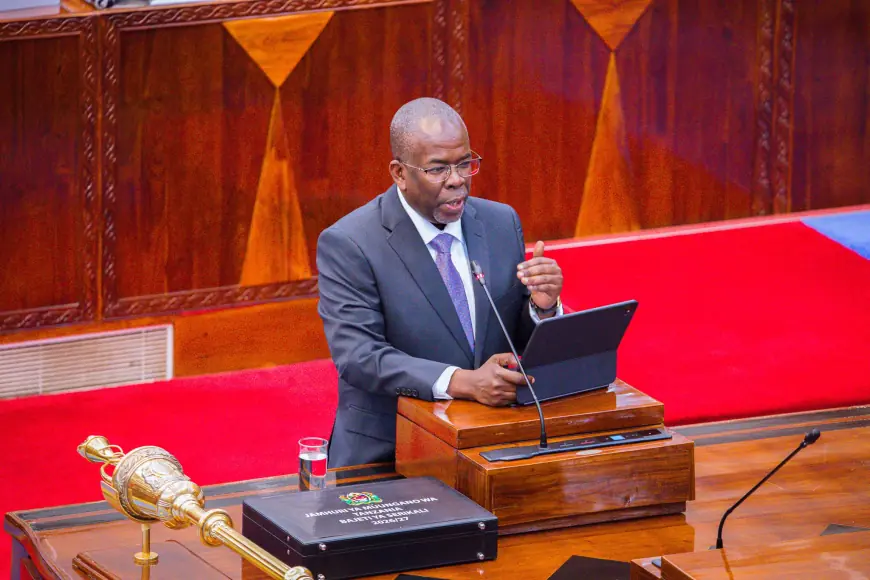
Dodoma. Tanzania has unveiled a wide-ranging overhaul of taxes, fees and regulatory charges, headlined by a new tiered system of company registration fees tied to nominal share capital, as the government seeks to balance business environment reforms with increased domestic revenue mobilisation.
The proposed amendments to the Companies (Fees Payable to the Registrar) Regulations introduce a tiered system in which registration costs are determined by a company’s nominal share capital, a shift the government says is intended to modernise the fee structure and align charges with the scale of business operations.
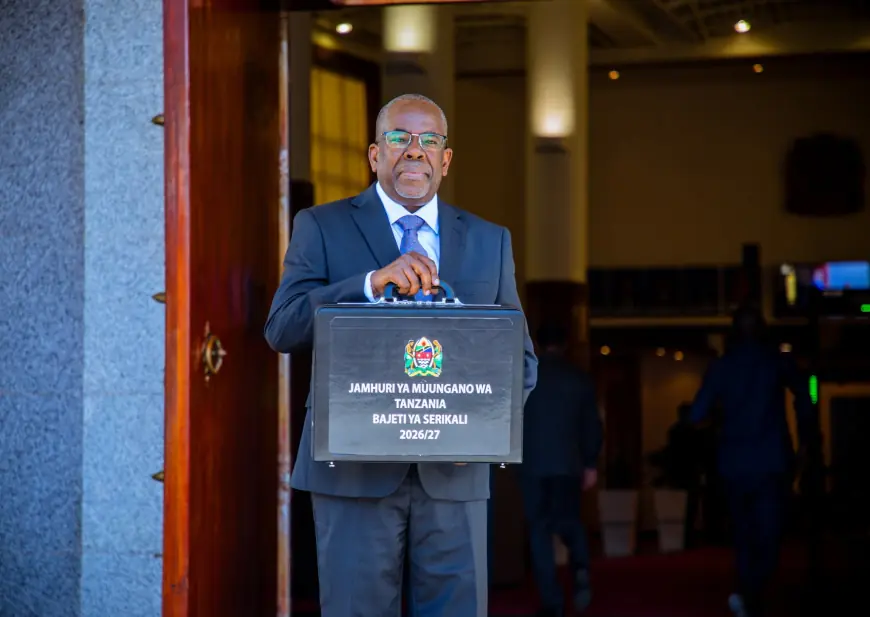 Under the new framework, companies with nominal share capital of more than Sh20,000 but not exceeding Sh1 million will pay Sh95,000 in registration fees.
Those with capital between Sh1 million and Sh5 million will be charged Sh175,000, while enterprises in the Sh5 million to Sh20 million bracket will pay Sh260,000.
“For capital limits between Sh5 million and Sh20 million, the fee stands at Sh260,000,” Amb Omar told Parliament while presenting the budget.
Larger firms will face progressively higher costs, with companies in the Sh20 million to Sh50 million category required to pay Sh290,000, and those between Sh50 million and Sh100 million charged Sh400,000.
Businesses with capital ranging from Sh100 million to Sh500 million will pay Sh450,000, while those between Sh500 million and Sh1 billion will be charged Sh500,000.
Companies with capital between Sh1 billion and Sh10 billion will pay Sh600,000, while those exceeding Sh10 billion will be required to pay Sh1 million.
Companies without share capital will pay a flat registration fee of Sh500,000, while the reservation of a company name has been set at Sh50,000.
Changes of company name will attract Sh22,000, with the same charge applied to the registration or receipt of documents submitted to the Registrar.
The regulations further provide for a penalty of Sh2,500 per month for late filing of statutory documents, alongside Sh22,000 for filing annual returns and Sh3,000 per page for certification of documents.
 A customized company search report will cost Sh30,000.
The government has also maintained a Sh70,000 monthly penalty for persistent non-compliance in filing obligations, signalling continued emphasis on enforcement of corporate reporting requirements.
Foreign companies will continue to operate under a separate fee regime. Registration of a certified copy of any instrument defining the constitution of a foreign company will attract a fee of Sh2 million, while filing a balance sheet and related statutory documents will each cost Sh600,000.
“The registration of a certified copy of any instrument defining the constitution of a foreign company will attract a fee of Sh2 million, while filing a balance sheet and other required documents will each cost Sh600,000,” the minister said.
Beyond company registration, the budget introduces significant adjustments to digital economy licensing fees, with substantial reductions for online content service providers under the Tanzania Communications Regulatory Authority (TCRA).
The application fee for online content services has been reduced from Sh50,000 to Sh10,000, while licence, annual and renewal fees have been cut from Sh500,000 to Sh50,000.
 Similarly, fees for Online Content Aggregator licences have been reduced from Sh100,000 to Sh20,000 for applications, and from Sh1 million to Sh100,000 for annual charges, in what the government says is a move to lower compliance costs and stimulate growth in the digital content industry.
“The government said the reductions are intended to lower compliance costs and encourage growth in Tanzania’s rapidly expanding digital content industry,” according to the budget framework presented to Parliament.
The reforms extend to cultural and recreational sectors, with new fees introduced for private museums, where Tanzanian citizens will pay Sh50,000 for registration and supervision, institutions Sh100,000, and foreign operators Sh500,000.
However, the budget also introduces upward revisions in several sectors as part of efforts to strengthen revenue collection.
Petroleum verification fees under the Weights and Measures Agency Regulations have increased sharply from Sh0.15 per litre to Sh1 per litre, a measure expected to generate approximately Sh21.96 billion to support procurement of modern fuel monitoring equipment.
The transport sector will also face higher charges, with motorcycle registration fees rising from Sh95,000 to Sh150,000, projected to raise Sh17.75 billion in additional revenue.
In the health financing framework, the government has introduced new excise adjustments, including an increase in excise duty on cigarettes by Sh20 per mille, alongside a sugar levy of Sh10 per kilogramme on both imported and locally produced sugar to support Universal Health Coverage funding.
Environmental and tourism-related charges have also been revised, with tourism and recreational facilities located in or near protected areas now subject to updated annual fees depending on classification and star rating, while environmental compliance costs under the National Environment Management Council (NEMC) have been restructured across multiple sectors, including oil and gas, mining, hospitality and infrastructure development.
The blue economy sector has also been affected, with revised licensing fees for fish and fish product exports and imports introducing differentiated charges for small-scale operators, large enterprises and foreign investors, with fees ranging from Sh500,000 to Sh3.5 million depending on product category and ownership structure.
Amb Omar said the reforms were part of a broader fiscal strategy aimed at modernising revenue systems while supporting economic transformation and private sector growth under the country’s long-term development framework.
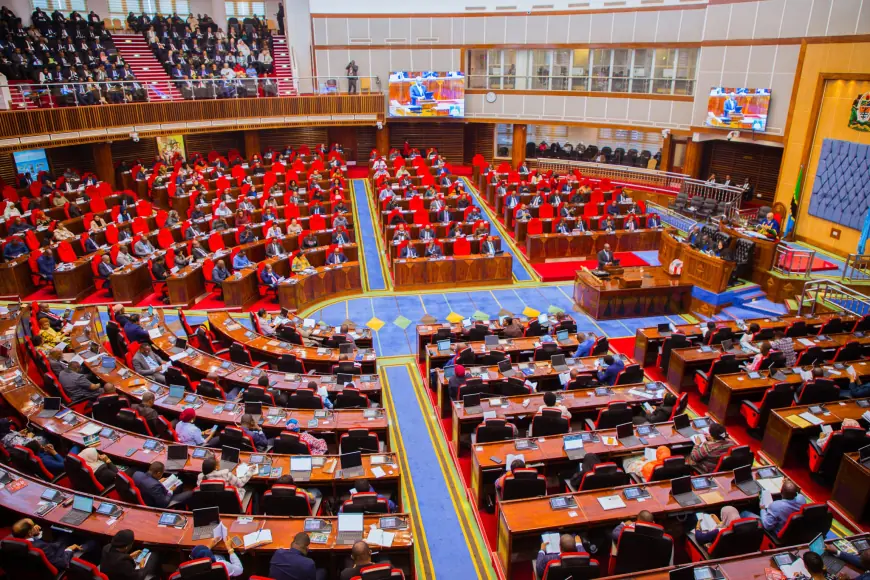 The proposed measures will now proceed to parliamentary scrutiny through the Finance Bill, where lawmakers are expected to debate and refine the new tax, fee and regulatory framework before enactment.
What's Your Reaction?
 Like
0
Like
0
 Dislike
0
Dislike
0
 Love
0
Love
0
 Funny
0
Funny
0
 Angry
0
Angry
0
 Sad
0
Sad
0
 Wow
0
Wow
0