












































































EAC summit unveils customs bond to speed up regional cargo movement
The EAC Customs Bond replaces the requirement for multiple national bonds and is designed to lower compliance costs and reduce border delays for traders



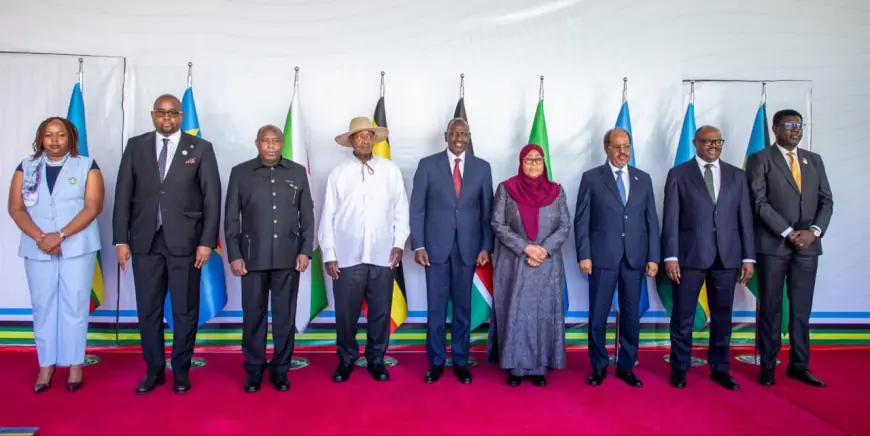
Arusha. East African Community (EAC) Heads of State have launched the regional EAC Customs Bond, a move aimed at easing cross-border trade and strengthening the bloc’s integration agenda.
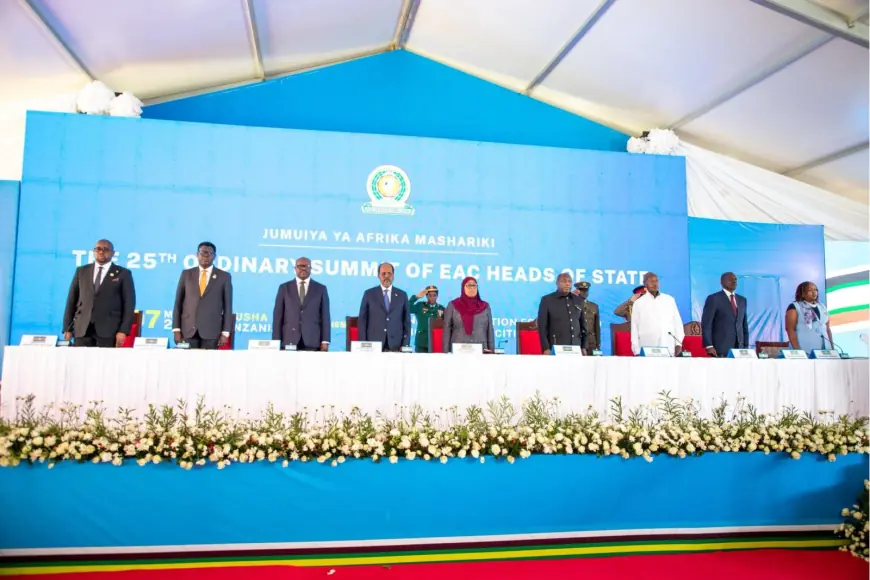
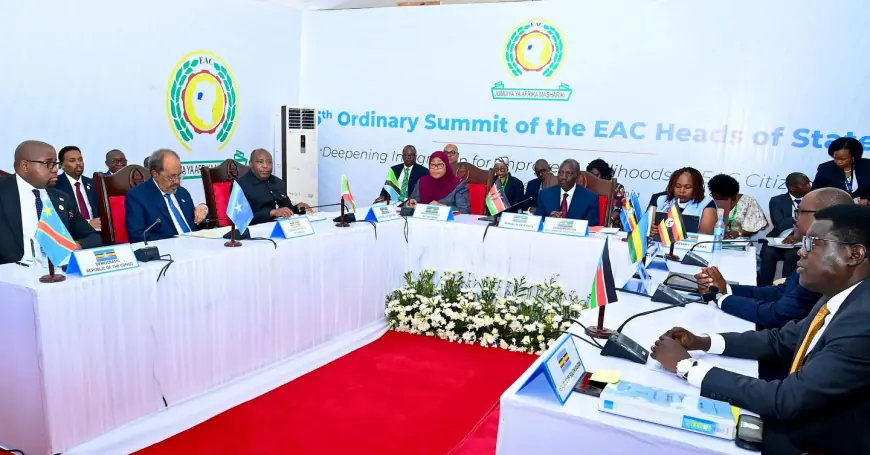
The decision was announced during the 25th Ordinary Summit of the EAC Heads of State held in Arusha on March 7, 2026, where leaders reviewed progress on regional cooperation and endorsed measures designed to facilitate the movement of goods within the bloc.
The summit chaired by Kenyan President William Ruto was attended by Tanzanian President Samia Suluhu Hassan, Ugandan President Yoweri Museveni, Burundian President Évariste Ndayishimiye and Somali President Hassan Sheikh Mohamud.
Representatives of the heads of state of Rwanda, South Sudan, and the Democratic Republic of Congo joined the leaders. The summit addressed the core pillars of regional integration and security coordination.
The new customs bond framework is intended to simplify the movement of cargo across member states by allowing traders to use a single regional bond when transporting goods through multiple EAC countries. The system replaces the need for separate national bonds at each border.
Officials say the reform will significantly reduce administrative procedures, lower the cost of transit trade and shorten cargo clearance times across the region.
The initiative forms part of wider efforts by the EAC to remove non-tariff barriers and improve the efficiency of regional supply chains.
Facilitating regional trade
Under the arrangement, goods transported under customs control across several EAC states will be covered by one guarantee recognised by all participating countries.
This means transporters will no longer be required to secure individual bonds in each jurisdiction as goods move from ports to inland destinations or between partner states.
Trade experts say the measure is particularly important for land-linked countries such as Uganda, Rwanda, Burundi, South Sudan and the Democratic Republic of Congo, which depend heavily on transit routes through coastal states.
By simplifying documentation requirements and reducing duplication of procedures, the system is expected to accelerate cargo flows along major trade corridors such as the Northern and Central corridors.
The reform is also expected to enhance transparency and improve risk management within customs administrations across the region.
Advancing the integration agenda
The launch of the regional customs bond reflects the broader objective of deepening economic integration within the East African Community.
Regional integration in the bloc has been advancing through a series of structured stages established under the EAC Treaty.
The first major milestone was the Customs Union Protocol, which came into force in 2005.
The protocol created a common external tariff for imports from outside the region and removed internal tariffs on trade among partner states.
The customs union also introduced coordinated customs procedures to facilitate trade across borders.
In 2010, the EAC moved to the next phase with the implementation of the Common Market Protocol, which guarantees the free movement of goods, labour, services and capital within the bloc.
The common market framework also recognises the rights of citizens of partner states to establish businesses and reside in other member countries.
Subsequent steps in the integration process include the planned establishment of a monetary union and, eventually, a political federation.
Addressing trade barriers
Despite these milestones, trade within the region has continued to face logistical and administrative challenges, including multiple customs procedures, inconsistent documentation requirements and delays at border posts.
Regional leaders have repeatedly emphasised the need to remove such bottlenecks to unlock the full potential of intra-EAC trade.
The introduction of the regional customs bond is therefore viewed as a practical step towards harmonising customs processes and making regional trade more efficient.
The reform complements other initiatives introduced in recent years, including one-stop border posts, electronic cargo tracking systems and harmonised transit procedures.
Together, these measures aim to create a seamless trading environment across the East African Community.
Growing economic bloc
The East African Community currently comprises eight member states: Tanzania, Kenya, Uganda, Rwanda, Burundi, South Sudan, the Democratic Republic of Congo and Somalia.
With a combined population of more than 300 million people, the bloc represents one of the fastest-growing regional markets in Africa.
Regional trade has expanded steadily in recent years as governments pursue policies aimed at reducing barriers and improving infrastructure connectivity.
Officials say reforms such as the EAC customs bond will help strengthen regional value chains and enhance the competitiveness of East African goods in global markets.
Leaders at the summit reaffirmed their commitment to accelerating integration and improving the livelihoods of citizens across the region through deeper economic cooperation.
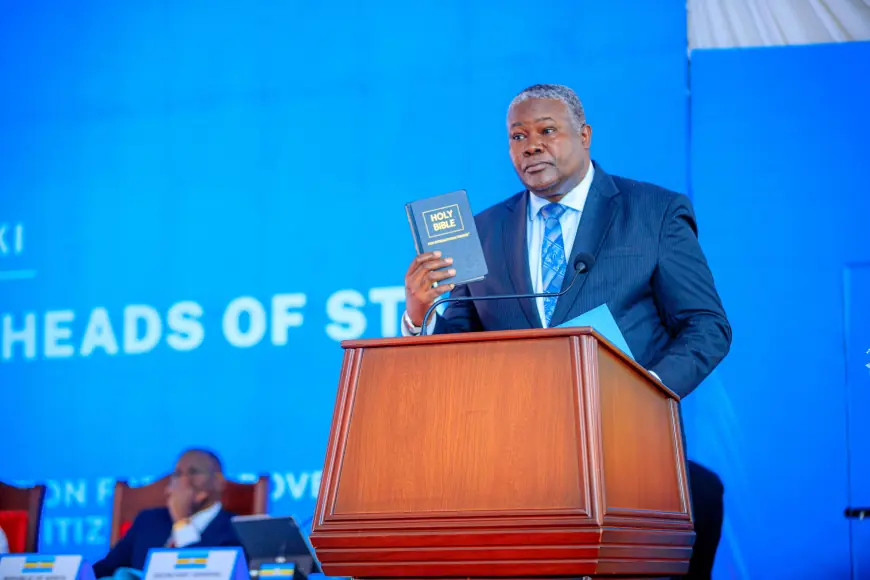
The summit also appointed Tanzanian diplomat, Amb Stephen Patrick Mbundi, as the new Secretary-General.
The Heads of State also appointed new judges to the East African Court of Justice.
He succeeds the Kenyan, Veronica Nduva, following the end of her tenure.
President Museveni assumed the chairmanship of the Summit, taking over from President Ruto.
What's Your Reaction?
 Like
0
Like
0
 Dislike
0
Dislike
0
 Love
0
Love
0
 Funny
0
Funny
0
 Angry
0
Angry
0
 Sad
0
Sad
0
 Wow
0
Wow
0