


















































Tanzania’s strategic oil reserve debate intensifies amid Middle East conflict
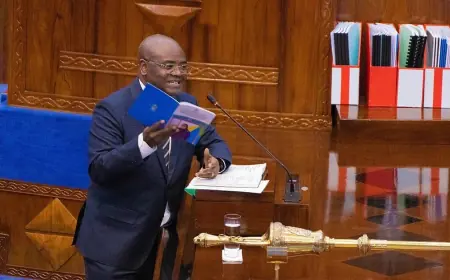
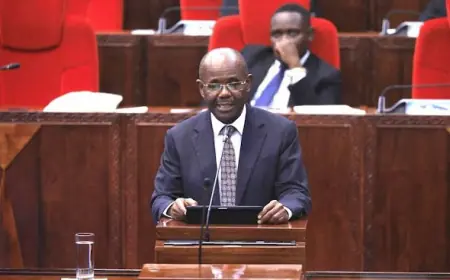
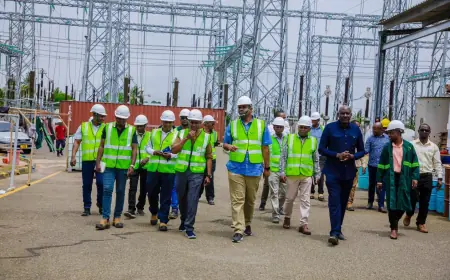
The Minister of Energy Deogratius Ndejembi has publicly advocated strengthening Tanzania’s stockholding capacity, emphasising that robust fuel reserves underpin not only domestic economic continuity but also investor confidence in the nation’s logistics and industrial sectors

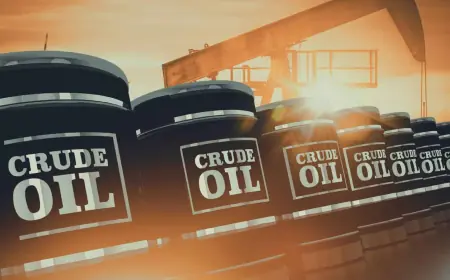
Dar es Salaam. The ongoing military confrontation in the Strait of Hormuz region, sparked by US and Israeli strikes on Iran and successive retaliatory actions, has sent ripples through global energy markets, lifting crude prices sharply and underscoring vulnerabilities in the international oil supply chain.
Around 20 percent of the world’s seaborne crude traverses this strategic waterway, and disruptions there have precipitated pronounced price hikes and volatility across benchmarks such as Brent and West Texas Intermediate crude.
Analysts caution that, should the crisis persist, global prices could edge toward $100 a barrel, even as production increases agreed by OPEC + remain constrained by logistic bottlenecks.
This backdrop has reignited discourse within Tanzanian policy and private sector circles on the necessity of expanding the country’s energy security apparatus, moving beyond its current operational petroleum stocks to a far more ambitious strategic reserve framework.
Proponents argue that, in an era of heightened geopolitical risk, Tanzania must not only safeguard its domestic fuel needs but also assert itself as a regional bulwark against supply shocks.
From operational stocks to strategic shield
Tanzania already operates a Bulk Procurement System (BPS) managed by the Petroleum Bulk Procurement Agency (PBPA), a state-owned entity tasked with coordinating petroleum product imports through international competitive bidding at scale.
The BPS supplies a range of refined products, from petrol and diesel to jet fuel, at competitive prices, ensuring steady weekly throughput for the domestic economy.
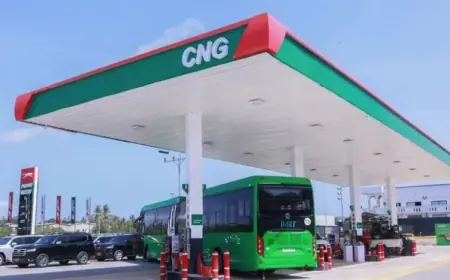
Additionally, facilities such as the Tanzania International Petroleum Reserves (TIPER) terminal in Dar es Salaam provide significant storage capacity and form a foundational layer of the existing supply infrastructure.
Nevertheless, experts stress a distinction between “operational stocks”, those necessary to keep markets functioning week to week, and true “strategic reserves”, which are held specifically to cushion against disruptions originating outside normal commercial cycles.
Current global volatility has sharpened awareness of this difference.
“Operational stocks” cover routine needs, but the shocks to shipping and production emanating from the Middle East crisis have shown that external supply tensions can persist long enough to threaten both availability and price stability.
A strategic reserve, in contrast, would be a sovereign asset held expressly to mitigate such scenarios.
The case for an ‘Energy Bank’
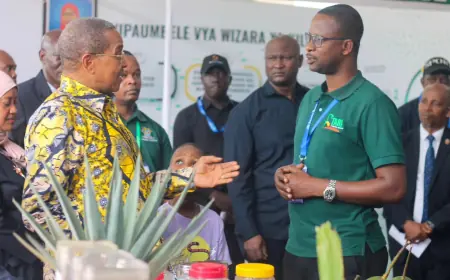
The Minister of Energy Deogratius Ndejembi has publicly advocated strengthening Tanzania’s stockholding capacity, emphasising that robust fuel reserves underpin not only domestic economic continuity but also investor confidence in the nation’s logistics and industrial sectors.
He has urged PBPA to collaborate with private players to expand storage infrastructure and secure larger volumes of petroleum products.
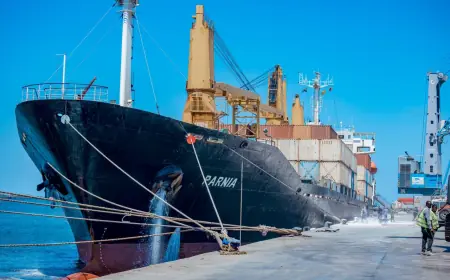
Under this vision, Tanzania would evolve from a transit hub, through which large quantities of fuel already flow en route to landlocked neighbours, into a strategic energy bank for the wider region. The Dar es Salaam port serve as the primary maritime gateway for much of East and Central Africa.
As it stands, a significant proportion of fuel imported under the BPS is destined for transit to countries such as Zambia, Malawi, the Democratic Republic of Congo, Burundi and Rwanda, highlighting Tanzania’s logistical centrality in regional energy flows.
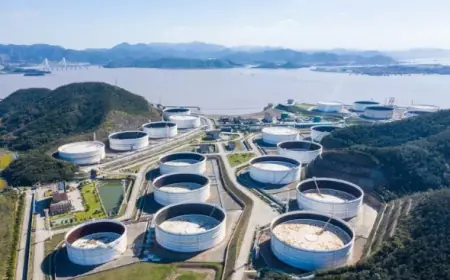
Advocates argue that a national reserve of strategic dimensions would enable Tanzania to purchase refined products when global prices are relatively low and hold them in purpose-built facilities.
In periods of severe supply disruption, whether caused by geopolitical conflict, pandemics, or other global shocks, these reserves could be released domestically to maintain essential services, or re-exported at premium rates to neighbouring states in need.
This commercial dimension, they suggest, transforms fuel storage from a pure security instrument into a potential revenue generator, anchoring Tanzania’s economic sovereignty while enhancing regional stability.
Blueprint for strategic implementation
Realising such an ambitious programme would require meticulous planning and significant investment.
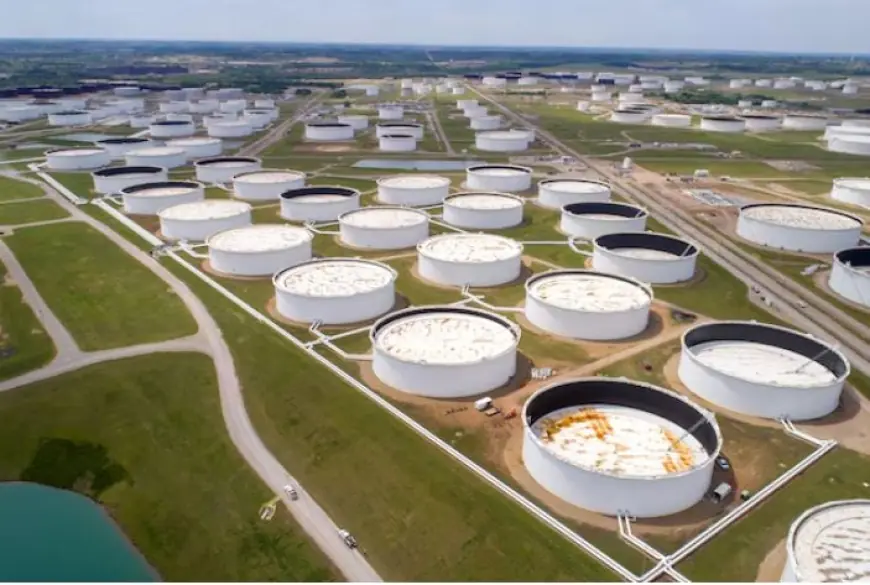
Drawing lessons from established models, such as the United States’ Strategic Petroleum Reserve or India’s subterranean caverns, Tanzania’s approach could combine massive above-ground tank farms with strategically located inland depots linked to vital transport infrastructure.
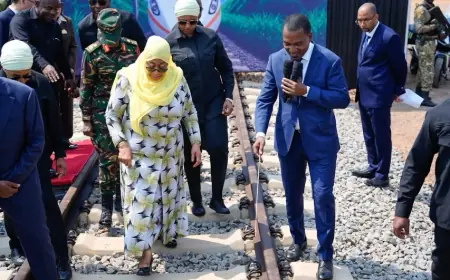
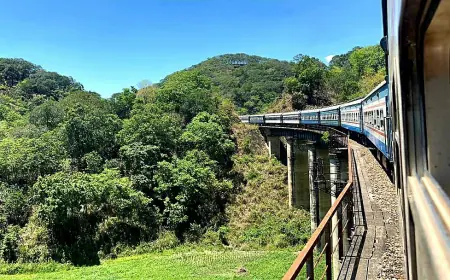
At the heart of this design would be seamless integration with the Standard Gauge Railway (SGR) system and key pipelines like the TAZAMA line, enabling rapid movement of fuel from the coast into the hinterland.
Such connectivity would transform stored stocks from static holdings into a dynamic distribution network capable of responding to emergent regional demand.
The government’s preferred investment mechanism for this paradigm would be Public-Private Partnerships under a “Build-Operate-Transfer” framework.
This model encourages foreign capital and technical expertise to participate in the construction and operation of sophisticated storage facilities while ensuring that ultimate ownership and strategic control remain with the Tanzanian state.
In parallel, a robust regulatory framework would be indispensable.
Clear “trigger mechanisms” dictating when strategic stocks may be deployed, either domestically or for regional assistance, would provide certainty to both Tanzanian consumers and potential re-export partners.
Regional demand and economic outlook
The calculus for Tanzania’s strategic reserve concept is reinforced by empirical trends.
Transit volumes through the BPS corridor have been rising, reflecting growing reliance by landlocked neighbours on fuel routed through Dar es Salaam.
In recent years, the number of firms participating in the country’s fuel import market has more than doubled, and through the improved BPS, total fuel imports have grown significantly.
Concurrently, global markets remain jittery.
The ongoing 2026 Strait of Hormuz crisis has effectively constrained maritime transport, prompting insurers and shippers to reroute or suspend operations around the Gulf and amplifying the risk premium embedded in crude prices.
The crisis has shown how swiftly geopolitical events can tighten supply, undermine confidence, and elevate the cost of energy imports globally.
Against this uncertain backdrop, Tanzania’s move towards a mega-reserve architecture is more than a matter of national preparedness; it is a strategic investment in regional resilience and economic autonomy.
As the government refines its policy instruments for the 2025/26 fiscal year, the “energy bank” concept stands poised to redefine Tanzania’s role in the East and Central African energy landscape, transforming it from a conduit of fuel to a custodian of supply security and a cornerstone of regional economic stability.
What's Your Reaction?
 Like
0
Like
0
 Dislike
0
Dislike
0
 Love
0
Love
0
 Funny
0
Funny
0
 Angry
0
Angry
0
 Sad
0
Sad
0
 Wow
0
Wow
0