




































Tanzania, Zambia, China launch Tazara's 21st-century future
The rehabilitation is anticipated to inject considerable dynamism into trade between Tanzania, Zambia, the Democratic Republic of Congo (DRC), and the broader Southern African Development Community (SADC) region

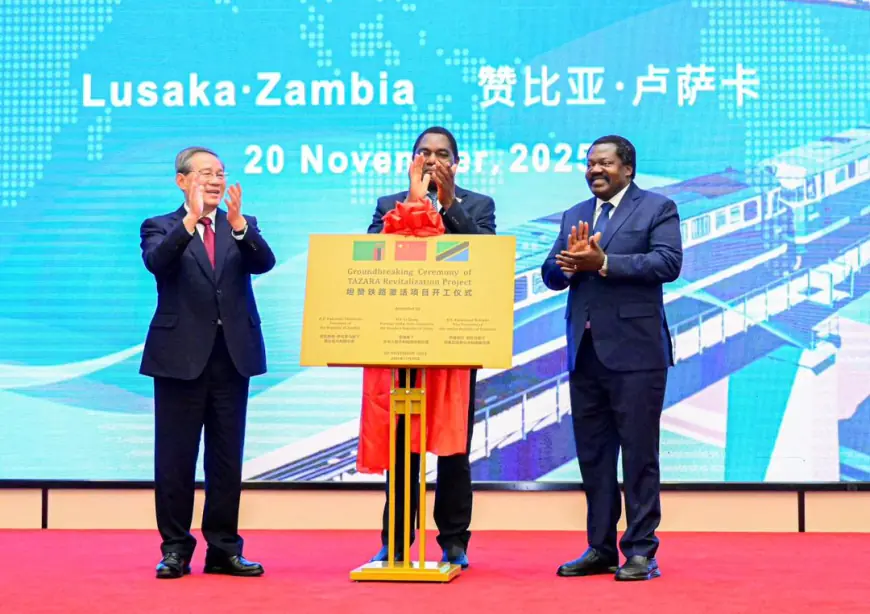
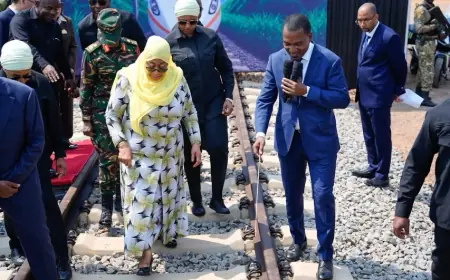
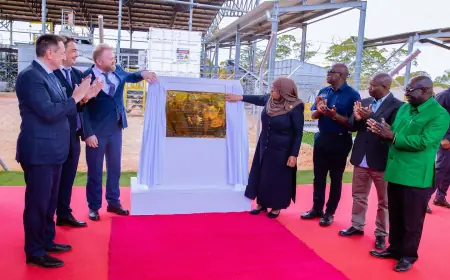
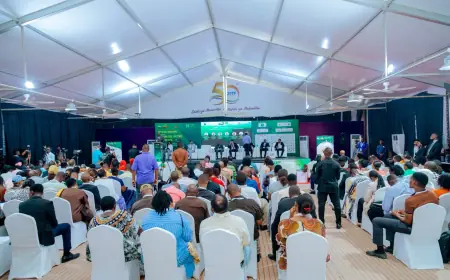
Lusaka. The Tanzania-Zambia Railway Authority (TAZARA), a historic symbol of pan-African cooperation, is poised for a major transformation following a foundation stone laying ceremony for its comprehensive rehabilitation in Lusaka.
The initiative, supported by significant investment from the People's Republic of China, is set to revitalise trade flows across the Central and Southern Corridors of the continent.
The event was attended by the President of the Republic of Zambia, Hakainde Hichilema, and the Premier of the State Council of the People's Republic of China, Li Qiang.
They were joined by Tanzania’s Vice President, Dr Emmanuel Nchimbi, who represented President Dr Samia Suluhu Hassan.
Restoring a strategic economic lifeline
Speaking during the event Dr Nchimbi said the revitalisation would fundamentally strengthen the regional transport corridors.
The rehabilitation is anticipated to inject considerable dynamism into trade between Tanzania, Zambia, the Democratic Republic of Congo (DRC), and the broader Southern African Development Community (SADC) region.
"This rehabilitation will increase exports and domestic sales for both Zambia and Tanzania, fostering growth across key sectors including agriculture, mining, industry, and tourism, while creating more employment opportunities for the people along this vital corridor," Dr Nchimbi stated.
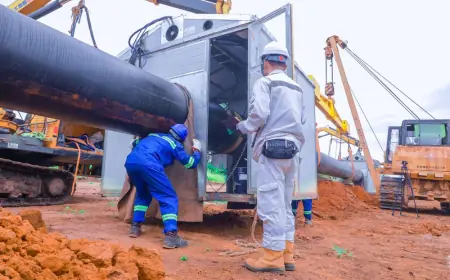
The ambitious plans involve extensive infrastructure improvements, including the refurbishment of the track and stations, alongside significant upgrades to the communication systems.
Furthermore, the project encompasses the procurement of new, modern rolling stock: 34 locomotives, 760 wagons, 18 passenger coaches, and two dedicated passenger trains.
The primary objective is to dramatically escalate the railway's cargo freight capacity to 2.4 million tonnes within the first three years of operation, re-establishing Tazara as a crucial transportation artery.
Tanzania’s integrated logistics vision
The Tazara renewal is being strategically aligned with Tanzania's overarching commitment to modernising its national port infrastructure, a cornerstone of President Hassan’s economic agenda.
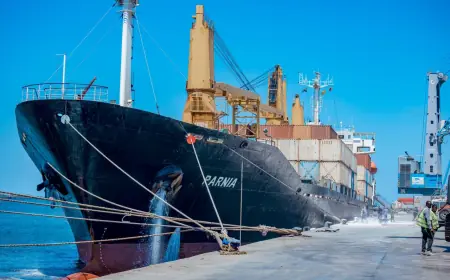
Dr Nchimbi said that Tanzania is simultaneously undertaking contemporary port improvements, including the determined expansion of the Port of Dar es Salaam with new berths and efficiency enhancements.
This effort is designed to ensure seamless and excellent connectivity between Tazara and the new Standard Gauge Railway (SGR).
Complementing this, Tanzania is committed to upgrading the ports of Tanga, Mtwara, and Bagamoyo to guarantee world-class logistics quality for Zambia, SADC, and Africa as a whole.
This holistic, multi-modal strategy aims to provide the hinterland with highly efficient access to the global market.
A nod to the ‘Uhuru railway’ legacy
The presence of Premier Li Qiang was a significant affirmation of the enduring historic partnership between the three nations.
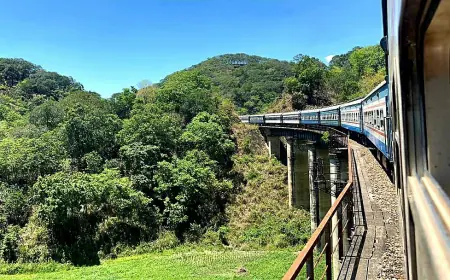
Tazara, originally conceived and built in the 1970s with essential financial and technical assistance from China, was famously known as the 'Uhuru Railway' (Freedom Railway).
It was engineered to link landlocked Zambia to the Indian Ocean port of Dar es Salaam, providing a lifeline independent of apartheid and colonial-era rail systems.
Invoking this powerful history, Vice President Nchimbi asserted that the past provides a strong lesson.
"History teaches a potent truth: when Tanzania, Zambia, and China stand together, no challenge is too great. If the founding fathers of these nations could successfully construct the Uhuru Railway, our current capacity ensures we can rehabilitate Tazara and make it a model for 21st-century cooperation," he said.
The railway spans 1,860 kilometres, utilising the 1,067mm Cape Gauge system, with approximately 975 km lying within Tanzania and 885 km in Zambia.
The comprehensive rehabilitation project represents a critical step for the corridor, viewed as a vital opportunity to re-establish the railway as a leading regional conduit that will spur investment, reduce transportation costs, and deepen both SADC and East African Community (EAC) regional integration.
The Tanzanian contingent included key technical and administrative personnel, such as Prof Godius Kahyarara, Permanent Secretary for the Ministry of Transport, and Engineer Machibya Masanja, Director General of the Tanzania Railways Corporation (TRC).
What's Your Reaction?
 Like
1
Like
1
 Dislike
0
Dislike
0
 Love
1
Love
1
 Funny
0
Funny
0
 Angry
0
Angry
0
 Sad
0
Sad
0
 Wow
0
Wow
0