



















Natural gas drives energy ambitions as govt expands production, infrastructure

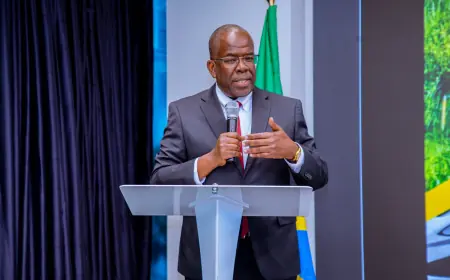
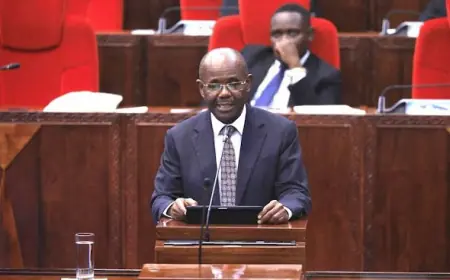
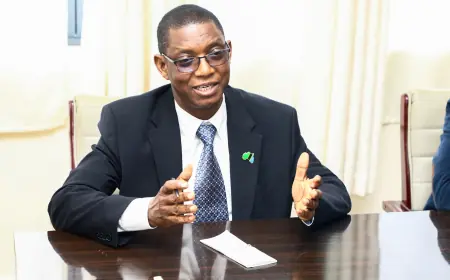
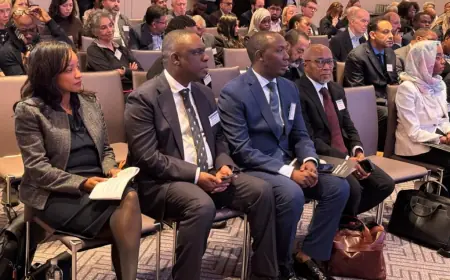
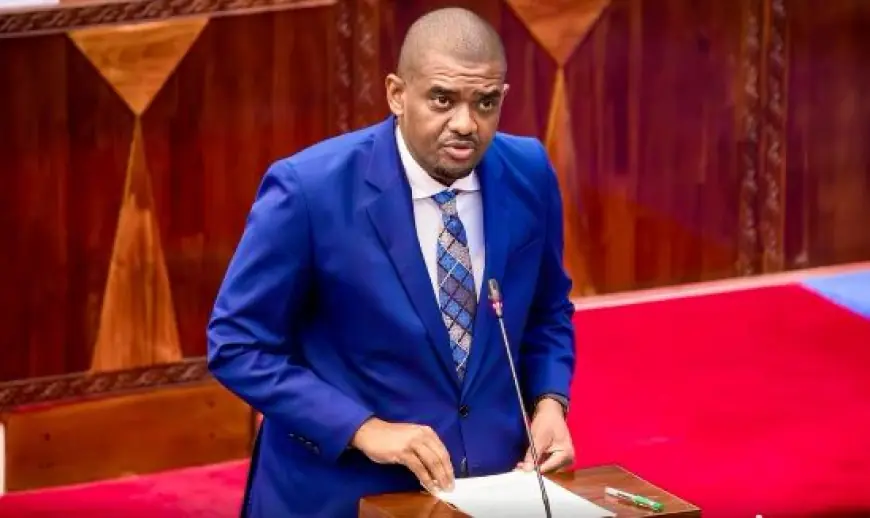
Dodoma. The minister for Energy, Deogratius Ndejembi, has revealed government plans on the natural gas sector, which continues to anchor the country’s long-term energy ambitions.
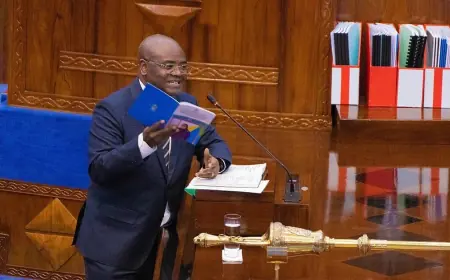
Presenting the 2026/27 budget estimates, Mr Ndejembi said natural gas production remained concentrated in the Mnazi Bay and Songo Songo blocks, which continue to serve as the backbone of the country’s gas supply.
During the period under review, total natural gas production reached 41,530.94 million cubic feet, drawn from both Songo Songo and Mnazi Bay fields.
The gas was utilised across multiple sectors, including electricity generation, industry, transport, institutions and households.
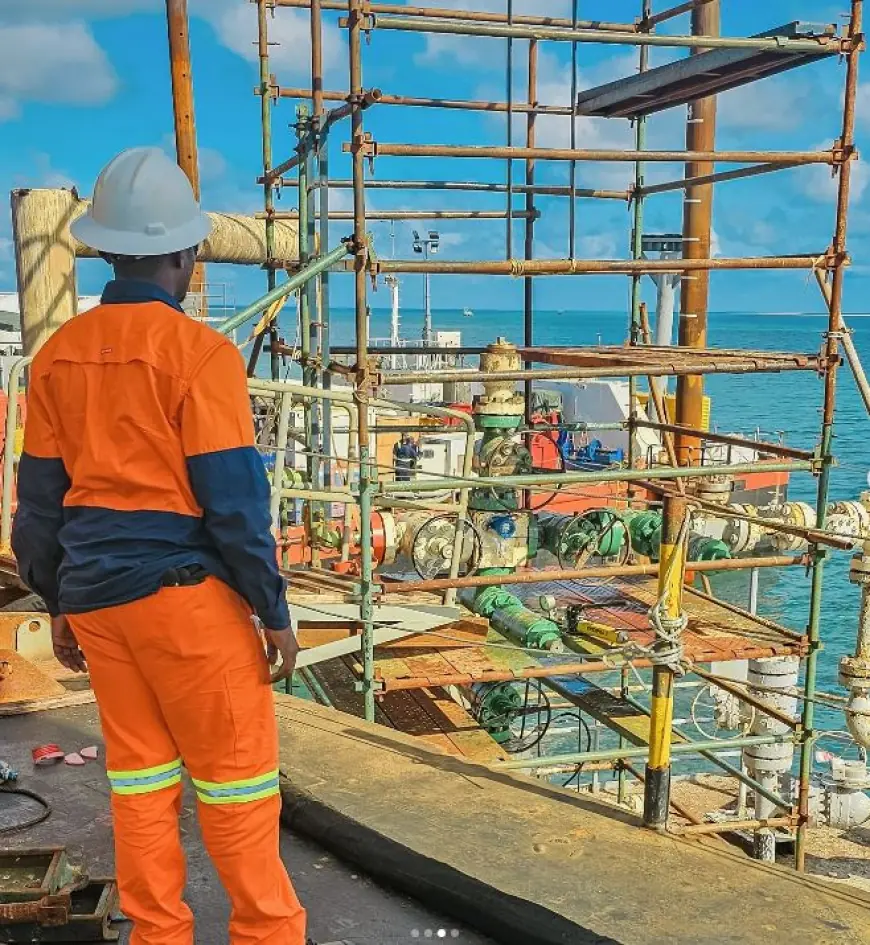
Within the Mnazi Bay block, production activities continued steadily, with average output reaching about 110 million cubic feet per day.
The government also progressed with the drilling programme involving three wells, two designated for production and one for exploration.
By March 2026, drilling of the MB-5 production well had been completed, with test production already underway.
Work on the second well, MS-2, had reached approximately 40 per cent completion and was expected to conclude by May 2026.
The completion of all three wells is projected to increase national gas production by between 45 million and 55 million cubic feet per day.
Production also continued in the Songo Songo block, which maintained an average output of 84.7 million cubic feet per day, depending on demand levels.
The government has been engaged in negotiations with investors to renew the licence for the block, which is due to expire in October 2026.
The renewal is expected to facilitate continued development and sustain production capacity within the field.
Significant progress was also recorded in the development of the Ruvuma block, particularly in the Ntorya area.
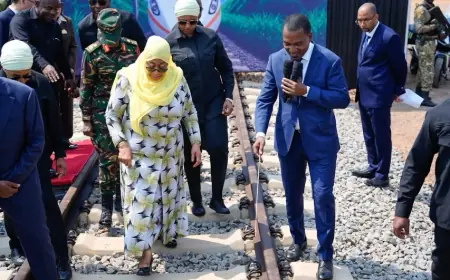
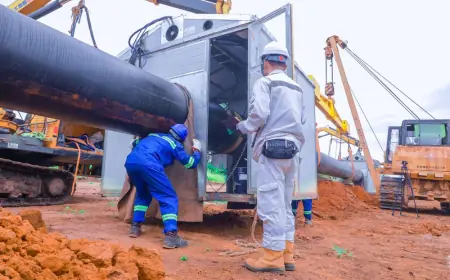
During the 2025/26 fiscal year, construction began on a 34.2-kilometre natural gas pipeline linking Ntorya to the Madimba gas processing plant.
By March 2026, implementation had reached 37 per cent completion.
Preparations were also underway for drilling the Chikumbi-1 production well, alongside rehabilitation works on Ntorya-1 and Ntorya-2 wells.
The project is expected to begin initial production at between 40 million and 60 million cubic feet per day, with the potential to increase output to 140 million cubic feet per day following further development.
Parallel to upstream developments, the government expanded domestic gas utilisation through infrastructure growth and regulatory support.
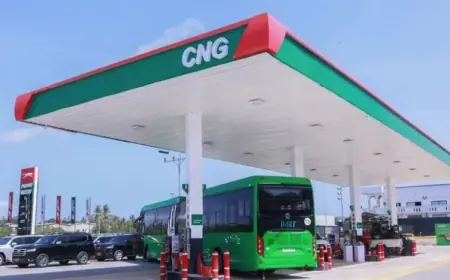
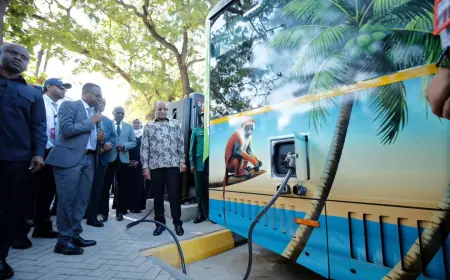
By March 2026, the number of operational compressed natural gas (CNG) filling stations had increased to 18, up from nine recorded in April 2025.
This expansion reflects growing investment interest, with more than 86 local and international companies receiving approval to participate in natural gas projects targeting transport and industrial applications.
Efforts were also directed towards strengthening gas distribution systems in urban centres.
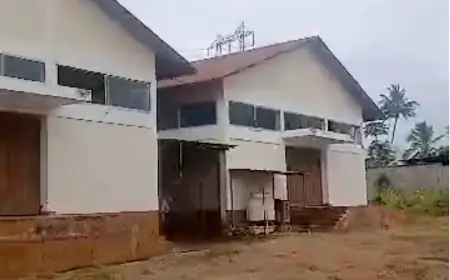
The government completed integration of communication systems between the main CNG station at Mlimani City and satellite stations located in Muhimbili and Kibaha.
The mother station at Mlimani City has the capacity to serve up to 2,000 three-wheeled vehicles, 1,200 small vehicles and 60 large buses per day, alongside supporting distribution through tube trailers.
Looking ahead to the 2026/27 fiscal year, the government has prioritised expansion of exploration, production and value addition projects to maximise returns from natural gas resources.
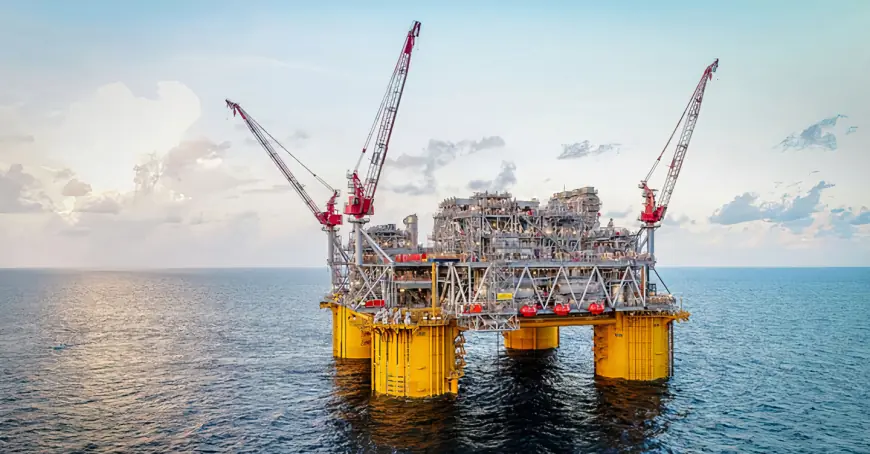
One of the most significant initiatives remains the Liquefied Natural Gas (LNG) project, which targets processing gas discovered in deep offshore Blocks 1, 2 and 4 into liquefied form for export to international markets and domestic use.
By March 2026, negotiations between the government and investors had progressed substantially, with agreements reached on several commercial and fiscal components of the project.
The LNG project is widely regarded as a cornerstone of Tanzania’s long-term energy strategy, designed to transform the country into a global exporter of liquefied gas while boosting foreign exchange earnings and strengthening fiscal revenues.
Continued collaboration with international partners has remained central to advancing this initiative, particularly in technical and financial negotiations.
Further upstream development is planned within the Mnazi Bay block, where production will continue in line with market demand, alongside completion of the Kasa-1 exploration well.
The Tanzania Petroleum Development Corporation (TPDC) has allocated approximately Sh81.04 billion to support ongoing production and drilling activities within this block.
In the Ruvuma block, the government intends to accelerate development activities by drilling the Chikumbi-1 exploration well and rehabilitating the Ntorya-1 and Ntorya-2 wells.
Completion of these works is expected to enable commercial production and strengthen the supply chain feeding into national gas infrastructure.
Approximately Sh20.35 billion has been allocated to implement these activities during the 2026/27 fiscal year.
The government also plans to expand exploration in strategic areas, including the Songo Songo West block, where funds amounting to Sh83.21 billion have been earmarked to complete acquisition and processing of three-dimensional seismic data across 421 square kilometres.
This work is expected to enhance geological understanding and support future drilling decisions.
Beyond production, policy priorities for the coming fiscal year include strengthening natural gas supply for vehicles, industries, institutions and households.
The government has reaffirmed its intention to expand domestic utilisation while also pursuing commercial gas trade agreements with neighbouring countries, including Kenya and Uganda.
These initiatives form part of a broader national strategy aimed at consolidating natural gas as a central pillar of economic growth, industrialisation and energy security.
The government has emphasised that continued investment in exploration, infrastructure and value addition will remain essential to ensuring reliable supply while unlocking the full commercial value of Tanzania’s gas reserves.

Taken together, the achievements recorded during the 2025/26 fiscal year and the ambitious plans outlined for 2026/27 demonstrate a sustained policy commitment to expanding the natural gas sector.
The continued development of production wells, pipelines, distribution networks and large-scale processing facilities signals the government’s determination to position natural gas at the centre of Tanzania’s energy transition and long-term economic transformation.
What's Your Reaction?
 Like
0
Like
0
 Dislike
0
Dislike
0
 Love
0
Love
0
 Funny
0
Funny
0
 Angry
0
Angry
0
 Sad
0
Sad
0
 Wow
0
Wow
0