



































































BoT: Gold buffer, prudent policies shield Tanzania from global shocks


Dar es Salaam. The escalation of tensions involving Iran, Israel and the US, and the resulting disruption of passage through the Strait of Hormuz, has once again exposed the vulnerability of the global economy to geopolitical shocks.
Yet Tanzania has entered this period of uncertainty with several structural and policy advantages that continue to shield the economy from the full force of external turbulence, the Bank of Tanzania (BoT) says in its latest report.
The report continues to say; strong gold export earnings, prudent macroeconomic management and the transparent fuel-pricing framework by the Energy and Water Utilities Regulatory Authority’s (Ewura) have together helped preserve economic stability despite mounting global pressures.
The Strait of Hormuz, located between Iran and Oman, remains the world’s most strategic energy corridor.
Nearly 21 million barrels of crude oil pass through the narrow waterway every day.

This represents close to one-fifth of global petroleum consumption.
When military confrontations in March 2026 effectively disrupted the passage, global commodity and shipping markets reacted immediately.
International crude oil prices surged sharply.
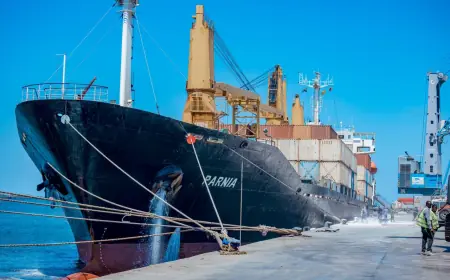
Freight costs also rose as shipping firms adjusted routes and insurance premiums increased.
The disruption further extended to fertiliser markets because Gulf producers account for a substantial share of global sulphur, ammonia and urea exports.
Within days, global nitrogen fertiliser prices climbed steeply, while urea prices rose by more than 40 percent in a single week.
Container shipping costs between Asia and Africa also escalated significantly.
Freight rates for a 40-foot container rose to around $4,800, more than double the levels recorded in early 2025.
These developments intensified pressure on economies that rely heavily on imported fuel, fertiliser, machinery and manufactured goods.
For Tanzania, the effects are transmitted mainly through energy and transport channels.
Higher global crude prices increase the cost of importing refined petroleum products.
Since the domestic economy relies extensively on road transport to move agricultural produce, consumer goods and construction materials, rising fuel costs inevitably increase freight and distribution expenses across the country.
The impact spreads quickly through supply chains.
Transport operators face higher operating costs. Farmers pay more for irrigation, machinery and fertiliser distribution.
Manufacturers encounter rising input and logistics expenses.
Ultimately, consumers experience higher prices for food, cement, household goods and other essentials.
The agricultural sector faces particular pressure.
Many African economies bordering the Indian Ocean source a substantial share of fertiliser from Gulf states.
Supply disruptions and rising shipping charges therefore threaten input affordability at a critical time for agricultural production.
Higher fertiliser costs weaken farmers’ purchasing power and may reduce planting activity, with possible consequences for future food supply and inflation.
External sector pressures may also emerge through the exchange rate channel.
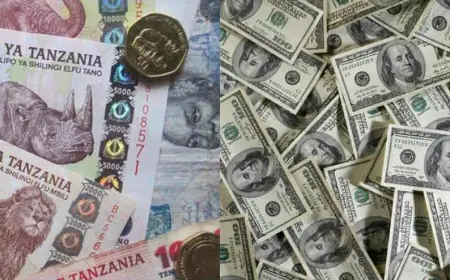
A larger oil import bill increases demand for foreign currency.
This places depreciation pressure on the Tanzanian shilling and raises the domestic cost of imported goods beyond fuel alone.
Low-income households remain especially vulnerable because energy, transport and food account for a significant share of household expenditure.
However, Tanzania possesses a structural advantage that many regional peers lack.
Gold exports continue to provide a natural macroeconomic hedge during periods of geopolitical instability.
Gold contributes between 30 and 40 percent of Tanzania’s foreign exchange earnings, with export receipts exceeding $5 billion in the year ending March 2026.
Historically, global oil and gold prices tend to move in the same direction during periods of geopolitical tension.
Investors often shift towards gold as a safe-haven asset when conflict escalates and uncertainty rises.
As oil prices increase, gold prices frequently rise as well due to heightened risk perceptions and speculative demand.
This relationship provides Tanzania with an important stabilising mechanism.
Rising gold export revenues help offset the increased cost of importing petroleum products.
The result is a partial cushioning of the current account against external commodity shocks.
While households and firms still experience higher fuel prices domestically, the broader macroeconomic impact becomes more manageable than in countries without substantial mineral export earnings.
Alongside this natural buffer, Tanzania’s macroeconomic policy framework has also strengthened resilience.
The Bank of Tanzania has maintained a cautious and disciplined monetary policy stance aimed at containing inflationary pressures while safeguarding financial stability.
Such policy credibility plays a critical role during periods of global uncertainty.
Unlike economies that resort to unsustainable subsidies during energy crises, Tanzania has continued to rely on Ewura’s transparent fuel-pricing mechanism.
The cost-plus pricing model allows domestic fuel prices to adjust gradually in line with international market movements.
Although consumers still face higher pump prices, the approach avoids severe fiscal strain and preserves public resources for broader economic priorities.
The framework also helps anchor inflation expectations.
Predictable and transparent price adjustments reduce uncertainty among businesses and consumers.
This limits the risk of panic pricing and speculative distortions that can worsen inflationary episodes.
Sectoral effects nevertheless remain uneven. Transport and logistics firms face sustained cost pressures because fuel represents a major share of operating expenses.
Businesses with limited ability to pass higher costs to consumers may experience shrinking profit margins.
Agricultural financing may also weaken if rising production risks reduce credit appetite among lenders.
At the same time, certain sectors may benefit from changing economic conditions.
The information and communications technology sector could experience stronger demand as businesses and households increasingly rely on digital platforms to reduce physical transaction costs.
Financial services may also expand as demand rises for trade finance, insurance and risk-management instruments.
The current crisis demonstrates how deeply interconnected the global economy has become.
Conflict in distant maritime corridors now carries direct consequences for inflation, trade and household welfare across developing economies.
Yet Tanzania’s experience also illustrates the importance of building structural resilience before crises emerge.
The combination of strong gold exports, disciplined monetary policy and transparent energy regulation has helped transform a potentially severe external shock into a more controllable economic challenge.
These safeguards do not eliminate hardship entirely.
Fuel, transport and food costs remain under pressure. However, they significantly reduce the likelihood of broader macroeconomic instability.
As geopolitical tensions continue to evolve, Tanzania’s strongest defence will remain prudent policymaking, fiscal discipline and evidence-based economic management.
In an increasingly volatile global environment, resilience depends not only on natural resources, but also on the credibility and consistency of national institutions.
What's Your Reaction?
 Like
1
Like
1
 Dislike
1
Dislike
1
 Love
1
Love
1
 Funny
0
Funny
0
 Angry
0
Angry
0
 Sad
0
Sad
0
 Wow
0
Wow
0