





































































Oil Surges, global shares slip amid gulf shipping attacks
The International Energy Agency’s plan to release 400 million barrels from strategic reserves, the largest such release in its history, announced on Wednesday, did little to calm investor nerves

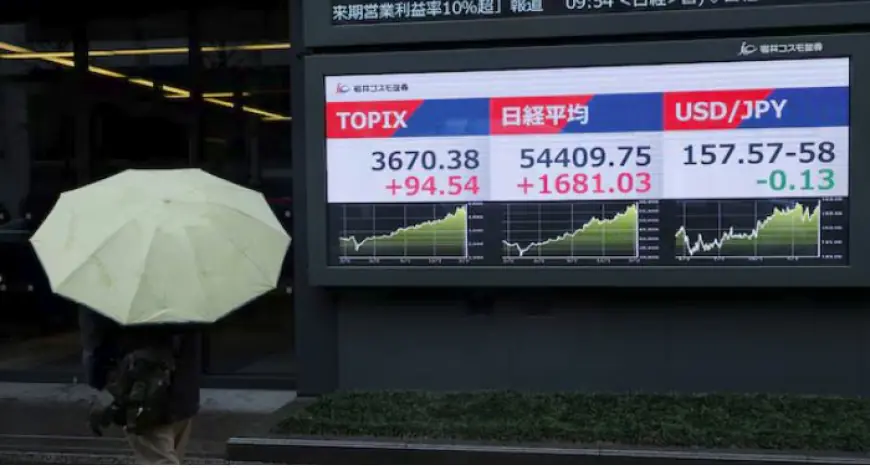
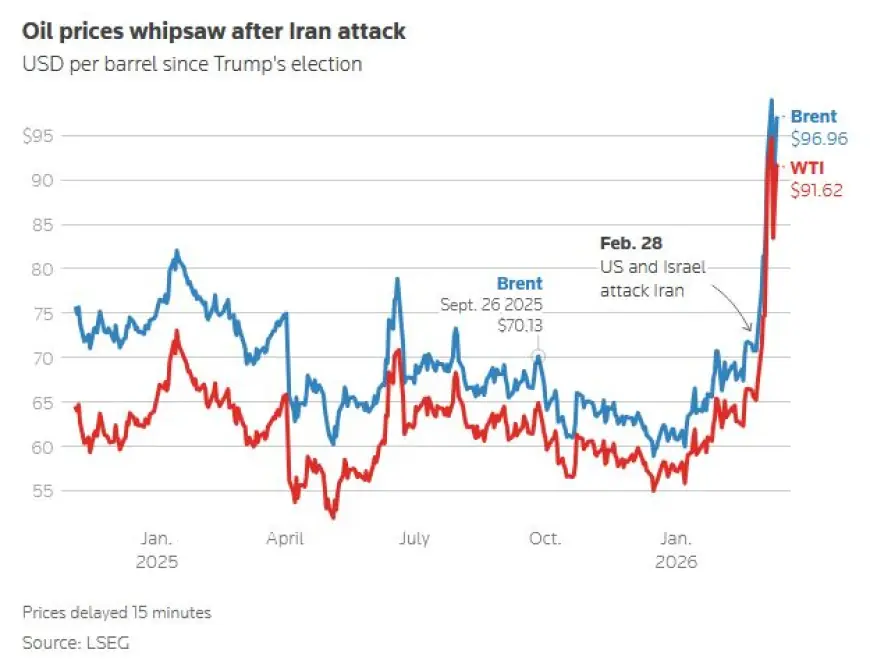
London/Sydney. Global shares fell on Thursday as attacks on oil tankers in the Gulf dashed hopes of a swift de-escalation in the Middle East conflict. Oil prices briefly exceeded $100 a barrel, fuelling fresh inflation concerns.
The reaction shows how quickly earlier optimism over a potential end to the war is being reversed. Conflicting statements from US President Donald Trump have left traders cautious, prompting many to remain on the sidelines or seek safer assets, according to Reuters.
The International Energy Agency’s plan to release 400 million barrels from strategic reserves, the largest such release in its history, announced on Wednesday, did little to calm investor nerves, Reuters adds.
Brent crude futures surged as much as 10.4 percent to $101.59 a barrel before easing, while US crude futures last traded 4.4 percent higher at $91.11.
“Even if the reserves are large, how quickly they can be delivered is untested. A market balanced via strategic stock releases is far less logistically efficient,” said Joel Hancock, energy analyst at Natixis CIB was quoted by Reuters as saying.
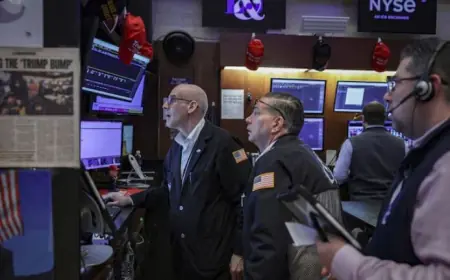
European equities were pressured, with the STOXX 600 index slipping 0.4 percent, while US futures for the S&P 500 and Nasdaq 100 each fell 0.5 percent.
The MSCI All-World index dropped 0.3 percent. Prediction markets on Polymarket now assign a 25 percent chance of a US-Iran ceasefire by March 31, down from 45 percent earlier this week, according to Reuters.
Attacks on oil shipments continue
Two tankers in Iraqi waters were struck by explosive-laden boats linked to Iran, Iraqi security officials told Reuters early Thursday. An Iraqi official added that the country’s oil ports “have completely stopped operations.”
Bloomberg News reported that Oman had evacuated vessels from its main export terminal at Mina Al Fahal as a precaution.
“The market remains very concerned about developments in the Strait of Hormuz. The latest information is not reassuring,” said Rodrigo Catril, senior FX strategist at NAB.
“It reinforces the view that oil prices may rise further rather than fall.”
Iran has intensified attacks on merchant ships in the Strait of Hormuz, hitting at least 16 vessels since the fighting began.
Tehran has warned oil could reach $200 a barrel.
Inflation risks rise
Reuters said US data on Wednesday showed the consumer price index rose 0.3 percent in February, in line with forecasts and above January’s 0.2 percent increase.
Analysts noted the figure is overshadowed by inflationary pressures linked to the conflict.
Global bond markets reacted, with inflation concerns outweighing safe-haven demand. Yields on 10-year US Treasury notes rose 2.4 basis points to 4.2296 percent on Thursday, after a 7-point jump overnight.
Fed funds futures fell as investors bet that higher inflation will make further rate cuts from the Federal Reserve unlikely.
Markets now expect just one additional Fed rate cut this year. Meanwhile, concerns over energy-driven inflation have prompted speculation that the European Central Bank could raise rates, possibly as soon as June, Reuters adds.
Investors sought the safety of the US dollar, shunning currencies from net energy importers such as Japan and much of Europe. The euro eased 0.1 percent to $1.1558, while the dollar rose to 158.68 yen.
What's Your Reaction?
 Like
1
Like
1
 Dislike
0
Dislike
0
 Love
0
Love
0
 Funny
0
Funny
0
 Angry
0
Angry
0
 Sad
0
Sad
0
 Wow
0
Wow
0