



































































Global markets, aviation collapse as Middle East conflict enters third day
Air corridors across key Gulf States were shuttered within hours of the initial escalation on Saturday, grounding thousands of flights and crippling some of the world’s busiest transit hubs

Dubai/London. The Middle East military conflict entered a volatile third day on Monday, plunging regional stability into its deepest crisis in decades and paralyzing global infrastructure.
As hostilities expand across multiple fronts involving Iran, Israel, and the United States, the dual impact of widespread airspace closures and surging energy prices has sent shockwaves through international travel networks and financial markets alike.
The geopolitical escalation, which began on Saturday with coordinated US and Israeli strikes on Iran, has evolved into a broader regional war.
By Monday morning, fresh fighting was reported in Lebanon, where Israeli air strikes killed at least 31 people following rocket fire from the Iranian-backed Hezbollah group.
In a significant diplomatic rupture, the United Arab Emirates closed its embassy in Tehran and withdrew its mission after Iranian missile strikes reportedly targeted the Gulf state, an act Abu Dhabi condemned as a grave violation of international law.
Aviation in Turmoil
The impact on global connectivity has been immediate and severe.
Air corridors across key Gulf States were shuttered within hours of the initial escalation on Saturday, grounding thousands of flights and crippling some of the world’s busiest transit hubs.
For a third consecutive day, operations at major gateways in Dubai, Doha, and Abu Dhabi remained largely suspended as authorities maintained restrictions amid intensifying missile and drone exchanges.
The scale of the disruption is visible across continents.
In Sydney, London, and various Asian hubs, tens of thousands of passengers remain stranded as airlines struggle with the logistical nightmare of diverted routes and overwhelmed rebooking systems.
British Airways, Lufthansa, Air France, and Singapore Airlines are among dozens of carriers that have announced sweeping cancellations extending into mid-March.
Industry analysts warn that the prolonged closure of this critical east-west crossroads will have lasting implications for airline finances and global cargo supply chains.
Market volatility and energy security
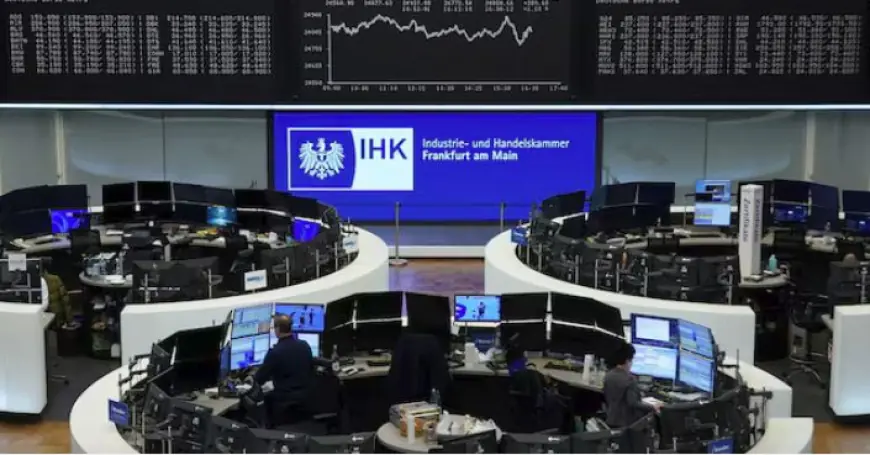
In London, global financial markets recoiled as the deepening crisis triggered a flight to safety.
Brent crude surged approximately 10 percent to nearly $80 a barrel, briefly touching $82, while gold prices rose more than 2 percent.
The primary concern for investors remains the Strait of Hormuz, through which a fifth of the world’s seaborne oil trade passes.
As tankers begin to accumulate on either side of the narrow waterway and insurance premiums soar, analysts at Wood Mackenzie warned that prices could exceed $100 if flows are not restored imminently.
Equity markets mirrored this anxiety, with the STOXX 600 sliding 1.7 percent and US futures dropping more than 1.5 per cent.
While energy and defence stocks saw gains, banking and aviation sectors led the losses.
The US dollar rallied strongly against the pound and the euro, reflecting a broader market pivot toward safe-haven assets.
Military escalation and the ‘lucas’ programme
On the military front, the Pentagon confirmed the first combat use of its "LUCAS" (Low-Cost Unmanned Combat Attack Systems) programme.
These one-way attack drones, costing roughly $35,000 per unit, are designed to overwhelm air defences and degrade radar networks at scale.
US military planners are reportedly racing to weaken Iranian capabilities before interceptor stockpiles are depleted, as the conflict shifts toward a war of attrition.
In a sign of the perceived threat level, Israel moved its official "Wing of Zion" government aircraft to Berlin as a precautionary measure.
Meanwhile, Kuwait’s defence ministry confirmed that several US military aircraft had crashed in the region, though specific details regarding casualties remain withheld.
A remote prospect for peace
Despite urgent calls for restraint from the United Nations and various global powers, the prospects for an early ceasefire appear remote.
President Donald Trump, speaking to The New York Times, indicated that casualties are expected to rise, citing Pentagon projections of heavier losses if the current trajectory continues.
For the thousands of passengers sleeping on terminal floors and the investors watching volatile tickers, the immediate future remains defined by uncertainty.
As the conflict grinds into its third day, the world faces a dual crisis of restricted movement and mounting economic pressure, with the potential for long-term shifts in global security and energy policy.
What's Your Reaction?
 Like
0
Like
0
 Dislike
0
Dislike
0
 Love
0
Love
0
 Funny
0
Funny
0
 Angry
0
Angry
0
 Sad
0
Sad
0
 Wow
0
Wow
0