












































Tanzania unveils Sh86.3trn development plan for 2026/27
The five-year programme carries an estimated price tag of Sh477.7 trillion, signalling the scale of investment required to drive economic expansion, create employment and strengthen key sectors of the economy


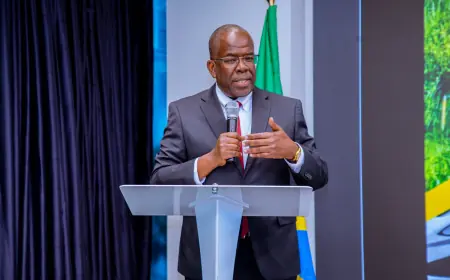
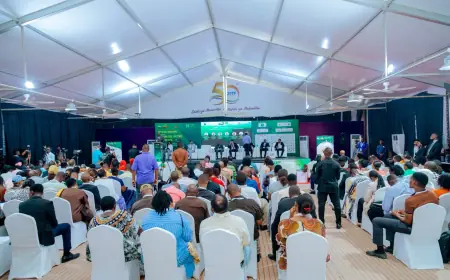
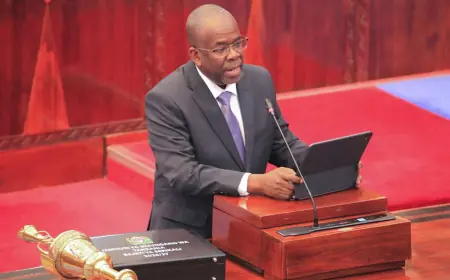
Presenting the National Development Plan proposals to Parliament in Dodoma on March 11, the Minister of State in the President’s Office responsible for Planning and Investment, Prof Kitila Alexander Mkumbo, said the spending framework forms part of the Fourth Five-Year Development Plan.
He said the wider five-year programme carries an estimated price tag of Sh477.7 trillion, signalling the scale of investment required to drive economic expansion, create employment and strengthen key sectors of the economy.
According to the minister, the private sector is expected to shoulder the bulk of the financing for the 2026/27 programme.
Investors and private enterprises are projected to contribute Sh60.1 trillion, equivalent to nearly 70 percent of the annual funding requirement.
Public institutions will finance the remaining Sh26.2 trillion.
Of this amount, Sh20.7 trillion will come from the central government while state-owned enterprises are expected to contribute Sh5.5 trillion.
The plan also calls on public corporations to broaden their financing options by accessing capital markets through instruments such as corporate bonds and stock exchange listings, rather than relying heavily on government support.
The development blueprint marks the first phase of implementing the country’s Development Vision 2050 and will operate under a central theme of reforms aimed at stimulating inclusive economic growth and employment.
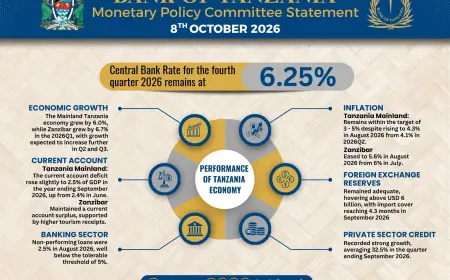
Economic indicators presented to Parliament show the country maintained steady growth in 2025.
Gross domestic product expanded by 6.0 percent between January and September, up from 5.5 percent during the corresponding period in 2024.
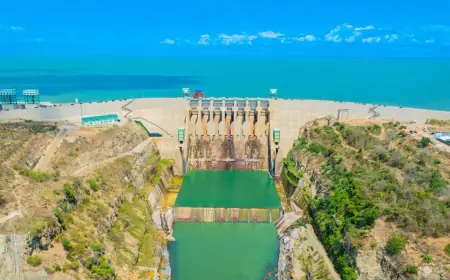
Officials attribute the improved performance to continued investment in strategic infrastructure, particularly in the energy, water and transport sectors. Higher output in agriculture, manufacturing and mining also supported the expansion.
Inflation remained contained, averaging 3.3 percent during 2025.
This level stayed comfortably within the national target band of between 3 and 5 percent.
Looking ahead, the government aims to raise economic growth to 6.3 percent in the 2026/27 financial year.
Authorities also intend to increase tax revenue to the equivalent of 13.7 percent of gross domestic product.
To achieve these objectives, the plan identifies five broad priority areas.
These include strengthening governance and maintaining peace, building a competitive economy and improving the quality of human capital.
Other focus areas include environmental protection and climate resilience, alongside reforms intended to drive structural transformation through technology, innovation and digital systems.
Implementation of the strategy will involve 408 programmes and projects.
Among them are 38 flagship initiatives integrated within seven major national programmes designed to accelerate economic modernisation.
The government expects the projects to deliver a range of economic and social outcomes. Officials estimate that about 1.7 million jobs could be created during the 2026/27 financial year.
This would represent a sharp rise from the 981,000 jobs generated in the 2024/25 period, with employment growth projected across agriculture, manufacturing and services.
Infrastructure development also features prominently in the plan.
Electricity generation capacity is projected to rise to 4,654.5 megawatts, while irrigation coverage is expected to expand to 1.2 million hectares.
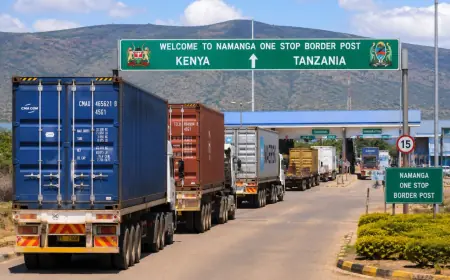
Rail transport capacity is also set to increase, with freight volumes projected to reach 810,000 tonnes annually as the government continues upgrading logistics networks.
To ensure delivery, authorities plan to track implementation through a results-based monitoring and evaluation framework.
Sh62.3 budget
Meanwhile, Tanzania is preparing to launch the first budget framework aligned with the Fourth Five-Year Development Plan (FYDP IV), setting the stage for a new phase of economic reforms and long-term development planning.
The proposed financial framework for the 2026/27 fiscal year outlines a national budget ceiling of about Sh62.3 trillion.
The spending plan will guide government policy as the country begins implementation of the development blueprint covering the period from 2026/27 to 2030/31.
Presenting the proposals before Parliament in Dodoma, Finance Minister Khamis Mussa Omar said the framework establishes the fiscal direction needed to support economic transformation and maintain macroeconomic stability.
The government intends to direct resources towards strategic sectors identified under the new development plan.
These include reforms aimed at building a resilient, inclusive and competitive economy. Officials say the reforms will be implemented through nine key transformation sectors designed to stimulate productivity and expand economic opportunities.
Another major focus will be strengthening human capital and improving social services.
The government plans to channel resources into education, health and other programmes intended to raise living standards and support long-term growth.
What's Your Reaction?
 Like
0
Like
0
 Dislike
0
Dislike
0
 Love
0
Love
0
 Funny
0
Funny
0
 Angry
0
Angry
0
 Sad
0
Sad
0
 Wow
0
Wow
0