






































































Central bank holds rate steady, signalling policy continuity and economic confidence
The move by the Bank of Tanzania’s Monetary Policy Committee reflects confidence that prevailing monetary settings are sufficient to support growth while keeping inflation firmly within target

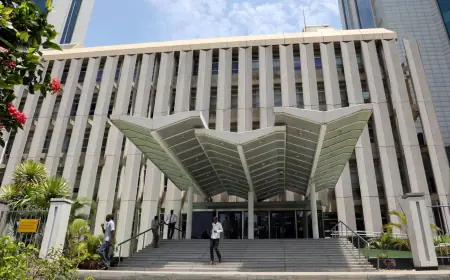
Dar es Salaam. The Bank of Tanzania (BoT)’s decision to maintain the Central Bank Rate (CBR) at 5.75 percent for a third consecutive quarter underscores a clear preference for policy continuity at a time when both domestic and global economic conditions remain delicately balanced.
Announced on January 8, 2026, the move by the Bank of Tanzania’s Monetary Policy Committee reflects confidence that prevailing monetary settings are sufficient to support growth while keeping inflation firmly within target.
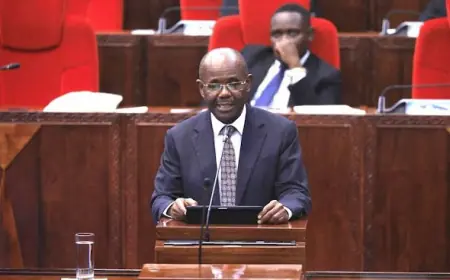
By holding the benchmark rate unchanged for the first quarter of 2026, after a similar stance in the fourth quarter of 2025, the central bank is signalling that inflationary pressures remain contained and that there is no immediate need for either tightening or loosening monetary conditions. Briefing reporters about the decision at a press conference at BoT offices in Dar es Salaam, Governor Emmanuel Tutuba said the fact that inflation expectations remaining within the three to five percent target band suggests that price stability remains broadly anchored, providing policymakers with room to prioritise economic expansion.
Macroeconomic perspective
From a macroeconomic perspective, the decision reinforces predictability in the financial system.
The CBR serves as a critical reference point for the central bank’s operations, including lending to commercial banks, and directly influences interbank lending rates, which are required to remain within a margin of plus or minus two percentage points around the policy rate.
Stability at this level offers commercial banks clarity in pricing credit, potentially supporting lending to productive sectors of the economy.
The broader economic context appears to justify this steady stance.
Mainland Tanzania’s economy is estimated to have grown by about 5.9 percent in 2025, close to earlier projections, with agriculture, mining and construction providing the main impetus.
Meanwhile, Zanzibar’s economy is projected to expand at a robust 6.8 percent in 2026, driven largely by construction, tourism and manufacturing.
These growth trajectories indicate an economy performing within expectations, reducing the urgency for policy intervention.
For businesses and investors, a stable policy rate may translate into a more supportive operating environment.
By avoiding abrupt shifts in borrowing costs, the central bank is effectively cushioning the private sector against volatility, while encouraging sustained investment and consumption.
This is particularly significant in sectors such as construction and manufacturing, which are sensitive to financing conditions and play a central role in employment creation.
The health of the banking sector further strengthens the case for policy continuity.
The decline in the ratio of non-performing loans to 3.1 percent, well below the tolerable threshold of five percent, points to improved asset quality and stronger risk management within banks.
Such indicators suggest that financial institutions are better positioned to extend credit without undermining system stability.
Reactions
Industry stakeholders have welcomed the central bank’s approach.
The banking community has credited the regulator’s firm oversight with strengthening the financial sector, curbing inflation, stabilising the shilling against major currencies and maintaining adequate foreign exchange reserves.
Together, these factors contribute to macroeconomic resilience, particularly in an uncertain global environment marked by shifting interest rate cycles in major economies.
In essence, the decision to keep the CBR at 5.75 percent reflects a measured assessment that current monetary conditions are aligned with Tanzania’s economic realities.
While risks from global shocks cannot be discounted, the central bank appears confident that a steady hand, rather than abrupt policy shifts, will best support sustainable growth, financial stability and continued confidence in the economy.
What's Your Reaction?
 Like
0
Like
0
 Dislike
0
Dislike
0
 Love
0
Love
0
 Funny
0
Funny
0
 Angry
0
Angry
0
 Sad
0
Sad
0
 Wow
0
Wow
0