































































Moody’s assigns Tanzania’s B1 credit rating as growth offsets political, social risks
In its latest review, Moody’s Ratings affirmed Tanzania’s long-term foreign and local currency issuer ratings at B1 and maintained a stable outlook, reflecting what it described as strong and increasingly broad-based growth momentum and resilience to shocks, balanced against weak institutional framework and low household incomes

Dar es Salaam. Tanzania’s credit profile has continued to rest on firm economic growth and improving policy effectiveness, even as political and social pressures pose persistent risks to stability, according to a new sovereign rating assessment by Moody’s Ratings.
In its latest review, the global ratings agency affirmed Tanzania’s long-term foreign and local currency issuer ratings at B1 and maintained a stable outlook, reflecting what it described as “strong and increasingly broad-based growth momentum and resilience to shocks”, balanced against “weak institutional framework and low household incomes”.
Moody’s said the affirmation was underpinned by Tanzania’s accelerating economic expansion, improving monetary and fiscal policies, and a gradual shift towards private-sector-led development.
However, it warned that political risks had increased following unrest during the 2025 general election.
“Political risks have risen following the 2025 election and associated violence,” the agency said.
“Stability has since been restored, but underlying social risks from low incomes and rapid population growth heighten the risk of renewed instability that would weigh on investment, exports and fiscal outcomes.”
Growth momentum remains robust
Economic growth remains a central pillar of Tanzania’s credit strength.
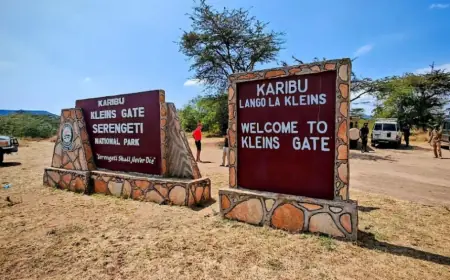
Moody’s expects real GDP growth of at least six per cent over the medium term, supported by rising investment in manufacturing, mining, and processing, alongside sustained expansion in tourism and transport-related services.
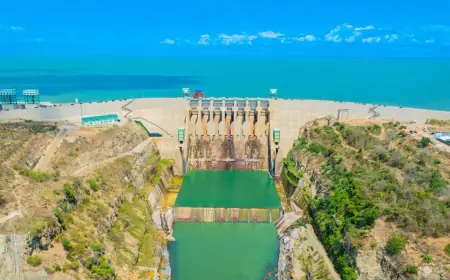
The agency said growth has been driven by major public infrastructure projects, improved energy reliability, and a strengthening business environment.
“Growth has been supported by major public infrastructure projects, improving energy reliability, and a gradually strengthening business environment as the authorities shift the growth model to private-sector-led investment,” it said.
Tanzania’s resource endowment and expanding infrastructure network were cited as key factors that could lift growth above baseline projections, raise incomes, and ease social pressures over time.
“Resource endowment, together with ongoing improvements in energy and transport infrastructure, could lift growth above our baseline, gradually rising incomes and easing social pressures,” Moody’s noted.
However, it cautioned that structural social challenges and a rapidly growing population would continue to place heavy demands on public spending and policy capacity.
Moody’s identified political stability as the most significant downside risk to Tanzania’s credit profile.
The agency said the 2025 general election led to “unprecedented unrest and violence”, raising political risk and weakening investor confidence.
Although conditions stabilised soon after the inauguration of the president, it warned that social pressures remain elevated.
“Persistently high social pressures, linked to low-income levels, rapid population growth and high employment demands from a young, fast-growing population, increase the risk of renewed instability over the medium term,” it said.
Such instability, Moody’s warned, could undermine tourism, disrupt exports, weaken fiscal performance, and slow investment.
“Heightened political instability or renewed policy uncertainty affecting investment and exports constitute downside risks to the baseline,” the agency said.
Policy effectiveness shows steady improvement
Moody’s highlighted significant improvements in economic, monetary, and external policy effectiveness, following a series of reforms.
It said regulatory easing and institutional strengthening had improved the business climate and supported higher private-sector investment.
“Economic, monetary, and external policy effectiveness has strengthened following successive reforms,” it said.
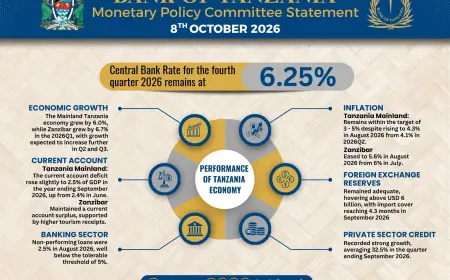
Authorities have also addressed longstanding foreign currency shortages by promoting local currency usage and improving domestic foreign-exchange markets.
“Since 2023, authorities have been addressing longstanding foreign-currency shortages by promoting local-currency use and improving the functioning of domestic foreign-exchange markets,” Moody’s said.
This has reduced dependence on central bank reserves and eliminated the parallel market for foreign exchange. Increased exchange-rate flexibility has also strengthened the economy’s capacity to absorb external shocks.
“The central bank has maintained a strong record of price stability, with inflation remaining below five per cent since 2018,” it added.
Debt levels remain moderate but pressures are rising
Tanzania’s public debt burden remains moderate, though it has increased in recent years to finance infrastructure expansion, social development, and the clearance of domestic arrears.
Government debt has risen to just under 50 per cent of GDP. Interest costs have also increased due to more constrained access to concessional financing and now consume about 16 per cent of government revenue.
“Government debt at approximately 50 per cent of GDP remains moderate but has been rising to finance infrastructure and social-development spending,” Moody’s said.
Despite the increase, the agency expects debt levels to stabilise, supported by strong nominal growth and improving revenue performance.
“Nevertheless, the debt burden remains moderate relative to peers and we expect it to stabilise at the current level, supported by strong nominal growth and revenue mobilization,” it said.
However, it warned that declining concessional financing flows and persistent social spending demands would continue to exert pressure on fiscal outcomes.
Revenue performance strengthens fiscal position
Revenue mobilisation has emerged as a key area of improvement. Moody’s said reforms in tax administration, digitisation, and compliance had lifted collections, while rising non-tax revenue had strengthened fiscal buffers.
“Improvements in tax administration, digitization and compliance, as well as rising non-tax revenues, including higher dividend income following structural governance reforms across state-owned enterprises, have all supported higher revenue generation,” it said.
Non-grant revenue has risen from 13.7 per cent of GDP in the 2020/21 fiscal year to 15.9 per cent in 2025/26.
It is expected to exceed 17 per cent of GDP in the current fiscal year.
However, the agency warned that pressures to expand social spending in response to political and social risks would persist.
“Pressures to address political risks by expanding social spending are likely to persist, while reduced access to concessional lending and other aid flows following the election unrest will also weigh on fiscal outcomes,” Moody’s said.
ESG risks constrain credit profile
Environmental, social, and governance risks remain significant constraints on Tanzania’s credit standing.
Moody’s assigned Tanzania an ESG Credit Impact Score of CIS-4, indicating that these factors present material risks, though not at extreme levels by regional standards.
Environmental risks stem largely from climate hazards, water stress, and reliance on agriculture.
“Physical climate risks, including recurrent droughts and floods, directly threaten agricultural output and critical infrastructure, increasing fiscal and economic volatility,” the agency said.
Social risks remain pronounced due to limited access to electricity, clean water, sanitation, and education.
“Limited access to electricity, clean water, and sanitation, combined with persistent education gaps, constrain human capital development and productivity,” Moody’s said.
Governance challenges also remain, reflecting moderate policy effectiveness, regulatory quality, and institutional capacity.
“Government effectiveness remains moderate but below the global median, and regulatory quality continues to lag,” the agency noted.
Outlook remains stable
Moody’s said the stable outlook reflects expectations that strong growth, reform momentum, and external buffers will offset political and social risks.
“The stable outlook reflects our expectation that strong, investment-led growth and sustained external buffers will offset elevated political and social risks, while debt and interest costs remain stable,” it said.
Upside risks include stronger-than-expected growth, higher foreign direct investment, improved export performance, and rising household incomes.
Downside risks include renewed political instability, rising government spending pressures, declining aid flows, and adverse external shocks.
“Downward pressure on the rating would come from further episodes of domestic social and political instability that weigh on investor confidence, exports or access to funding,” Moody’s said.
Fragile balance
Overall, the rating affirmation highlights a fragile balance between Tanzania’s strengthening economic fundamentals and persistent structural vulnerabilities.
Strong growth, improving policies, and rising revenues continue to support macroeconomic stability.
However, political uncertainty, social pressures, and climate risks remain the central constraints on a higher sovereign rating.
As Moody’s concluded, “economic fundamentals have not materially changed, while political and social risks remain significant,” underscoring the delicate path Tanzania must navigate to sustain stability and long-term growth.
What's Your Reaction?
 Like
0
Like
0
 Dislike
0
Dislike
0
 Love
0
Love
0
 Funny
0
Funny
0
 Angry
0
Angry
0
 Sad
0
Sad
0
 Wow
0
Wow
0